
 close
close


 LOGIN
LOGIN
You are viewing 1 of your 1 free articles
Edu Rubio: The Simple Things
In a recent Elite Soccer webinar, Edu Rubio spoke to Ben Bartlett about building a team from the ground up, the importance of pragmatism, and doing the basics well


Words: Carrie Dunn
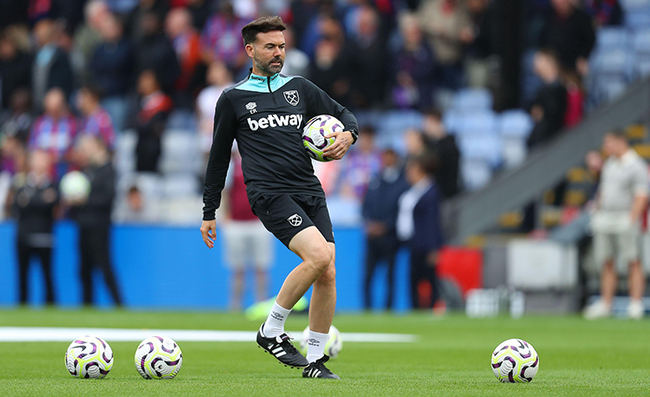
Edu Rubio has enjoyed what he describes as the rollercoaster ride of football coaching. His career is a portfolio of countries and levels, throughout the age groups, and in the men’s and women’s game – a breadth of experience of which he is justly proud.
“I do believe that rollercoaster and that diversity and experiences have helped me - not sure whether [it is] to be a better coach, that’s for others to judge - but [to be] definitely more self-aware, and I do believe when you are self-aware, you’ve got a better chance to lead people and to be a better coach,” he says.
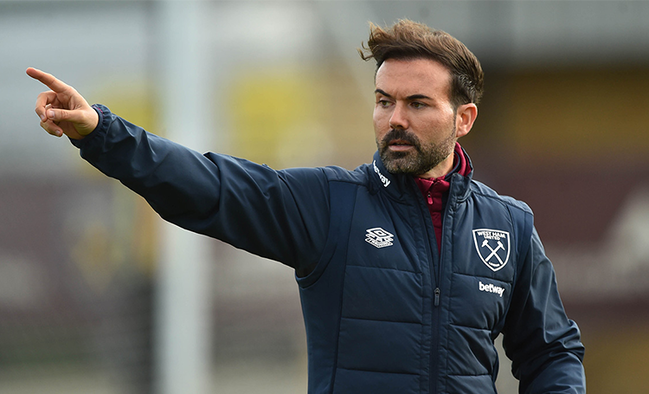
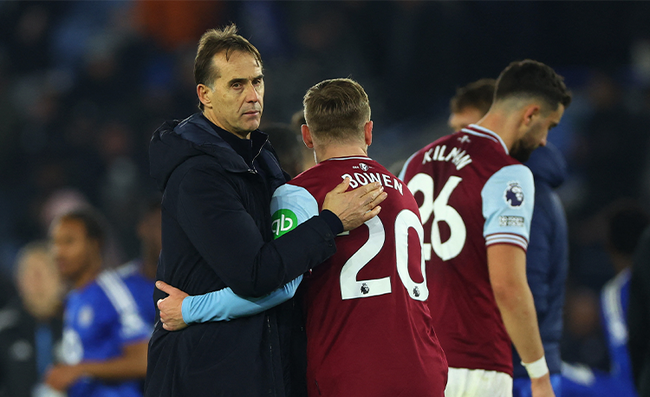
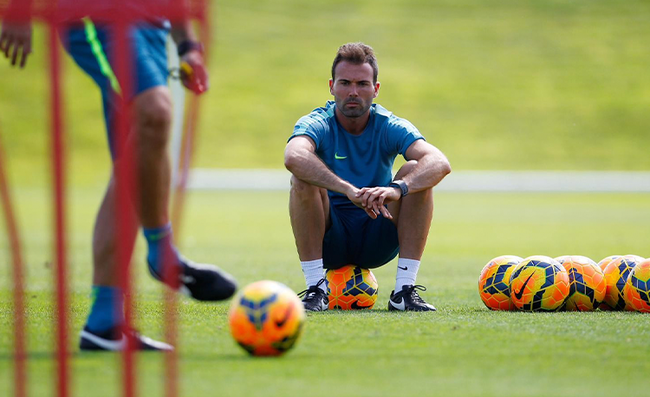
He has worked as an assistant to head coaches from Julen Lopetegui at West Ham United and Wolverhampton Wanderers to Roy Hodgson at Crystal Palace for a brief spell, as well as assisting Paul Konchesky at West Ham Women. He has also headed up MK Dons’ academy coaching, and had spells with the Nike Academy, Chelsea, Valencia and the FA.
And he says that good leadership does not necessarily follow a playbook.
“For me, it’s whether you are authentic to your values, whether you are authentic to who you are, whether you are true to yourself,” he says, adding that all of those managers were very different people – “but they had something similar, which was they were true to themselves. They were confident. They have that assertiveness and belief that they wanted to do things their own way and also they were not afraid to make decisions and to take the steps to make those decisions and those processes and those protocols that you need to make in a football club.
“All of them got things wrong and all of them did excellent things, and that’s why they are obviously at the top of the game. Ultimately they made decisions. They took the chance to make decisions, and they live by their values.”
Seeing the bigger picture
For anyone looking to improve themselves as an assistant coach, Edu recommends flexibility, adaptability and emotional intelligence.
“You are the person who understands what’s the missing piece in the way that the gaffer wants to work on things. It’s not your show. It’s not your picture, it’s his – and so what does he need?”
He gives the example of working with Lopetegui, where the head coach liked being hands-on with the coaching, but wanted more support with game plans and player management. However, other head coaches he has supported were more comfortable with the strategy and personnel elements of the work, and wanted Edu to therefore spend more time on the training pitch and coaching players directly.
“As an assistant, you have to service and to provide whatever is missing, then you are learning, you are adding into your toolbox. You are acquiring better tools, more tools, for either the next gig as an assistant or whether you would then jump into a head coach [role]. Then you know how to lead and what are your strengths and weaknesses.
“I’ve never seen the job as an assistant as, ‘Oh, this is minimising my learning’, or ‘This is minimising the way I am’, or ‘This is not allowing me to flourish or to become who I am or to express myself’, because I’ve always seen it from a perspective of, ‘Hold on a minute, have a growth mindset. You are having an opportunity to learn a new perspective.’
“Ultimately when you are the leader, I do believe that it’s very important to understand what’s needed. And to understand what’s needed, you need to see things in a bigger picture.”
Related Files
Building a house
Arriving at a club and working with players recruited by the previous manager can be difficult, Edu says. Therefore he recommends starting any role with an open mind, and rather than going in with a mindset focused on oneself, a coach should be thinking about what’s needed. He gives the metaphor of building a house’s foundations right from the base so that it doesn’t need to be knocked down and built again.
“I’ve had experiences as head of coaching, and that’s leading a huge amount of staff. I’ve had to be an assistant in a smaller staff. I’ve been in what people would consider big clubs, and then I’ve been in other clubs where the priorities were different and the resources were different.
“That potentially has offered me that intrinsic flexibility in me. When I go into a place I don’t say, ‘Okay, how am I going to change things in accordance to how I see the world?’ I go in there thinking, ‘Okay, what’s needed here in accordance to their environment and their culture, and how I can add value?’ rather than, ‘No, no, guys, stop there. Now I’m going to teach you how it’s done.’”
“We started to install this resilience to the players with modified games in the training sessions based on how to cope with pressure, how to cope with the scoreline”
And the key word for him isn’t a glamorous one – but a necessary one.
“You need to be pragmatic. So you need to know exactly what kind of team you have - what are they capable of doing today and what can we do? - and then assess potential to understand what can we achieve in short term, medium term, long term.”
And, he points out, a coach will not have the chance to think about the long term if they don’t get going right away with setting some practical, achievable targets.
“I can bore you with my philosophies and my DNA and my understanding of how I want the team to play. But the reality is that very rarely you’ll find the ideal scenario in which, from day one, you can implement all your DNA, you can implement all your philosophies and win straight away. So I think you have to be pragmatic and you have to do your homework, analyse what the team needs, what kind of a squad you have, and then from there, start building - of course to build into your DNA, of course with a journey and understanding where you are heading with an outcome, but also with the understanding that in between there are loads of blocks that you need to put together to build that wall.”
The learning journey
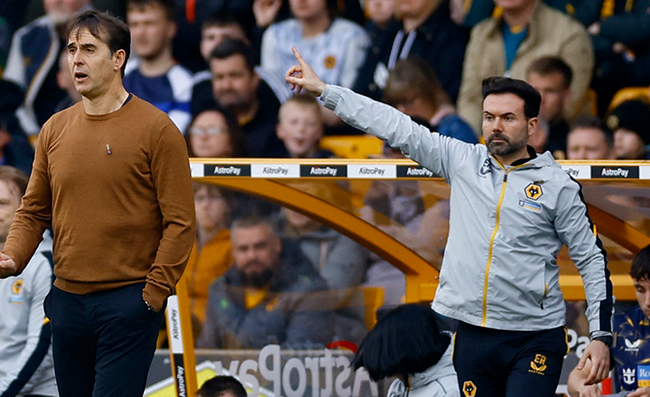
Edu points to what he achieved at Wolverhampton Wanderers with Lopetegui as soon as they took over.
“What we did there was making sure that, ‘Okay, what do we need here? We have to stop leaking goals because otherwise we are going to go down.’
“So we started to install this resilience to the players with modified games in the training sessions based on how to cope with pressure, how to cope with the scoreline. Incentivising the importance of the 0-0, the importance of if we are 1-0 down, make sure it doesn’t go 2-0, make sure we are competitive and we get to the last 10 minutes of the game only 1-0 down, because then with the quality we have with set pieces, with any other factors, we can get the equaliser.
“It was all about building that resilience, building that team environment and building that, I would say, unselfish scenario. When you are in there, when you are in the mud, when you are making sure that every point counts, no one can be selfish.”
From day one, he says a new coach should make an effort to get to know the players, and to understand how they learn – and that’s regardless of the age group, because even seasoned senior professionals are still learning.
“He might have a hundred games under his belt, and maybe he’s played three years in the Premier League, but he can still grow as a player. He can still learn, he can still develop and do different things,” he says. “The key factor is to go there from day one and make sure that you make that player understand that you are there to make him better and to make sure to understand what kind of coaching they need.
“Of course they’ll have to play by our rules. Of course we’ll need to have our discipline. Of course they’ll have to understand that this is the way the team wants to play and they have to be in agreement with the game plan.
“I don’t live in utopia where we are going to sit down and play the guitar and then just sing songs. But I do believe that when you provide an environment of learning, development and growth mindset, you get the buy-in from the players, because they see that, okay, this guy is here to help us, this guy’s here for the right intentions and the right ethos and the right motive, so I’m going to give him a chance.”
Acting as influencers
But fascinatingly he also thinks that this is the case in every industry, not just football, with every leader coming into a new company facing the same challenges when managing their staff.
“Maybe they were employed by a different leader with different perspectives,” he says. The starting point is making sure the group understand the key messages: “This is how we are going to improve. This is how we are going to get better, and this is how we are going to have a chance to win.
“When you focus on improvement, development and being competitive, very rarely you don’t get the backing of the athlete, the player. Of course, yes, there is always those who moan – ‘These strategies, this game plan, this style of play is not suitable for my qualities.’
“That’s part of being a coach - the communication skills of how you can potentially influence those players to understand.
“I’ve never come across any player who is not an intelligent woman or man. Influencing doesn’t mean I’m going to make them believe that what I say is the right thing. Influencing is I’m going to make them believe that actually what I’m doing here can still positively impact their game and their careers.”

Get a free issue
Latest Issue

Subscribe Today
Editor's Picks
Turning defence into a fast attack
Attacking transitions
Deep runs in the final third
Using the goalkeeper in build-up play
Intensive boxes drill with goals
Penetrating the final third
Creating and finishing
My philosophy
Pressing initiation
Coaches' Testimonials
Alan Pardew
Arsène Wenger

Brendan Rodgers
Carlos Carvalhal
José Mourinho
Jürgen Klopp
Pep Guardiola
Roy Hodgson
Sir Alex Ferguson
Steven Gerrard
Get a free eBook
Coaches' Testimonials

Gerald Kearney, Downtown Las Vegas Soccer Club
Paul Butler, Florida, USA

Rick Shields, Springboro, USA

Tony Green, Pierrefonds Titans, Quebec, Canada
Join the world's leading coaches and managers and discover for yourself one of the best kept secrets in coaching. No other training tool on the planet is written or read by the calibre of names you’ll find in Elite Soccer.
In a recent survey 92% of subscribers said Elite Soccer makes them more confident, 89% said it makes them a more effective coach and 91% said it makes them more inspired.
Get Monthly Inspiration
All the latest techniques and approaches


Since 2010 Elite Soccer has given subscribers exclusive insight into the training ground practices of the world’s best coaches. Published in partnership with the League Managers Association we have unparalleled access to the leading lights in the English leagues, as well as a host of international managers.
Elite Soccer exclusively features sessions written by the coaches themselves. There are no observed sessions and no sessions “in the style of”, just first-hand advice delivered direct to you from the coach.
