ZOOM Q&A WITH KEITH ANDREWS - FEB 25 - DETAILS HERE

 close
close


 LOGIN
LOGIN
Great expectations
In his latest feature for Elite Soccer, John Allpress – former assistant head of academy player and coach development at Tottenham Hotspur – explores how coaches’ expectations can impact on the way their players perform


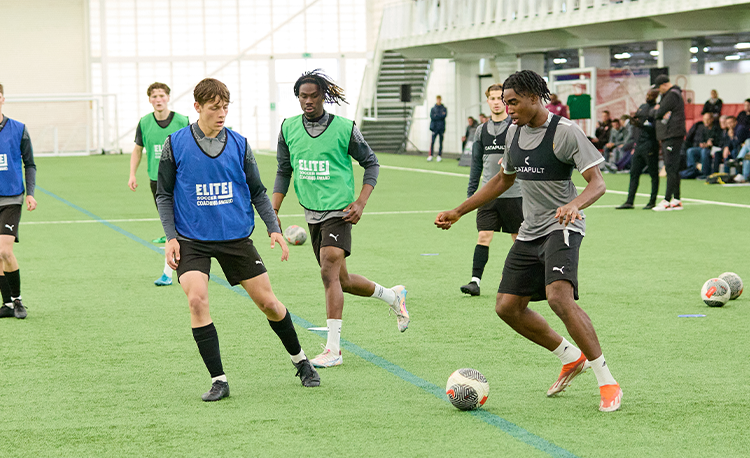
Coaches’ expectations can significantly influence what they think of a player’s performance. It is vital a coach has realistic ideas of what an individual is ready to produce in training and matchplay, as experience alone can have a significant impact on performance in any specific set of circumstances. For example, a player taking part in their 100th league match is in a very different event physically, psychologically, socially and emotionally from one playing in their first.
Experience counts and the pressure of inexperience is real. Nobody plays better under pressure. The very best and the more experienced players know how to maintain their performance levels. The trick is not to play worse.
The training and match environments are multifaceted ones with actions being contingent upon a very broad range of interconnected and interacting factors that go way beyond the traditional psychological, social, physical and technical domains.
A player’s performance will depend on the type of event (a league match, knock-out, part of a tournament, friendly), the opposition, the quality of the squad available, experience, age, fitness, readiness, form, climate, weather or how long you have to prepare.
The coach’s job remains the same, though: to move the players from not knowing to knowing stuff and to teach them what to expect and what’s expected of them as they progress along their development pathway.
Hard work and communication
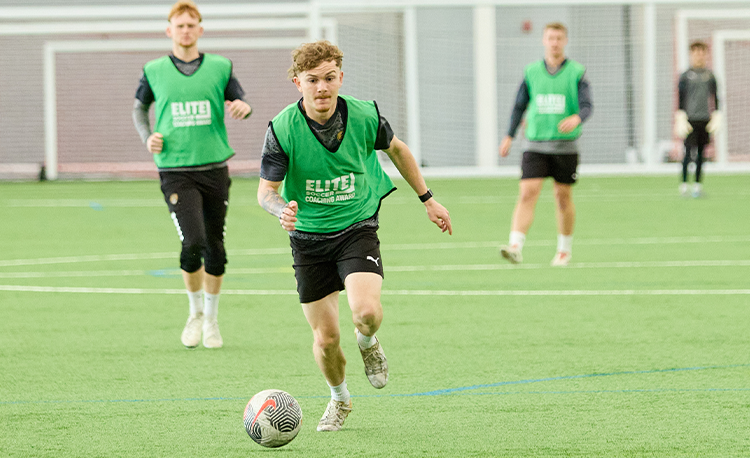
The key areas of a coach’s expectations of their players’ performances traditionally revolve around effort and attitude. The coach will look out for hard work, dedication to the task in hand, punctuality, a deliberate focus on practice and a positive attitude. They will often reward effort and intent as much as skilful decision-making and execution of techniques.
Players will also be expected to understand their roles within the team and do their jobs, make smart decisions in and out of possession and apply in matchplay what they have learned and practised in training regularly.
Helping players to manage their nerves, maintain concentration and focus and demonstrate resilience when they make mistakes or things go wrong is much harder for the coach to assess in the heat of battle. Encouraging words are helpful but 70 per cent of communication is non-verbal, so behaviour and body language are crucial to any conversations the coach may have with the players either privately or in team meetings.
Related Files
Quick decisions
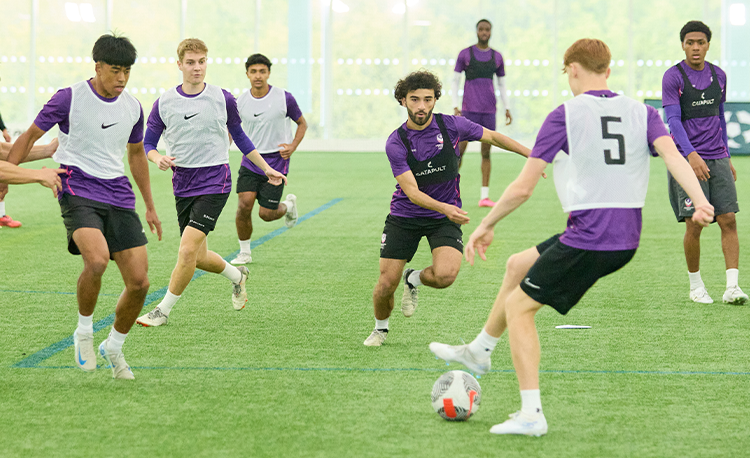
In football, nothing ever happens in exactly the same way more than once, but many very similar things happen a lot, and success or failure often depends on playing well in the big moments. Everything can change in a split second. But smaller moments when the right decisions have to be made and techniques executed to a high standard matter too. These things can be unexpected and occur very quickly sometimes without a player realising their significance at the time, like a tackle, block or interception that regains possession, or a simple one-touch pass that retains it.
When judging a player’s contribution to the team’s performance and the impact of an individual on the game, the coach must be on the lookout for such actions - especially if a player is the spider in the web, whose influence is often only noticed when they are not there.
Also, when a player is young and has been encouraged to play with courage, to try things and not be concerned so much with mistakes, the coach must be ready to praise effort and intent to a greater degree and note that when assessing the overall performance.
When things go well, they look effortless, but even for a youngster, who lacks consistency, a lot of unseen work and preparation will have gone into being able to execute such actions to a high standard. But that skilful moment is not owned by the player or combination of players until it appears in training or the match, because nobody has seen that exact moment before. It may be fleeting but still deserves merit and admiration.
Not all actions are of equal consequence. A hat-trick in a friendly against lesser opposition is still an achievement, but does not bear comparison to scoring the winning goal in a World Cup final. Nevertheless, when big moments appear, players must be ready to take advantage and step up to the plate because when they do, they inevitably get better. The youngster scoring a hat-trick against lesser opposition should be practising finishing for the time the opponents are tougher and more skilful, and the coach should note that about the performance.
Making mistakes
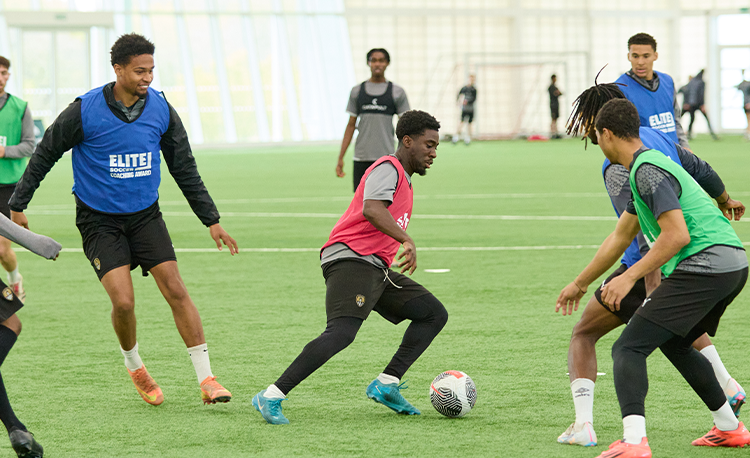
To help players prepare to manage big moments as they occur training should resemble the reality of matchday to a large extent as much as possible. Football can be messy and chaotic and to be effective players have to regularly make the right decisions and skilfully execute the right actions at the right time under pressure. In this challenging environment, it helps if players can stay focused and direct their attention to the next moment, next task and next action. So if they do make a mistake they can quickly reset and aim to make their next pass, next interception or next header a good one.
The coach can help the players learn to manage these moments in the game by focusing their attention on specific actions they have to execute inside the game situation. These take the form of challenges that do not compromise decision-making. By using the right language, the coach can focus players’ attention on the next action. For example:
- Look for opportunities to pass forward off one or two touches
- Be ready to play forward as a first action
- Try to get the ball back without tackling.
These challenges and ones like them can be directed to individuals, units or the whole group during a 20-minute training block where messiness and chaos is actively encouraged or in match play where it can occur naturally within the flow of the game. If the coach wants skilful play to become reliable under pressure, then it needs to be stress-tested so that in the big moments players can perform to a very high standard.
Every time the coach gets together with the players, they need to focus their attention on the challenges ahead and the opportunities that such challenges present. The coach should encourage a mindset of humility and confidence in the players: humility so nobody gets ahead of themselves and realise they still have to get better, and the confidence to be able to move towards those challenges as they arise. The environment should encourage players to focus on opportunity and what is possible. Mistakes should be embraced as part of a learning and practice pathway and not something to be afraid of making. This mindset will allow the players to play in the moment, play with courage and try out things in the heat of battle of matchplay, not just in training or against weaker opponents. That’s how players find out how good they can be, and when evaluating performances the coach should take these factors into account.
Matchplay moments
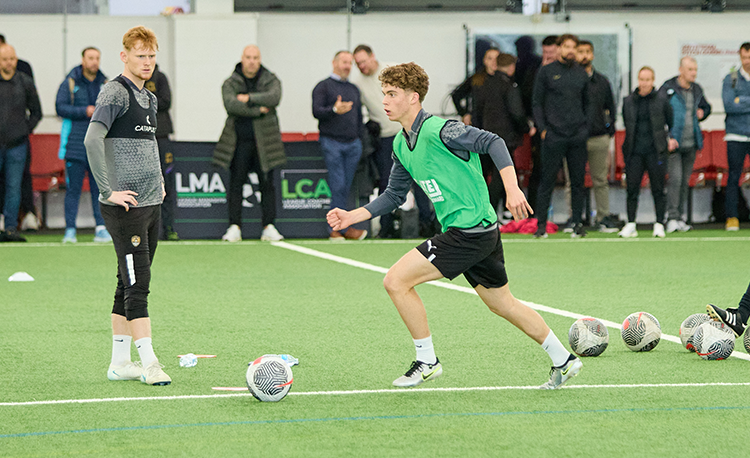
A football match or training session is a series of moments that require players to act and react. These events can happen quickly even in junior grassroots and youth academy matches. Sometimes a player doesn’t have the time to think about things but must act instinctively to retrieve a situation or execute an action. It’s important a coach does not get caught up in the expectation of what a player should do in any given situation. The coach does not see exactly what the players see so should keep an open mind. Players in the peloton sometimes catch and even surpass the early high-fliers.
A coach should know the standards required for players to progress and what good, great and elite looks like so they can challenge the players and teach to the top. Not having expectation of where players may eventually end up playing out their careers is not the same as not having standards and challenges for the current training session or match day.
Standards relate to things that are controllable and based on personal levels of performance. The questions for the individual are – how can you go home a better player? If you think your performance was worth a 7 out of 10, how can you make it an 8? The job of the coach is to help the players meet certain standards of performance that we know they are capable of and encourage them to push those boundaries and strive to progress and improve.
No matter how much planning goes into a game at grassroots, academy, under-18, under-21, senior or international level things inevitably go wrong. That’s the game. The plan always changes when it hits the pitch. For this reason, players need structure. They need to know that their coach would rather they made a mistake than didn’t try anything, and that if they do make a mistake their reset is to try to make the next thing they do a good thing.
Fear of making a mistake will shut a player down, whereas mistakes, like everything else in football, are just moments and noise to be sucked up and dealt with. For that to happen the player must know the coach has their back 100 per cent. If this is truly the case the players will know they will be free to optimise their performances without the negative impact of failure.

Get a free issue

Latest Issue

Subscribe Today

Editor's Picks
Turning defence into a fast attack
Attacking transitions
Deep runs in the final third
Using the goalkeeper in build-up play
Intensive boxes drill with goals
Penetrating the final third
Creating and finishing
My philosophy
Pressing initiation
Coaches' Testimonials

Alan Pardew
Arsène Wenger

Brendan Rodgers
Carlos Carvalhal
José Mourinho
Jürgen Klopp
Pep Guardiola
Roy Hodgson
Sir Alex Ferguson
Steven Gerrard
Latest Issue
Get a free eBook
Coaches' Testimonials

Gerald Kearney, Downtown Las Vegas Soccer Club

Paul Butler, Florida, USA

Rick Shields, Springboro, USA

Tony Green, Pierrefonds Titans, Quebec, Canada
Join the world's leading coaches and managers and discover for yourself one of the best kept secrets in coaching. No other training tool on the planet is written or read by the calibre of names you’ll find in Elite Soccer.
In a recent survey 92% of subscribers said Elite Soccer makes them more confident, 89% said it makes them a more effective coach and 91% said it makes them more inspired.
Get Monthly Inspiration
All the latest techniques and approaches


Since 2010 Elite Soccer has given subscribers exclusive insight into the training ground practices of the world’s best coaches. Published in partnership with the League Managers Association we have unparalleled access to the leading lights in the English leagues, as well as a host of international managers.
Elite Soccer exclusively features sessions written by the coaches themselves. There are no observed sessions and no sessions “in the style of”, just first-hand advice delivered direct to you from the coach.
