ZOOM Q&A WITH KEITH ANDREWS - FEB 25 - DETAILS HERE

 close
close


 LOGIN
LOGIN
Leah Blayney: Xs, Os – and Whys
In a recent Elite Soccer webinar, Leah Blayney told Ben Bartlett about her perspective on how to best develop players as well-rounded individuals, how that changes over time, and how she’s adapted to working in Japan.


Words: Carrie Dunn
“I’m always excited to be on the pitch!”
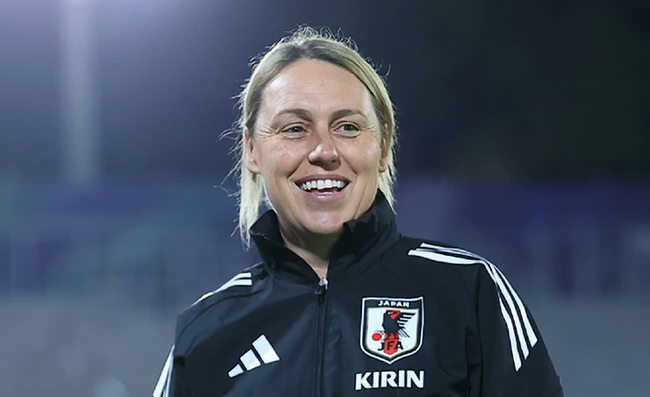
That could well be Leah Blayney’s motto. Currently assistant coach with the Japan senior women’s national team, she first started playing football at the age of six, and was one of the best prospects of her age group, making her international debut for Australia when she was 16.
Her own personal experience of elite football has given her an insight into how best to support young players in their pathways to the top – as has her professional background as a teacher, having combined teaching with coaching for many years. After the school day concluded, she would be working with the junior national teams and the Future Matildas program, for which she eventually became technical lead – with graduates including Arsenal’s Kyra Cooney-Cross and Tottenham Hotspur duo Charli Grant and Clare Hunt.
So she’s well placed to observe that, when it comes to younger players, time is crucial.
“Everybody learns different[ly], they have different personalities, they respond in different ways. It’s really that process of how can you get the best out of the player over a period of time, understanding you need to absolutely be patient with youth players. Their inconsistencies are going to exist, and it’s your job to have that patience with them and instil that belief, whereas in the senior space, it’s definitely a lot more direct. You’re working with top professionals, who have had similar experiences before and it’s a little bit more of an opportunity to guide and motivate as opposed to that development piece.”
Talent identification
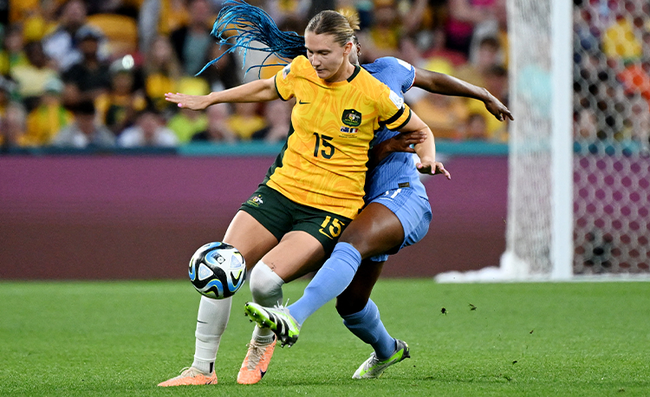
Leah’s work with the Future Matildas was a method of bridging that gap as youth players took the step towards professional football.
“It’s an extremely important program that was developed on the backend of the Australian landscape, identifying that there was a massive performance gap between the youth players stepping up into senior football and the high level match minutes and training environments that was afforded to them,” she explains, adding that the league and club system for senior players was not as developed as the academy space, meaning it was tough for young players to progress. Leah was initially the program manager and an assistant coach alongside her day job.
“I was learning from some terrific coaches in Australia throughout that process. and worked with some of our best up and coming talent, with a focus on individual player development: this wasn’t a team, this was about taking a group of individuals outside of the A-League season and working on what their deficiencies were.
“We evolved it. We added a whole layer of wellbeing services, high level of S&C servicing, sports psych, nutrition.”
Holistic development
It was also a chance for young players to learn how to live away from home – excellent preparation for the life of a professional footballer who is likely to have to move abroad to play.
But it also encouraged the young women to develop holistically, which is something Leah thinks is crucial.
“I’m certainly learning, throughout my career and journey, the importance of players having something else outside of football as well, whether it’s school education, different social circles that sit outside your football friends - I think even for our top professionals now. I work with some of those players and we look at, ‘Okay, but what else are you doing as well as your career?’ The way sport is progressing, we want to develop more holistically sound athletes, who have other things in life as well.
“When players do retire, they might not necessarily want to stay in football either. I retired as a player and went into coaching. I have team-mates who don’t want to be anywhere near the football field at the moment, and have other successful careers because they went a different road. So I think it’s important that we open up new players’ worlds to what else there is outside of football because it’s certainly not forever.”
But of course, the Future Matildas’ staff were dedicated to developing individuals as players.
“You study them, you watch them in their club environments, you watch them in your training environment and you can develop an individual player plan for that player. What is it they need to add to their locker? They’re already good players, they’re already national team-identified professionals. What is it that they need to take that next step into top professional environments overseas and what is the best next step for them?
“That guidance and that intimate knowledge of the players is what made us extremely successful during that period and during my time with the Future Matildas program - and also the aspect of understanding what makes them tick. How do you get the best out of a certain player at any time? That became an extremely important piece of it.”
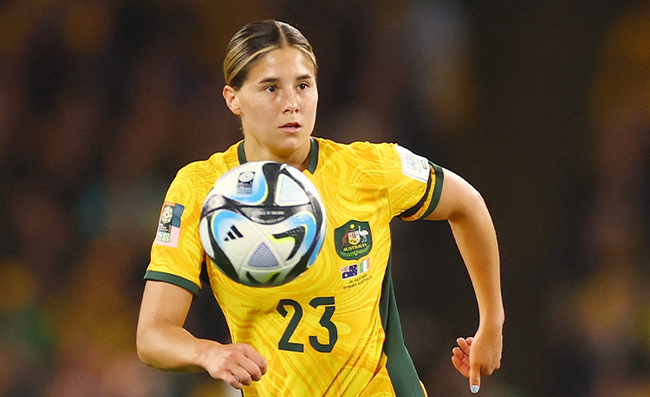
Players transitioning into professional football and joining clubs in the top leagues globally, and of course achieving senior international caps for Australia, are what Leah and her colleagues would pride themselves on – but she warns that progress is non-linear. Experienced coaches can make an educated prediction to bring together a squad of 15-year-olds they think will make it to the top – but it’s no guarantee.
“You can have a good idea. You can provide the opportunity and, a great environment. but there’s certainly going to be ups and downs in a player’s career. You can see so many youth players who at the age of 13 or 14 are quite strong, but maybe due to injury, maybe they lose a love for the game, whatever their circumstances, aren’t in the game at 20 - whereas others at 21, 22, just get it together, but the penny might drop for whatever reason, and end up professionals as well.
“The ones that do make it all have resilience and mental toughness in common.”
Related Files
Planning sessions
Leah has always been focused on detail when it comes to designing training sessions, but again she maintains that focus on the individual in parallel with the team.
“I’ll go into a training session and I’m aware of every single player, their strengths, what the needs are that day for that player. Getting to know your playing group is huge. The easy part actually becomes the session design and the topic. The hard part is how do you get the best out of who you are working with? And I think that’s really important. It’s those Xs and Os in coaching that help set you apart.
“How has somebody’s day been, to be standing in front of you? How do you motivate them? How do you get the best out of them? I think that’s extremely important, and then understanding that balance of when do you need to bring the energy?
“It’s that understanding of what your group need at any given moment in the session. If something isn’t working for a player, how do you keep them laser focused?”
Leah is a fan of using video prior to a training session, ensuring that players know before stepping on the grass what they will be working on – and why.
“The why is so important, because if you understand why you’re doing something, then you’re likely to get more buy-in as well from a playing group.
“If you just [allude] to what some of that detail might be in the learning process, then when you’re able to step on the pitch, things can happen quicker because the players have already seen what it is they’re potentially working on and might have a greater understanding of that ‘why’.”
And Leah says the head coach also needs to think about the roles played by the rest of the staff when it comes to delivering sessions and developing players.
“What’s your assistant’s role in the training session? What’s your S&C’s role? What’s your physio’s role? I think that’s super important that we bring everybody on that journey. I have a habit as a head coach, I like all my staff in the room to see the pre-training meeting as an example, because I want them to feel a part of that journey. Now, everybody’s different. Somebody might say, no, that makes the room too crowded, and it’s up to you as an individual, but my preference is that in the delivery of those topics or whatever we’re doing in training, everyone feels a part of it. It’s important that you focus on your playing group, but also the people around you as well that are going to help you execute that training session.”
She adds: “That also carries on to your individual player meetings as well, and other processes you might have in your environment. You have to have enough value yourself to understand that maybe you are not the best person to deliver a message or a topic at a different time, so being able to delegate that to an assistant coach, or another technical staff member in your team, is extremely powerful.”
Commitment and discipline
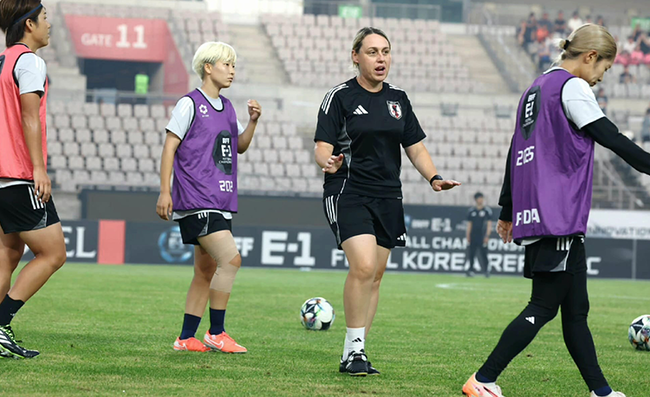
Leah is currently assistant to head coach Nils Nielsen, the first foreign coaches to be involved with the women’s national team in Japan, and in their first tournament with the side they won the SheBelieves Cup.
Japanese players, she says, have a commitment to daily improvement.
“It’s just that day-to-day commitment to just getting that little bit better and focusing on those individual techniques and that level of discipline where they show up and they’re ready to train and they have an absolute commitment to that football environment,” she says.
Leah knew Japan as a set-up well from having played and coached against them previously, so that transition wasn’t a shock. What was a challenge was the language, which has meant she’s had to reflect on her coaching and ensure the detail she likes to convey does not become lost in translation.
“The why is so important, because if you understand why you’re doing something, then you’re likely to get more buy-in as well from a playing group”
“We’re doing very well with it. We have translators in the environment. A lot of the Japanese players have a strong level of English because they’re playing abroad and they learned it in high school in Japan. Definitely those sort of challenges we’re navigating through.”
Leah now spends a lot of time in England watching players eligible for the Japanese team – she was spotted by the television cameras sitting with Lionesses manager Sarina Wiegman at Leigh Sports Village watching Hinata Miyazawa play for Manchester United versus Chelsea - and training camps for the squad have been split this year between Japan and Europe.
“That’s what’s been a bit of a change: for Japan to have that foreign influence - which hopefully brings success and trophies to the program.”

Get a free issue
Latest Issue
Subscribe Today
Editor's Picks
Turning defence into a fast attack
Attacking transitions
Deep runs in the final third
Using the goalkeeper in build-up play
Intensive boxes drill with goals
Penetrating the final third
Creating and finishing
My philosophy
Pressing initiation
Coaches' Testimonials
Alan Pardew
Arsène Wenger

Brendan Rodgers
Carlos Carvalhal
José Mourinho
Jürgen Klopp
Pep Guardiola
Roy Hodgson
Sir Alex Ferguson
Steven Gerrard
Latest Issue
Get a free eBook
Coaches' Testimonials
Gerald Kearney, Downtown Las Vegas Soccer Club

Paul Butler, Florida, USA

Rick Shields, Springboro, USA
Tony Green, Pierrefonds Titans, Quebec, Canada
Join the world's leading coaches and managers and discover for yourself one of the best kept secrets in coaching. No other training tool on the planet is written or read by the calibre of names you’ll find in Elite Soccer.
In a recent survey 92% of subscribers said Elite Soccer makes them more confident, 89% said it makes them a more effective coach and 91% said it makes them more inspired.
Get Monthly Inspiration
All the latest techniques and approaches


Since 2010 Elite Soccer has given subscribers exclusive insight into the training ground practices of the world’s best coaches. Published in partnership with the League Managers Association we have unparalleled access to the leading lights in the English leagues, as well as a host of international managers.
Elite Soccer exclusively features sessions written by the coaches themselves. There are no observed sessions and no sessions “in the style of”, just first-hand advice delivered direct to you from the coach.
