
 close
close


 LOGIN
LOGIN
Numbers up
The session is called ‘Numbers up’ and is a two-part practice that mainly focuses on attacking principles of play. After an unopposed strike at goal, the session develops in number and builds up to a 2v2 small-sided game. The practice involves my D.O.T approach: D – direction, O – opposition, T – transition.
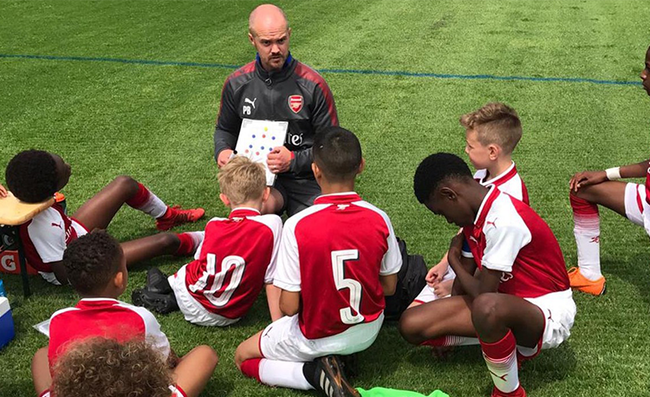
The session is called ‘Numbers up’ and is a two-part practice that mainly focuses on attacking principles of play. After an unopposed strike at goal, the session develops in number and builds up to a 2v2 small-sided game. The practice involves my D.O.T approach: D – direction, O – opposition, T – transition.
This session includes a lot of the important elements that I believe should form part of an exciting and fun practice. Providing players with opportunities to finish and work on their ball striking, as well allowing the goalkeeper(s) plenty of specific football action repetition as well, in terms of shot-stopping and distribution. The game format evolves throughout the practice but remains small enough to ensure players get plenty of opportunities to complete a variety of different football actions. I’ve delivered this session to groups from under-8s upwards. The focus should relate to the age and stage of the players, but the basic premise and session design works really well across all age groups. Coaches will also need to consider the area and goal size with regard to the specific group they’re working with.
I believe young players should feel comfortable and confident to express themselves in fun, challenging and competitive learning environments. I enjoy coaching and developing players to be innovative and creative in possession, play with pace and dynamism as well as understand and appreciate the hard work associated with being part of a collective team effort.
This is a practice that is simple to set up, and players love as it flows well within each four-minute block. It’s competitive, game-related and allows a variety of themes to be focused on (eg attacking outnumbered, defending outnumbered, passing etc). As there’s a winning team at the end of each round, players enjoy the social and psychological elements as well and always ask, “Can we play one more round?”
The session works best with smaller numbers to avoid too many players being inactive (even though the transitional element allows for brief rest before being entering the game). It is a physically demanding practice so works well at the end of a session as a “finisher” but equally well as an individual development plan session with players having specific objectives to work towards (eg focus on ball striking, defensive actions such as tackling and intercepting, or attacking actions including 1v1 dribbling and movement off the ball).
Please register to read this session plan
or subscribe today to get access to our complete library of over 600 session plans written by leading Premier League, Football League and International managers. Get access from as little as £9/month.

Get a free issue
Latest Issue
Subscribe Today
Editor's Picks
Turning defence into a fast attack
Attacking transitions
Deep runs in the final third
Using the goalkeeper in build-up play
Intensive boxes drill with goals
Penetrating the final third
Creating and finishing
My philosophy
Pressing initiation
Coaches' Testimonials

Alan Pardew
Arsène Wenger

Brendan Rodgers
Carlos Carvalhal
José Mourinho

Jürgen Klopp

Pep Guardiola
Roy Hodgson

Sir Alex Ferguson
Steven Gerrard


Get a free eBook
Coaches' Testimonials
Gerald Kearney, Downtown Las Vegas Soccer Club

Paul Butler, Florida, USA

Rick Shields, Springboro, USA

Tony Green, Pierrefonds Titans, Quebec, Canada
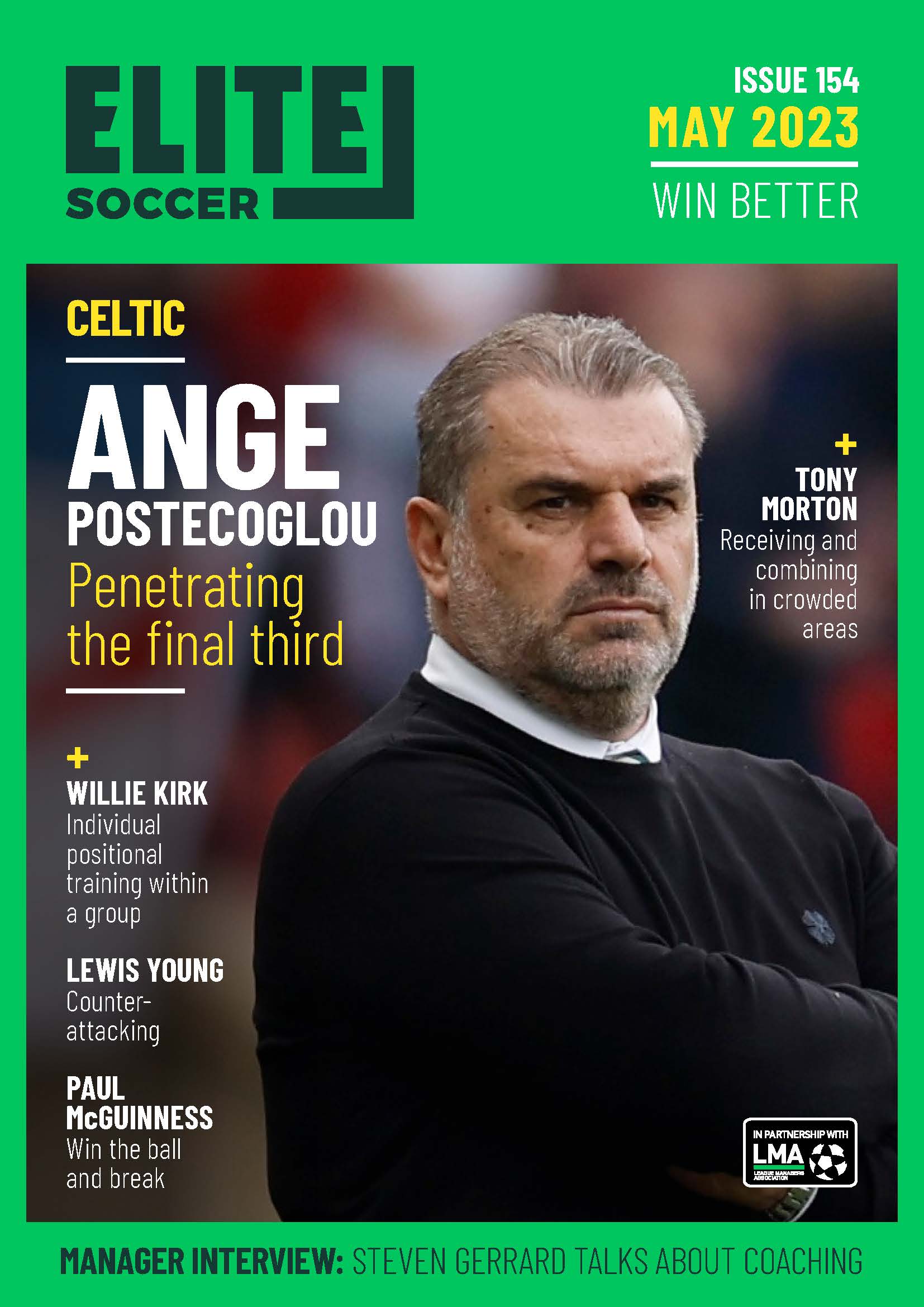
Join the world's leading coaches and managers and discover for yourself one of the best kept secrets in coaching. No other training tool on the planet is written or read by the calibre of names you’ll find in Elite Soccer.
In a recent survey 92% of subscribers said Elite Soccer makes them more confident, 89% said it makes them a more effective coach and 91% said it makes them more inspired.
Get Monthly Inspiration
All the latest techniques and approaches


Since 2010 Elite Soccer has given subscribers exclusive insight into the training ground practices of the world’s best coaches. Published in partnership with the League Managers Association we have unparalleled access to the leading lights in the English leagues, as well as a host of international managers.
Elite Soccer exclusively features sessions written by the coaches themselves. There are no observed sessions and no sessions “in the style of”, just first-hand advice delivered direct to you from the coach.
