
 close
close


 LOGIN
LOGIN
You are viewing 1 of your 1 free articles
Positive approach to defending
This session is important as it reflects on my beliefs about football, particularly the out-of-possession principles.


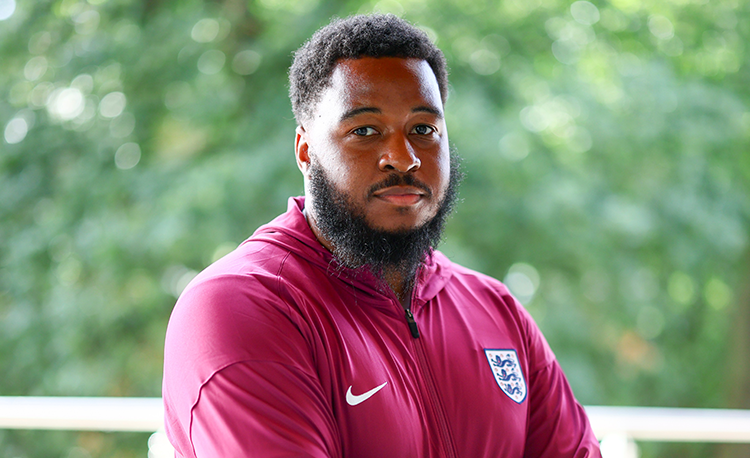
The game of football in its simplest format is an invasion game where you succeed by scoring goals and stopping goals. There is no right or wrong way to play, just impactful and effective principles set out to guide the outcomes of stopping, making and scoring goals. The more insights we have from different backgrounds and cultures about preferred principles will add to the game as it creates variations of game problems and solutions.
I want my team to be decisive and be sure of what to do and why to do it. This allows the execution of the intention to be the only focus in the moment.
This session is important as it reflects on my beliefs about football, particularly the out-of-possession principles. It’s great for player development because it gives them the opportunity to gain clarity of when and how to apply these principles while making decisions on how to defend to help them succeed and win the game.
This is all about developing a positive approach towards defending in a game. It has been created to provide relevant information to players when out of possession while engaging them psychologically to have pride in defending and doing so with a purpose.
Players really enjoy defending with a purpose and a passion, implementing individual and team tactics to defend, and having their mindset changed towards defending, although sometimes they may struggle psychologically and socially with how to react after conceding a series of goals in quick succession.
I would run this practice when I feel the out-of-possession principles are not being used well enough which could be due to the desire to implement them or the understanding and clarity of when and how to apply them. This session usually works well to introduce or refine information. Without having a clear understanding of what you’re going after as a coach, delivering this session would fall under the category of facilitating. However, this practice is set up to provide as many opportunities to defend when organised, when unorganised, with an underload or with an overload, so it’s key to know what it is you’re after, so when the picture appears you can step in and deliver the coaching points to support the players’ development.
| Area |
Dependent on age group, ability and numbers |
| Equipment |
Cones, full size goals, discs |
| No. of players |
At coach’s discretion |
| Session time |
Team game: 30 minutes |
TEAM GAME
We set up in an area to be adjusted according to the number of players available to you; consider their age and stage. Mark out the area widthways in thirds using your discs. We set up in two teams with equal numbers.
This activity runs under normal match rules, but with some special conditions. When defending, all players must occupy two of the three thirds, without a gap in between. Both teams start with ten goals. A team loses a goal every time they concede. The team with the most goals left wins the game.
In this example, we are playing 11v11 with the blue team seeking to score [1a] and the red team defending [1b].
We run this for three reps of eight minutes.
[1a]

-
Blue team in possession, seeking to score
[1b]

-
Red team defending as a whole, staying within two of the three marked zones
To progress the session, I would remove the lines which created the three zones, and add in lines running the length of the pitch to create five channels [1c]. This adaptation will allow me to see how the players maintain their distances without the width references but now try and occupy three out of the five channels without a gap in between, using the length line references.
[1c]

-
Progression – five channels
-
Blues looking to score
-
Reds occupying three channels as they defend
coaching points
What are the key things to look out for?
Throughout the session, I would be observing:
- if players are trying to delay the opposition and how
- if they are getting compact and when
- if they are providing cover and balance when there is pressure on the ball
- when around their own goal if they try to show control and restraint to defend without mistakes.
The intent would be encouraged throughout.
While all these things may be happening, my focus would be on one or two principles maximum, and this needs to be clear for the players as well. Players would then receive coaching points linked to these principles and their decisions. For example, if it was decided to apply pressure on the ball high up the pitch, we would discuss coaching points around speed and angle of approach for the player pressing the ball; the players around the ball would receive information about locking on to the nearest supporting player for the opposition and keeping them on the outside shoulder, whilst the ones away from the ball would be prepared to defend the space vacated in behind by adopting a side on body shape which allows you to go either direction quickly. I would also look at the actions before, during and after a moment.
Related Files

Get a free issue
Latest Issue

Subscribe Today
Editor's Picks
Turning defence into a fast attack
Attacking transitions
Deep runs in the final third
Using the goalkeeper in build-up play
Intensive boxes drill with goals
Penetrating the final third
Creating and finishing
My philosophy
Pressing initiation
Coaches' Testimonials

Alan Pardew

Arsène Wenger

Brendan Rodgers
Carlos Carvalhal
José Mourinho
Jürgen Klopp
Pep Guardiola
Roy Hodgson
Sir Alex Ferguson
Steven Gerrard
Get a free eBook
Coaches' Testimonials

Gerald Kearney, Downtown Las Vegas Soccer Club

Paul Butler, Florida, USA

Rick Shields, Springboro, USA

Tony Green, Pierrefonds Titans, Quebec, Canada
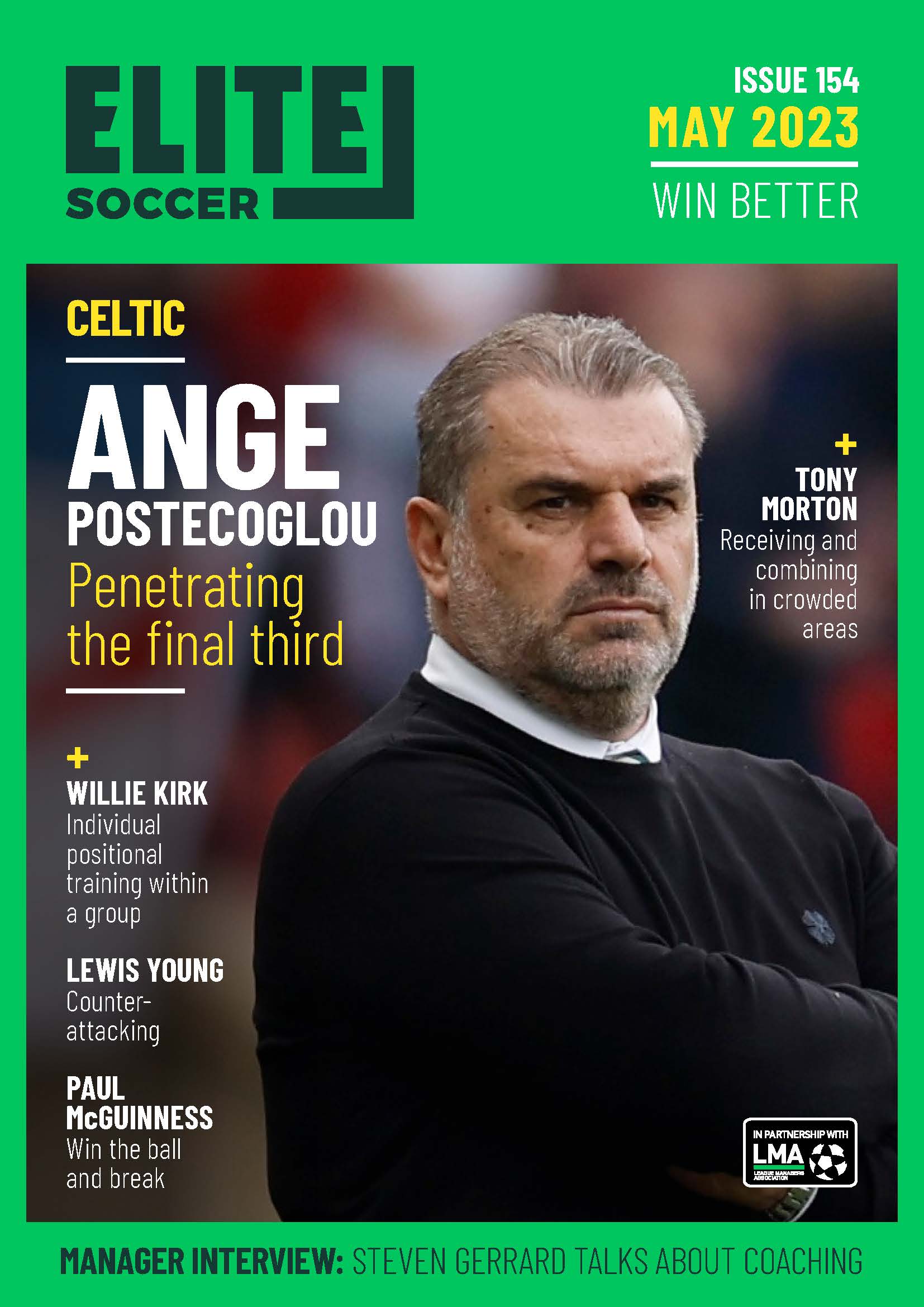
Join the world's leading coaches and managers and discover for yourself one of the best kept secrets in coaching. No other training tool on the planet is written or read by the calibre of names you’ll find in Elite Soccer.
In a recent survey 92% of subscribers said Elite Soccer makes them more confident, 89% said it makes them a more effective coach and 91% said it makes them more inspired.
Get Monthly Inspiration
All the latest techniques and approaches


Since 2010 Elite Soccer has given subscribers exclusive insight into the training ground practices of the world’s best coaches. Published in partnership with the League Managers Association we have unparalleled access to the leading lights in the English leagues, as well as a host of international managers.
Elite Soccer exclusively features sessions written by the coaches themselves. There are no observed sessions and no sessions “in the style of”, just first-hand advice delivered direct to you from the coach.
