You are viewing 1 of your 1 free articles
This session is all about build-up play against direct pressure. It includes focus on 1v1, player-to-player pressure, provoking pressure, and blind side movement.
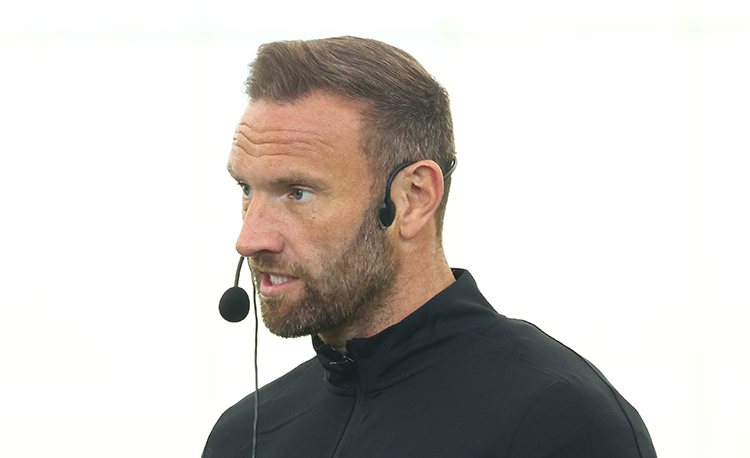
This session is all about build-up play against direct pressure. It includes focus on 1v1, player-to-player pressure, provoking pressure, and blind side movement. We begin with an introductory drill to get the players used to dealing with all these elements in small, tight spaces as well as the timing of passing and receiving, and then moves into 11v11, building up from the back against different types of pressure - some plus-one, some player-to-player. This session is intense and focused, and we would usually run it on MD-2.
| Area |
Full pitch |
| Equipment |
Full size goals, discs |
| No. of Players |
20 + 2 goalkeepers |
| Session Time |
At coach’s discretion Grid game: Up to 12mins 11v11: Up to 40mins |
We set up in an area 24x24yds split into four squares of 12x12yds, plus a 3yd end zone around the perimeter, with 17 players. Eight bounce players are around the outside (yellow), one neutral in the middle (red), with four greens and four blues competing within the square. The coach feeds in the ball.
The greens and the blues are restricted to within their grid, pressing only their opponent within that space, while the red player can move around but is encouraged to stay as central as possible [1a].

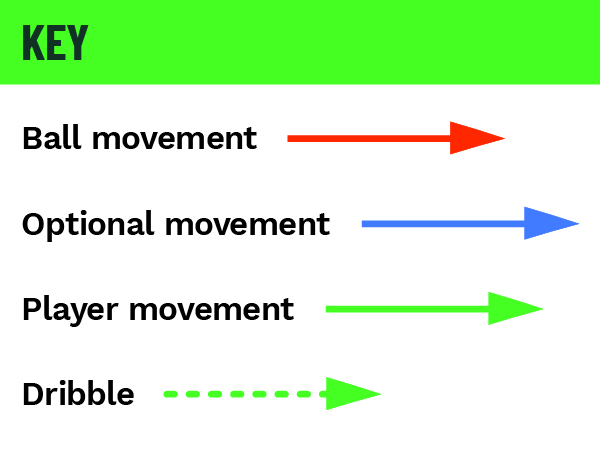
Coach serves ball in
Blues look to retain possession
Greens press within their grids
Red stays central
Yellow players on outside serve as additional neutral players
We then progress this, with outside players now restricted to two touches. Players in the square can have one pass to the outside before it has to come into the middle, while the red player in the centre can connect only with the players in the grid, and cannot pass out. The focus here is on the relationship between the passer and the receiver, with the receiver looking to move as soon as the passer is ready [1b].

Coach serves ball in
Blues and greens can have one pass to the outside before it has to come into the middle
Red player in the centre can connect only with the players in the grid, and cannot pass out
Yellow players restricted to two touches
We can then progress it further, with players having three touches on the outside, but they cannot play outside to outside; the ball has to come into the middle. When the yellows put their foot on the ball, this triggers more pressure from the defending team inside the area (green in this example). The red player in the centre is now on one touch and can still only connect with players in the middle [1c].
We run this for up to four reps of up to two minutes, layering in the content as we go.

Coach serves ball in
Red player in the centre is now on one touch
Yellows are restricted to having three touches on the outside, but cannot play to other yellows
Yellow player with foot on the ball triggers pressure from defending team
We set up on a full pitch. We move on to 11v11, including goalkeepers. In this example the blues are set up as 3-5-2, the reds as 4-3-3. Play restarts every time from the goalkeeper. The blues start by looking to create wide diamonds [2a], with the ball-side striker moving into space, with the players on the opposite side looking for the possibility of switching the play [2b]. If the reds win the ball, they have 15 seconds to transition and score, with the blues then looking to counter-press aggressively [2c].

Play begins with goalkeeper
Blues set up on a full pitch in 3-5-2, reds in 4-3-3
Blues looking to create wide diamonds
We can then progress this by marking player to player, and seeking to capitalise on the overload. With play starting from the blue goalkeeper, the red nine has a decision to make when pressing, and whichever choice they make will leave the blues with a spare player. This activity can become a little chaotic, so I encourage the players to stay intense and aggressive while the ball is in play, but the minute it stops, they should rest.
We run this for up to 40mins, ensuring players are putting the range of potential solutions into practice.

Blue strikers move into space and look to score
Reds continue to press

If reds intercept, they have 15 seconds to transition and score
Blues counter-press aggressively
“This activity can become a little chaotic, so I encourage the players to stay intense and aggressive while the ball is in play, but the minute it stops, they should rest”


In a recent survey 92% of subscribers said Elite Soccer makes them more confident, 89% said it makes them a more effective coach and 91% said it makes them more inspired.
Get Monthly Inspiration
All the latest techniques and approaches
Since 2010 Elite Soccer has given subscribers exclusive insight into the training ground practices of the world’s best coaches. Published in partnership with the League Managers Association we have unparalleled access to the leading lights in the English leagues, as well as a host of international managers.
Elite Soccer exclusively features sessions written by the coaches themselves. There are no observed sessions and no sessions “in the style of”, just first-hand advice delivered direct to you from the coach.
Live calls. Fitness programmes. Session plans. Everything the prepared coach needs.