ZOOM Q&A WITH KEITH ANDREWS - FEB 25 - DETAILS HERE

 close
close


 LOGIN
LOGIN
You are viewing 1 of your 1 free articles
Creating and assist zones
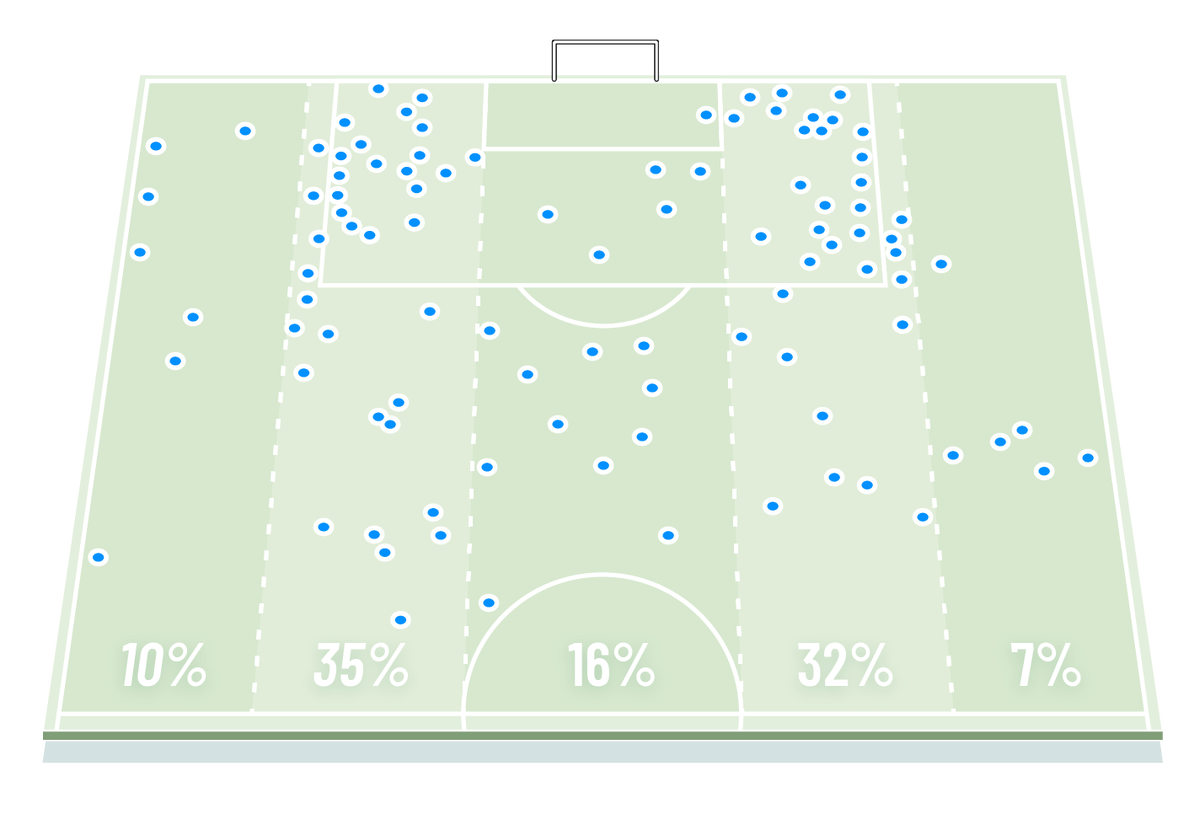
This session is from my time as manager at Cardiff City in the Championship. It is developed on some analysis done of assist zones in the league, with 17% of assists coming from wide zones (zones 1 and 5), 16% coming centrally (zone 3), 10% coming from the defensive half of the pitch and, crucially, 67% coming from zones 2 and 4, sometimes called the half-space.


This session is from my time as manager at Cardiff City in the Championship. It is developed on some analysis done of assist zones in the league, with 17% of assists coming from wide zones (zones 1 and 5), 16% coming centrally (zone 3), 10% coming from the defensive half of the pitch and, crucially, 67% coming from zones 2 and 4, sometimes called the half-spaces [Figure 1].
The session is therefore designed to work on how we as a team can be as effective as possible in using zones 2 and 4 to create and make more use of zones 1 and 5 to create.
In order to exploit these areas, we focus on both team practice to build and create, and individual practice to finish. The idea is that we then understand specific builds and patterns of play we can employ in fixtures.
We focus on, at different points of the pattern and moments of the game, using inverted wide players and inverted full-backs, linking opposite side 8s and wide players, creative runs from the 8, creating overloads, playing forwards and supporting, and the full-backs making inside runs and underlaps.
[Figure 1]
| Area |
Half pitch |
| Equipment |
Mannequins, goals |
| No. of Players |
Minimum 20, plus two goalkeepers |
| Session Time |
60mins Patterns to a finish: 20mins Individuals: 10mins In and out (not shown): 20mins Game (not shown): 10mins |
PATTERNS TO A FINISH
We set up on a half pitch, split into two groups, with two mirroring patterns working at the same time into separate goals. This means that each group works in half of the central zone, and a full half space and wide area.
Each side has a two centre backs, a 6, an 8, a full-back, a winger and a striker, replicating a 4-5-1. The mannequins are set up in a 4-4-2 formation.
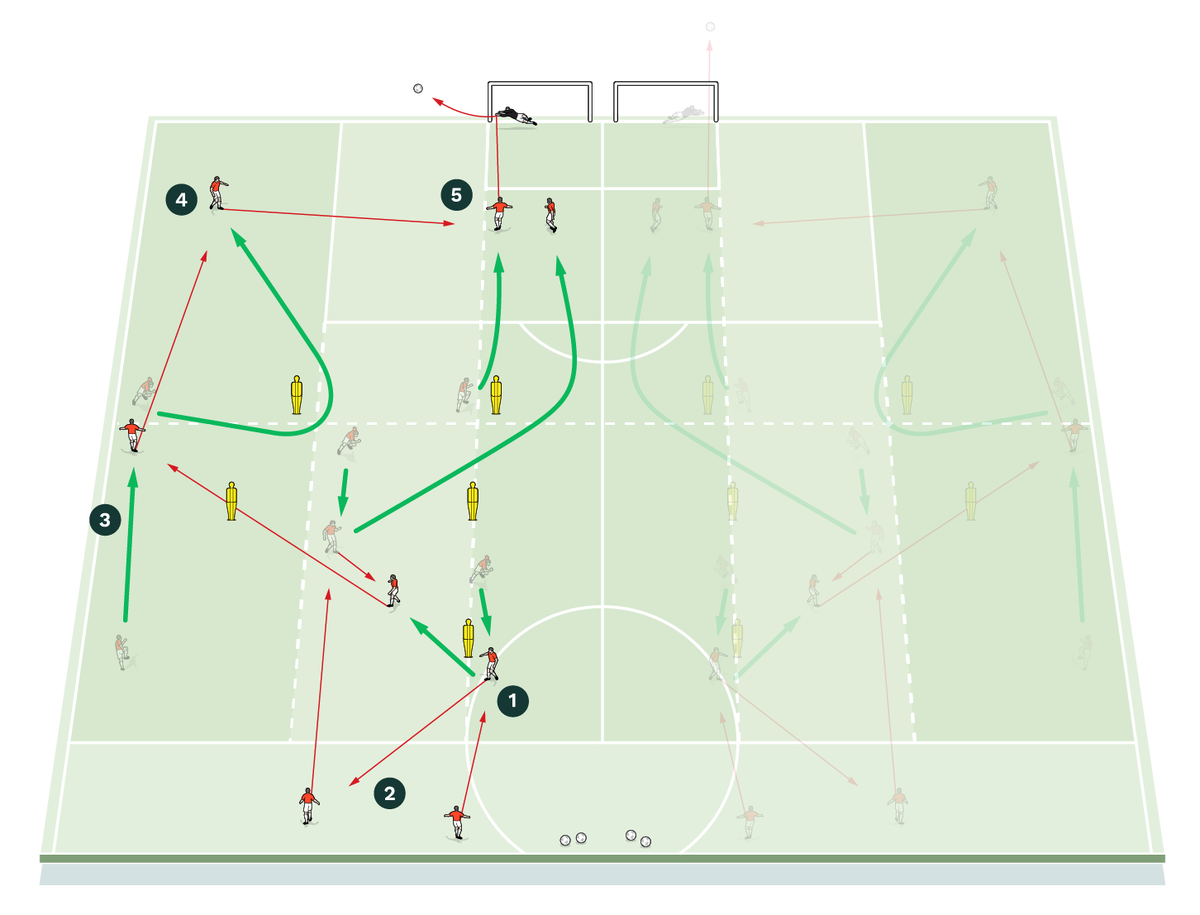
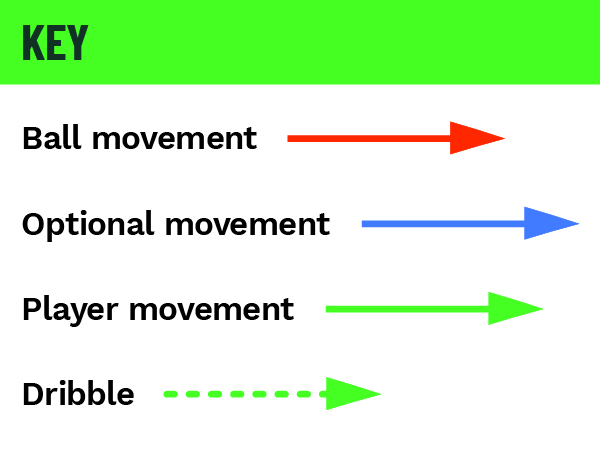
We run through unopposed passing patterns, each time building from the centre backs and ending with a finish. The first two patterns run discretely. The first pattern focuses on the wide player’s inside shoulder run [1a]. In the second pattern, the wide player drops to open up space, allowing the full-back to drift high and the 8 to come inside [1b].
[1a]
-
The ball starts with the inside centre back
-
The 6 drops in to receive, playing it to the outside centre back
-
The 8 drops in to receive and plays the ball beyond the mannequin to the advancing full-back
-
The winger, who has made inverted run beyond the mannequin receives the ball and crosses it
-
The striker and the 8 are advancing to finish
[1b]

-
The outside centre back starts with the ball, playing it to the inside centre back
-
The inside centre back bounces with the 6 who has dropped in to receive
-
The full-back drifts high
-
The wide player comes inside
-
The inside centre back plays a lofted ball to the advanced full-back
-
The full-back crosses for the advancing 8 or striker to finish
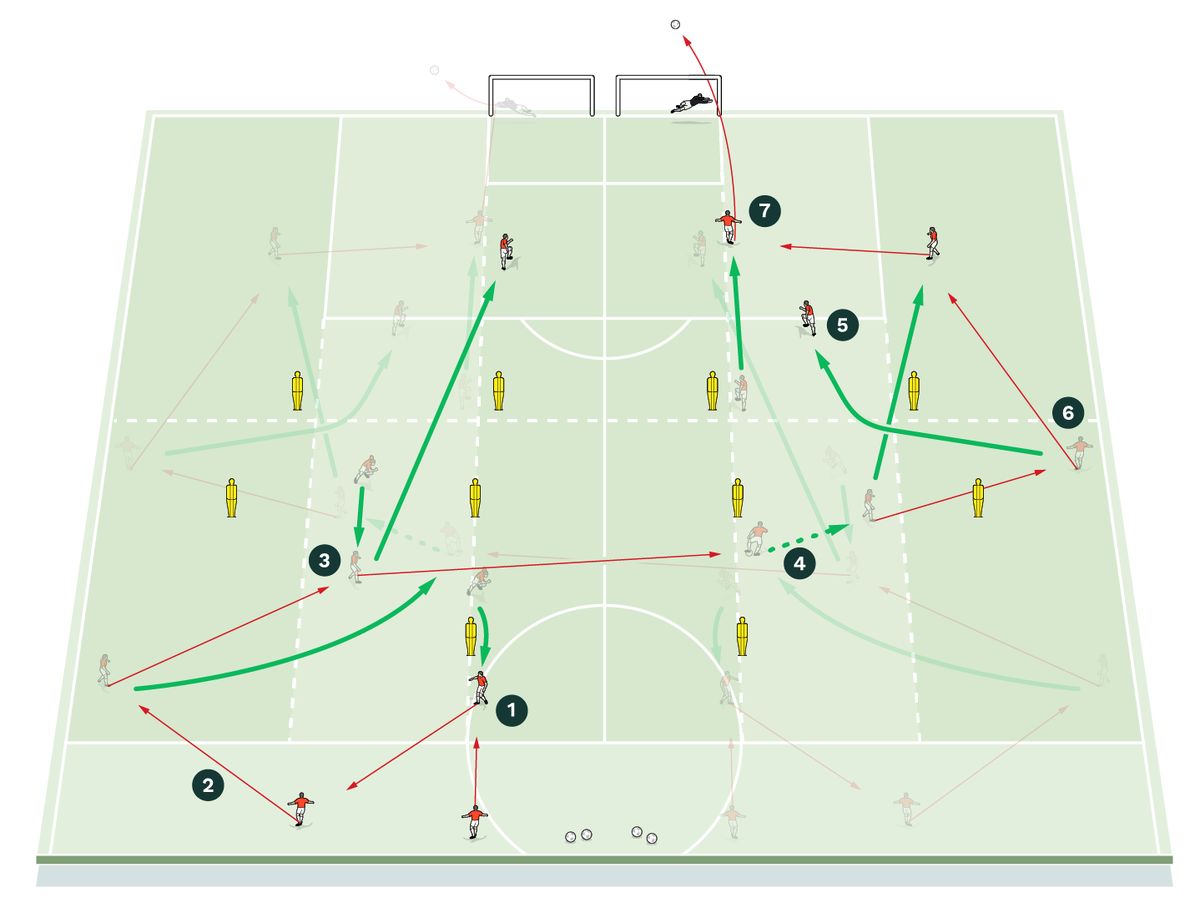
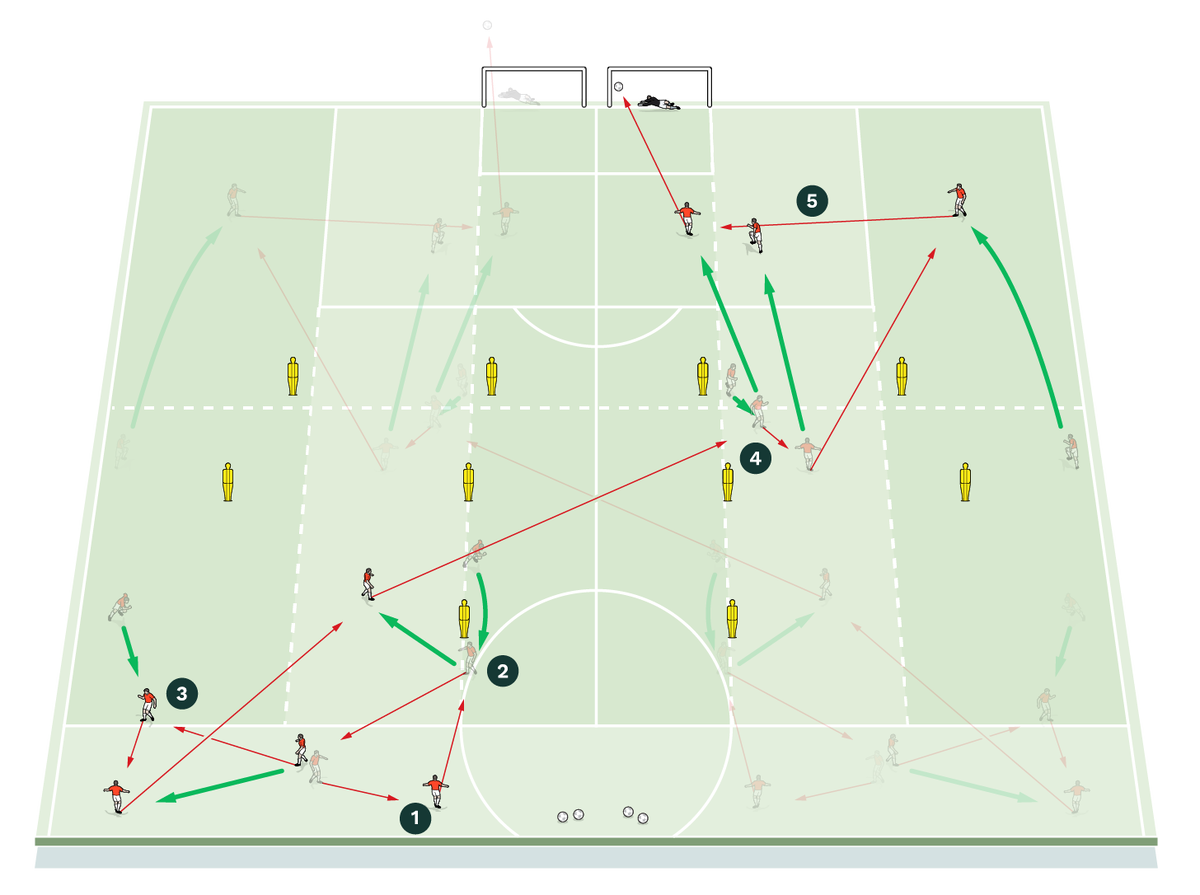
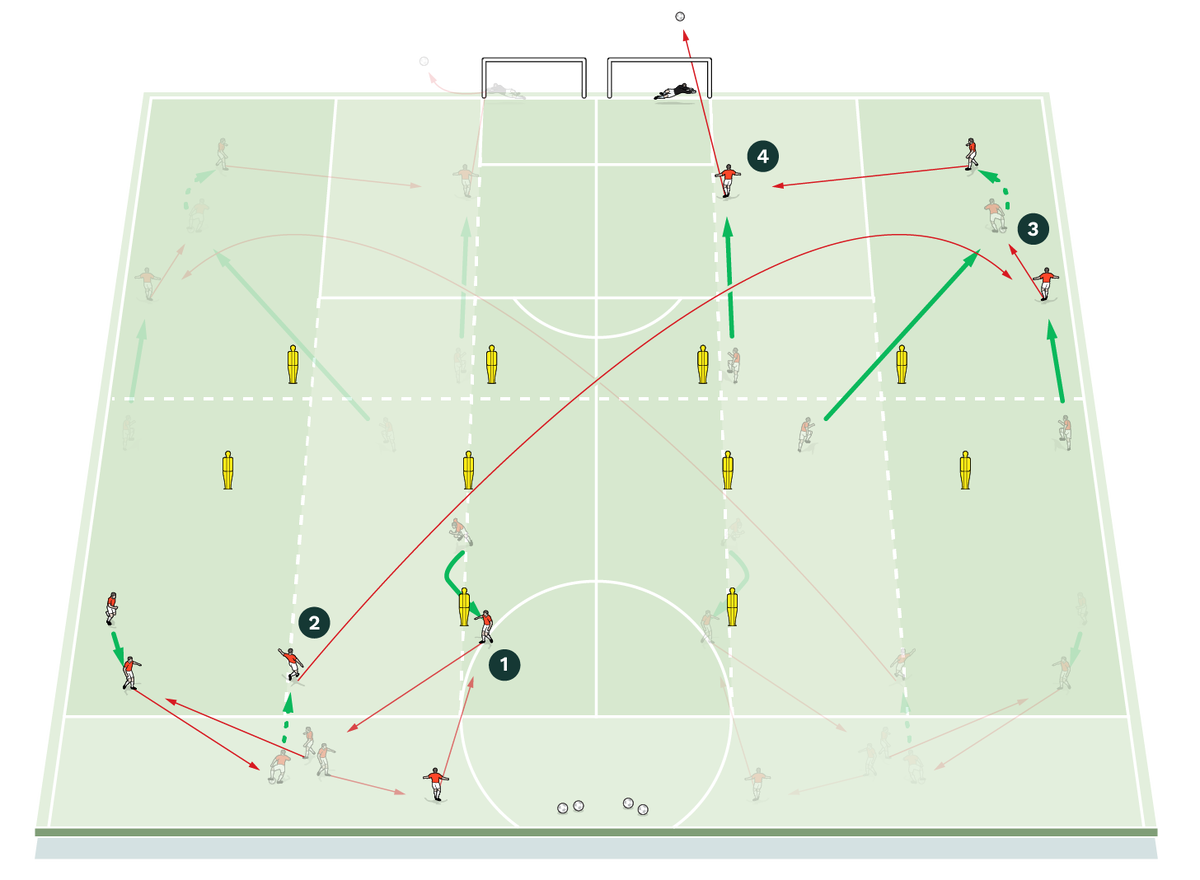
The following three patterns include a switch of play between the sides. The third pattern works on using an inverted full-back [1c], the fourth on combinations between the 6 and the 8 [1d], and the fifth and final pattern on a diagonal switch from the centre back to the winger [1e].
We run each of these patterns numerous times before moving onto the next. The first time is always about understanding the pattern – primarily where the ball goes. Then, we look at the detail and coaching points within the pattern.
We run this for 20 minutes.
[1c]
-
The inside centre back starts with the ball, playing it to the 6 who has dropped in
-
The 6 bounces it to the outside centre back, who plays the ball to the full-back
-
The full-back plays the ball inside to the 8 who has dropped in
-
The 8 switches to the 8 on the other side
-
The full-back makes an inside run
-
The 8 moves with the ball before playing it to the winger, then making an inside to out run and receiving the ball back
-
The 8 crosses for the striker, or the advancing winger, to finish
[1d]
-
The outside centre back starts with the ball, playing it to the inside centre back
-
The inside centre back plays the dropping 6, who returns the ball to the outside centre back
-
The outside centre back plays to the dropping full-back, then moves to receive it back, before playing it inside to the 6
-
The 6 switches the ball to the 8 on the other side who plays wide to the high winger
-
The winger cuts back for the striker or the advancing 8 to finish
[1e]
-
The inside centre back starts with the ball, playing to the dropping 8 who bounces it to the outside centre back
-
The outside centre back sets before playing a long diagonal switch to the advancing winger on the opposite side
-
The winger plays forward for the run of the 8
-
The 8 dribbles then cuts back for a finish from the advancing striker
INDIVIDUALS
We set up on a half pitch, with a goal and one goalkeeper. Mannequins are set as required in order
to dictate movement or skills needed to finish.
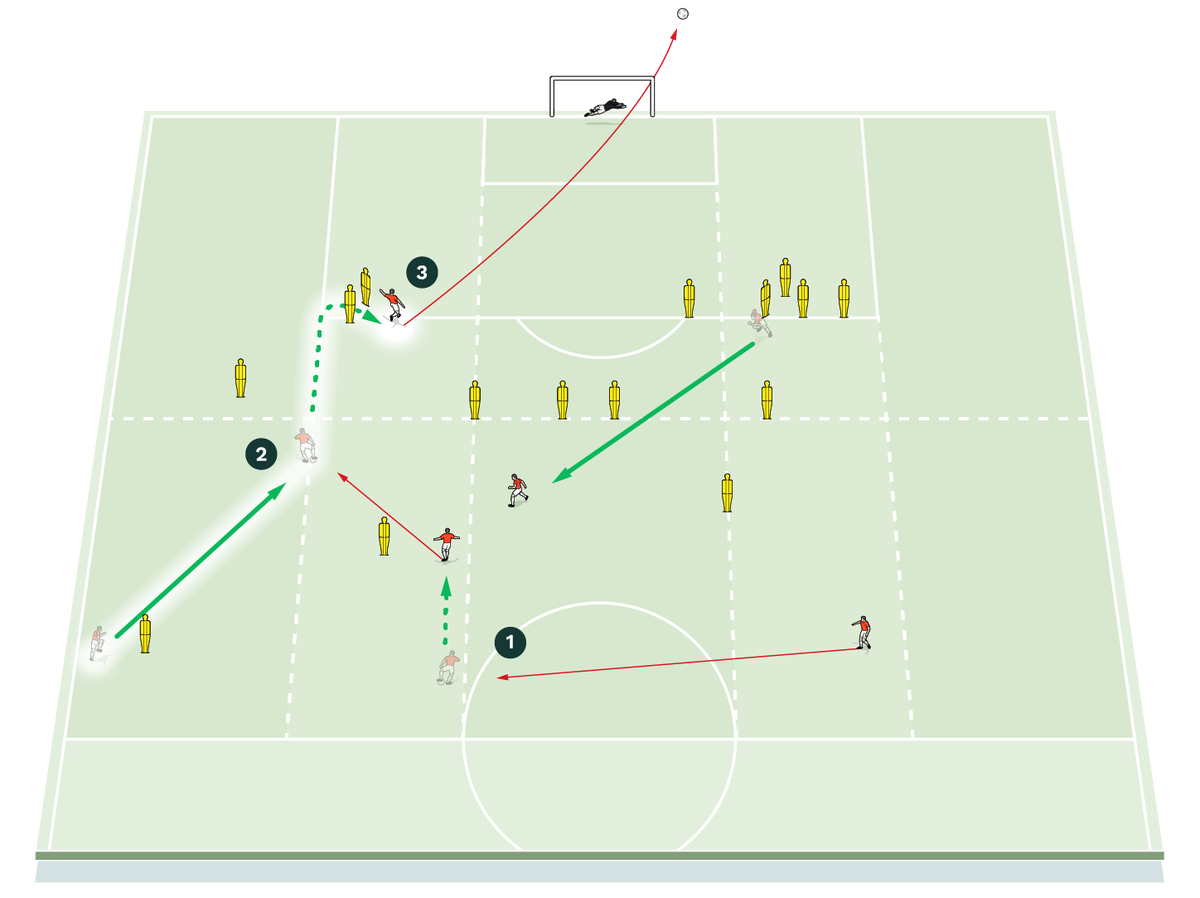
The first iteration is about runs beyond and cutting in to finish. The focus is on the full-back, who makes a run to receive the ball from inside, before dribbling through two tight mannequins to finish [2a].
The second iteration focuses on the opposite side 8 running beyond lines. The focus is on the 8, who receives from a centre back and goes to finish [2b].
[2a]
-
The ball starts with a centre back who plays to their defensive partner, who dribbles forward to play to the full-back
-
The full-back makes an inside run to receive
-
The full-back dribbles through the mannequins before finishing
[2b]
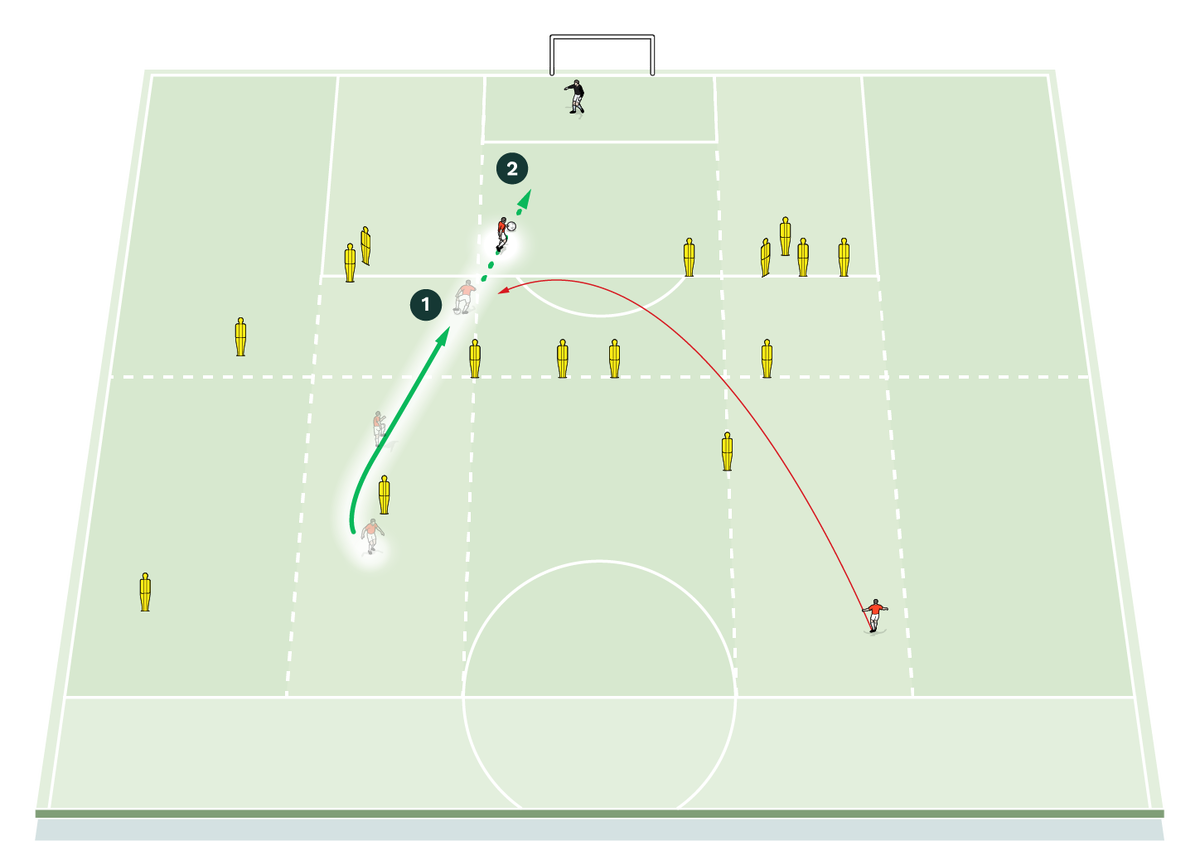
-
The 8 makes a curved run to receive beyond the lines from the centre back
-
The 8 advances into the box and shoots
The third iteration is about dribbling skills to finish, with the focus on the 8. The 8 receives from the centre back, then dribbles between four mannequins, before shooting from outside of the box [2c].
The fourth iteration works on a touch turn and finish with the focus on the striker, who receives the ball from the centre back with their back to goal and must control, turn and shoot [2d].
[2c]
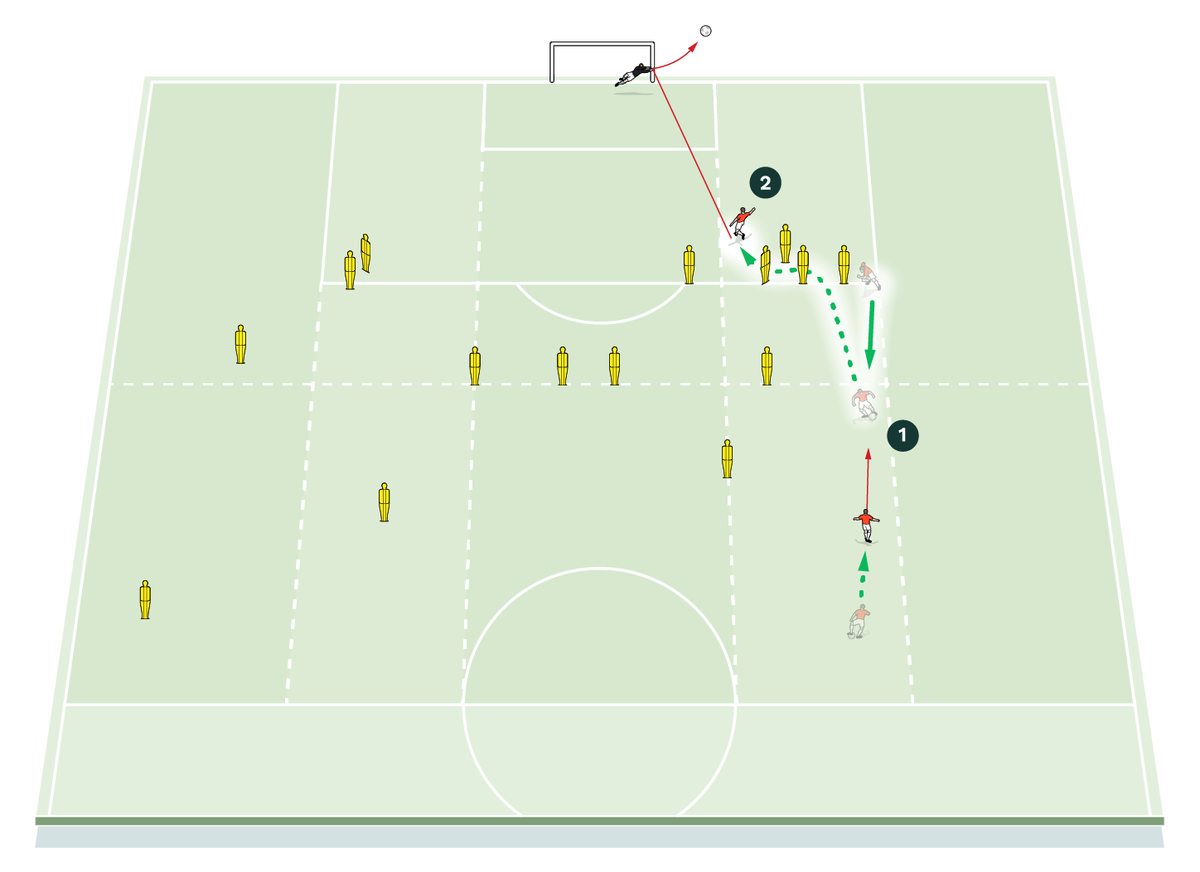
-
The centre back plays in to the dropping 8
-
The 8 turns and dribbles through the mannequins before shooting
[2d]
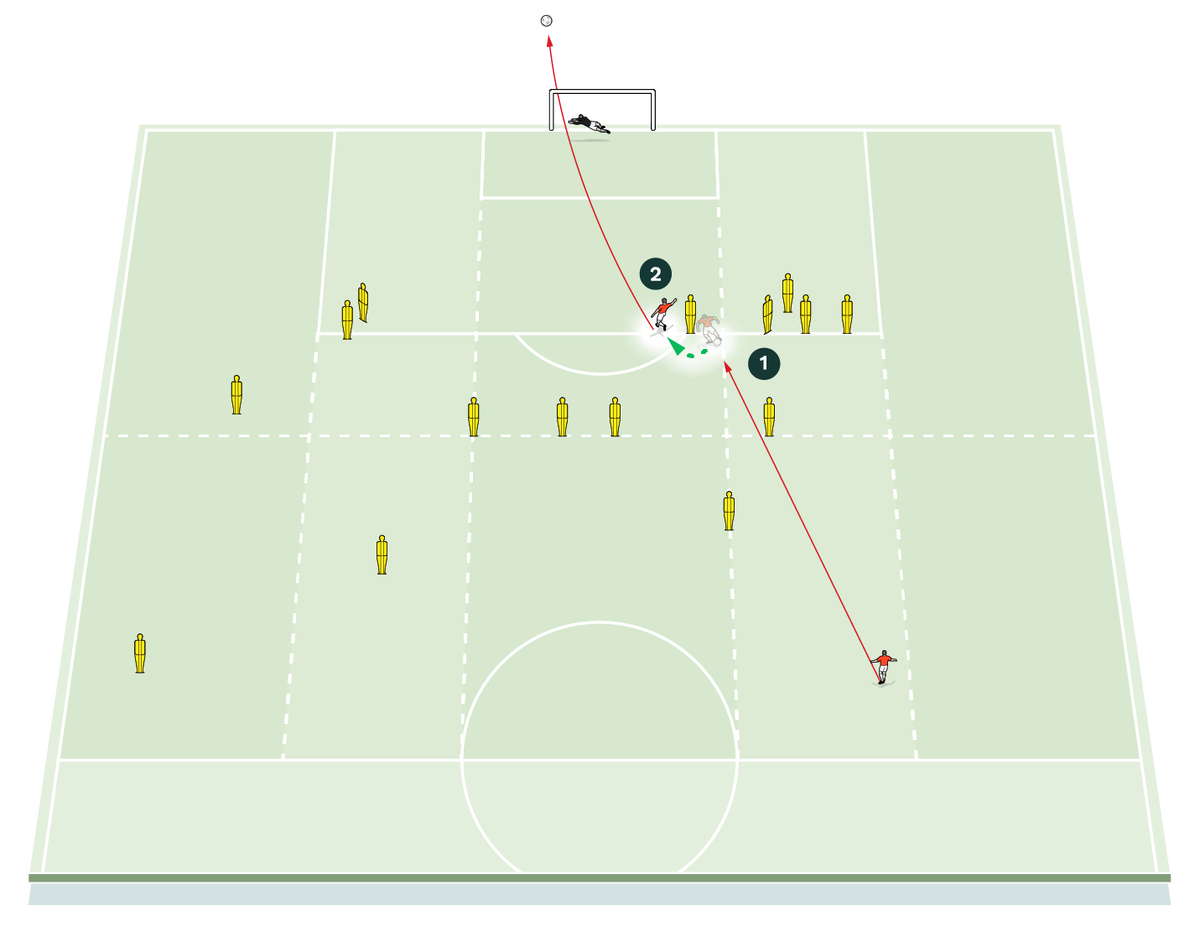
-
The centre back plays a direct ball into the striker who has their back to goal
-
The striker controls, turns and finishes
The fifth iteration works on a cross and a finish, with importance placed on balance, technique and timing. The focus is on the winger and the striker. The winger receives from the centre back, then crosses it in for the advancing striker to finish [2e].
The sixth and final iteration works on nearside 8 inside runs, with the 8 making a curved run inside to receive from the centre back and finish [2f].
We run these iterations on loop for 10 minutes.
[2e]
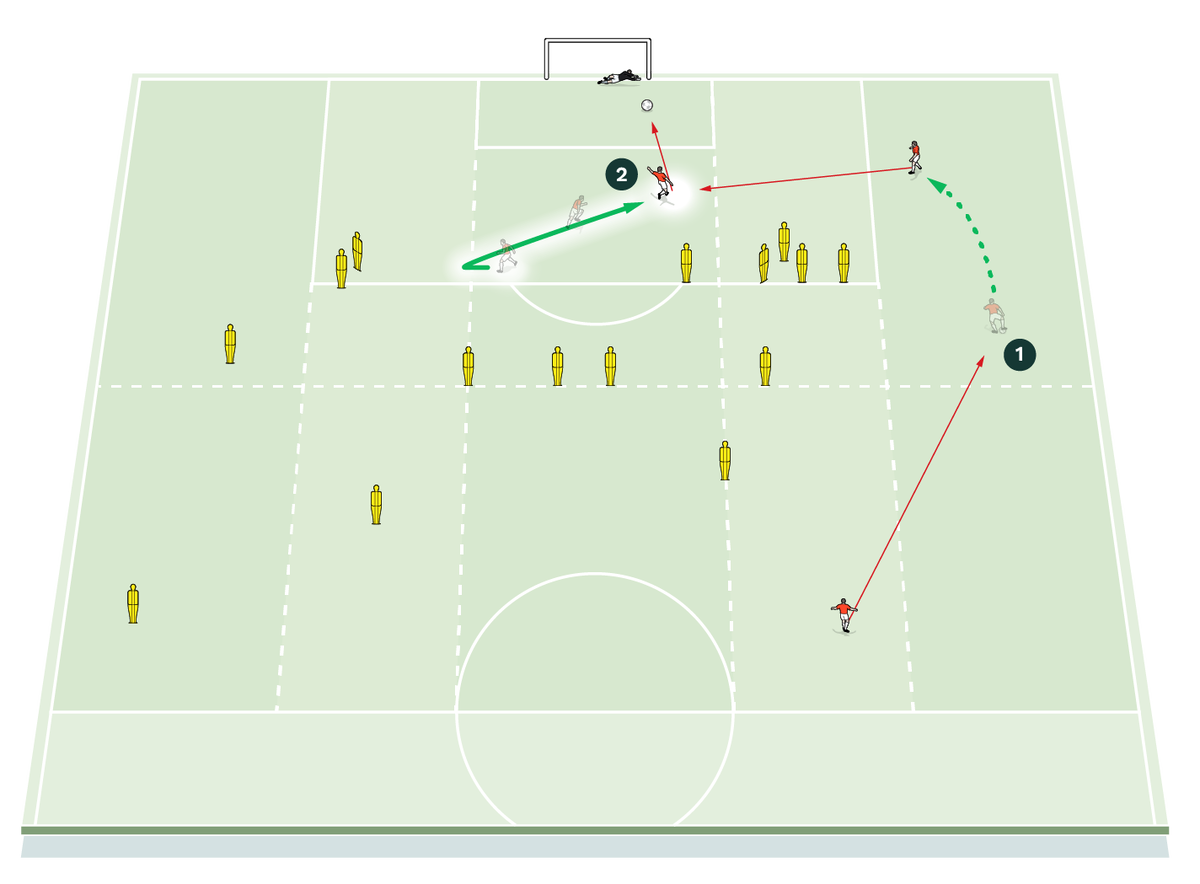
-
The centre back plays the ball to the winger who dribbles forward and cuts back
-
The striker pulls back before running across the box to finish from the near post
[2f]
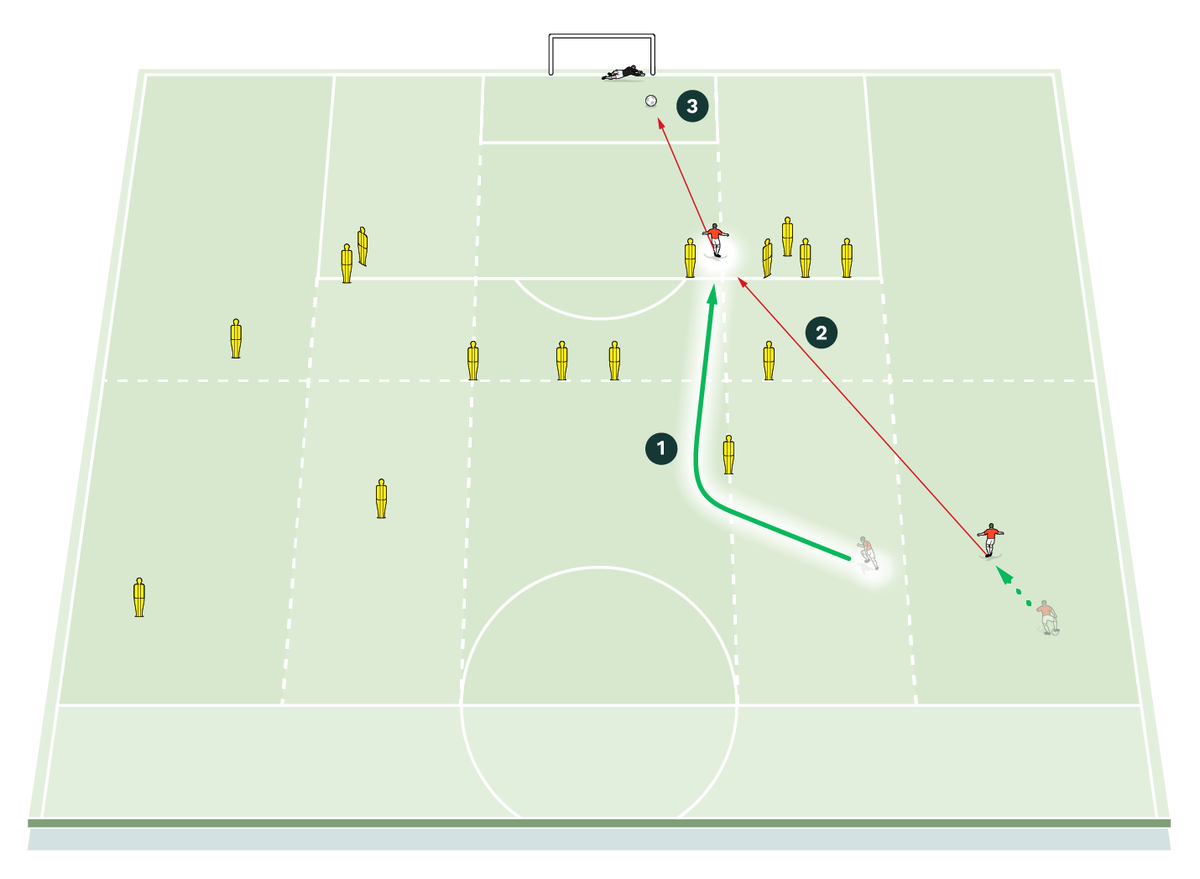
-
The winger makes an inside run
-
The centre back sets and plays a through ball
-
The winger finishes
coaching points
What are the key things to look out for?
Once the players have grasped the pattern or the practice, we then focus on the detail, including the timing, shape and speed of runs, the type and pace of the pass, body shape to receive and the type and execution of the finish.
Related Files

Get a free issue

Latest Issue

Subscribe Today

Editor's Picks
Turning defence into a fast attack
Attacking transitions
Deep runs in the final third
Using the goalkeeper in build-up play
Intensive boxes drill with goals
Penetrating the final third
Creating and finishing
My philosophy
Pressing initiation
Coaches' Testimonials

Alan Pardew

Arsène Wenger

Brendan Rodgers
Carlos Carvalhal
José Mourinho

Jürgen Klopp

Pep Guardiola
Roy Hodgson

Sir Alex Ferguson
Steven Gerrard


Get a free eBook
Coaches' Testimonials

Gerald Kearney, Downtown Las Vegas Soccer Club

Paul Butler, Florida, USA

Rick Shields, Springboro, USA

Tony Green, Pierrefonds Titans, Quebec, Canada

Join the world's leading coaches and managers and discover for yourself one of the best kept secrets in coaching. No other training tool on the planet is written or read by the calibre of names you’ll find in Elite Soccer.
In a recent survey 92% of subscribers said Elite Soccer makes them more confident, 89% said it makes them a more effective coach and 91% said it makes them more inspired.
Get Monthly Inspiration
All the latest techniques and approaches


Since 2010 Elite Soccer has given subscribers exclusive insight into the training ground practices of the world’s best coaches. Published in partnership with the League Managers Association we have unparalleled access to the leading lights in the English leagues, as well as a host of international managers.
Elite Soccer exclusively features sessions written by the coaches themselves. There are no observed sessions and no sessions “in the style of”, just first-hand advice delivered direct to you from the coach.
