ZOOM Q&A WITH KEITH ANDREWS - FEB 25 - DETAILS HERE

 close
close


 LOGIN
LOGIN
You are viewing 1 of your 1 free articles
Leam Richardson: The culture club
In a recent Elite Soccer webinar, the former manager of Rotherham United and Wigan Athletic spoke to John Allpress about the way that his background in social work has shaped his perception of coaching – and why creating a philosophy isn’t just a slogan


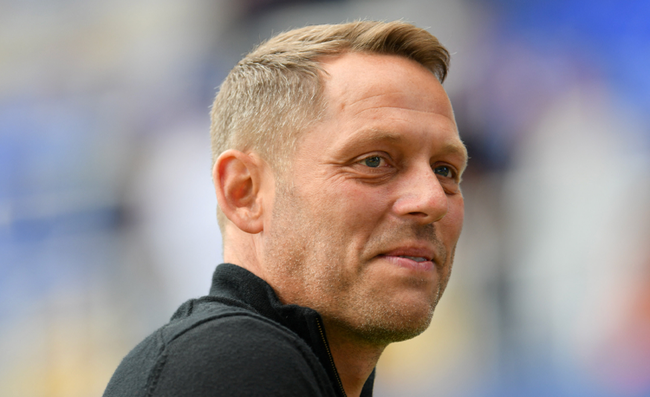
Words: Carrie Dunn
Leam Richardson’s career path might not be the traditional one expected of a coach.
But he thinks that his experience in social work has actually helped him in football too.
He began his degree in social work towards the end of his playing career at Rotherham United, and says that understanding that sector has shaped how he approaches coaching and management.
“Within the industry of social work, you meet people who have got a story to tell, who’ve got really strong challenges within life,” he explains. “I find myself carrying that into football. The industry that we’re in, people see footballers and managers as footballers and managers – they don’t see them as people sometimes. That’s one take that I feel quite strongly about. I try and see the person first, not just the athlete. Players and staff, when they feel valued off the pitch, they’ll perform better on the pitch.
“It certainly helped me with communication, listening. I focus strongly on values, creating an environment where players and staff feel heard, respected, whether that’s through feedback, encouragement, or even within conflict.
“I try and see the person first, not just the athlete. Players and staff, when they feel valued off the pitch, they’ll perform better on the pitch”
“In social work you’re often put under pressure with certain situations where it can be life and death sometimes, with abuse of alcohol, drugs, et cetera.
It can be quite stressful. You develop a resilience, a solution-focused mindset, which, again, transfers directly into football. There’s always something around the corner, which is set to test you as a manager. You’ve probably got a hundred decisions to make within the first hour that you walk into the training ground sometimes.
“It’s given me a strong sense of empathy and inclusivity. You try and build a culture - people talk about philosophies and culture and it doesn’t happen overnight.”
Setting clear values
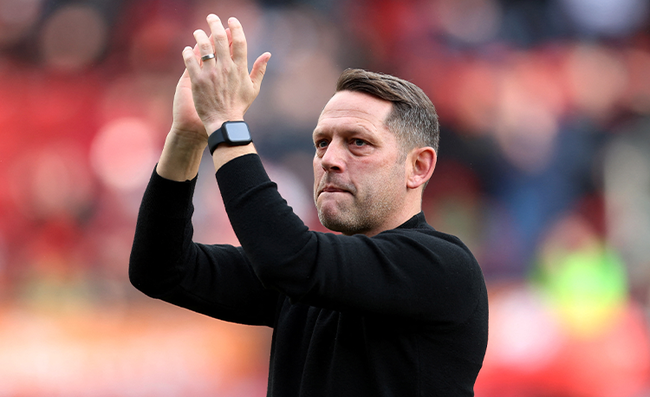
An empathetic, inclusive culture, he says, creates a sense of belonging and trust, and that drives success. It was something he worked to build when taking over at Wigan Athletic – a time he recalls “as a crisis within a crisis”, with the club in administration during the Covid-19 pandemic.
“We had a really good team, a lot of assets, and then we went into administration, and to see things fall around you and try to lead, that is a task within itself.
“When the [new] ownership came in, they certainly asked me to rebuild the culture and put a philosophy within the club. You’ve got to start by setting clear values, and stay true to yourself because people can see right through that [if you don’t].
“We certainly set out professionalism, respect, accountability, honesty, integrity, all the buzzwords. But words can mean anything really. It’s got to be driven each day and it’s got to be a habit, it’s got to be consistency each day.”
He adds: “I use a little analogy… everybody’s got to be on the same bus. Everybody’s got to be on that same pathway for success, however that may look. Sometimes success looks like you want to get promoted, to win the league. Sometimes success means your sustainability and you’ve got to stay within the league.”
Desire to learn
But Richardson has also sought for inspiration even beyond his own studies.
“We’re all thirsty to learn, especially in the football industry. It doesn’t stand still. On the Pro Licence, there’s a lot of talk about elite performing environments, and when you do look into that, there’s so many around, I did a paper on the air ambulance; I was fortunate to work in Wigan, which was a very successful rugby town, as well..
“Drawing from outside the game, it’s been really important in shaping a philosophy as well as the culture. The Air Ambulance service, I’ve learned how vital that clear communication is, within seconds. You need to be precise, you need to do it with calmness. You need to perform under pressure because you know you’ve got seconds to make these decisions – and the lessons transfer directly onto the pitch. We talk about trust, where players need to make quick decisions, and rely on yourself that you’re making the right decision, [and] they can carry it through.
“In rugby, [they have] discipline, respect, and putting the team first - they seem to have that way ahead of football… making sure everybody feels empowered, and every player understands their role, whether you’re playing one week or sat in the stands injured. Every restart, every action within the game should have a meaning; it shouldn’t be a reaction, we should be proactive, whether that’s throw-ins, whether we build, whether we press, how we press, et cetera. It certainly contributes to each and every game.
“For me, these external influences, they’re not just side notes, they’re central to how I coach, how I manage.”
And ensuring that everyone buys into the philosophy created by the head coach – and that they live it every day – will feed into success, Leam says.
“Every high-performing environment, you’ve got to have non-negotiables and you’ve got to believe in that as well.
“Everybody’s got to believe in that. Every now and again, you’ve got to help somebody get back on the track because everybody has setbacks, especially when we’re in an industry which is based so much on emotion and results. You’ve got to have some consistency and sustainability and I think the clubs that have that, they’re the ones that have success.”
Related Files
The importance of resilience
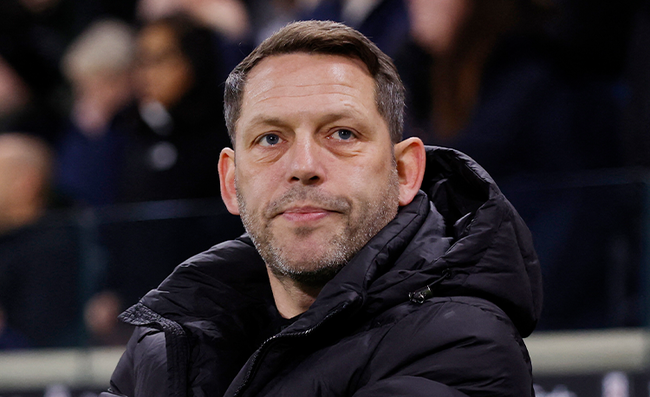
He says in his early days as a young player, the most important lesson he learned was resilience, and understanding he needed to work hard and dedicate himself to his profession.
And he also took plenty of knowledge from his coaches – some of whom inspired him with their leadership and individual player management, and some of whom had approaches that he knew he did not want to take into his own career.
“Both ways have shaped how I think, how I manage, how I coach, and certainly how I manage people, building trust.
“The idea of coaching started to appeal to me later in my playing days. You take more of an interest in ‘why are we playing like this?’ and ‘why is this my responsibility?’ for certain games. I studied a lot of managers and a lot of coaching philosophies when I was really young.”
Even that preparation did not make him entirely ready for the wealth of responsibilities of a head coach.
“As a player, you’ve got to be selfish, you’ve got to look after yourself, which is obviously understandable because it’s a short career.
“Then when I become the head coach and manager, you soon realise how many people rely on your decision-making and how you’ve got to be so thorough. You’ve got to manage people, and you’ve got to see the person first.”
Adding that it also means working with external people, such as agents, and liaising with other managers, he goes on: “You’ve got to embrace certain things. You’ve got to embrace social media, and certainly you’ve got to make sure you’re successful. What has surprised me of late is I don’t think it matters what success you’ve had over the last 10 years. It matters what success you have had in the last six weeks.
“You’ve got to deliver that on a daily basis and winning is everything.”
He adds: “Winning gets you the time to build the culture, and the culture gives you the foundation to win, so it’s a double-edged sword. If you get the time and you build a strong culture, you’ll have success.”
Being proactive
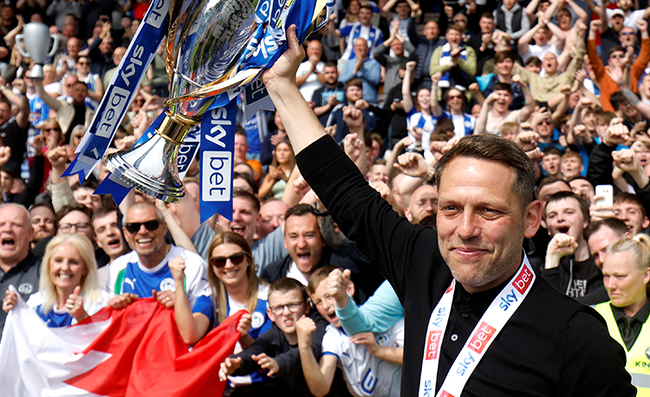
Leam’s focus on understanding individuals ties in with his emphasis on proactivity rather than reactivity. He gives the example of working with a young player about to make the step up to the first team.
“It’s important that we spend time [finding out] about the person and find out how they will feel when they get there, and open up to say, ‘Do you think the pressure will be too much?’ or ‘Why do you think you’ll perform at this level?’
“Some people take to it like a duck to water, then all of a sudden, you’re in front of thousands of fans with the pressure of every touch. If they’re ticking all the boxes technically and tactically, it’s important that we spend a lot of time on the emotional side as well.”
“You’ve got to deliver on a daily basis and winning is everything”
And he thinks that coaches would benefit from more support to have those kinds of conversations, suggesting that counselling courses might be a useful tool to add to the coaching skillset.
“Everybody’s a relatively very good coach. I think what’s getting missed now is the [person]-management side of things. It’s always the person. Everybody’s got their own needs. Everybody’s got their own challenges.
“It’s important that you delve into that as well and see what motivates people, what motivates the coaches that you’re working with, and certainly what motivates the player, because ultimately they’ve got to perform on that Saturday - and if they can go on that pitch where they feel really strong and empowered off the pitch, normally they perform very well on it.”

Get a free issue
Latest Issue
Subscribe Today
Editor's Picks
Turning defence into a fast attack
Attacking transitions
Deep runs in the final third
Using the goalkeeper in build-up play
Intensive boxes drill with goals
Penetrating the final third
Creating and finishing
My philosophy
Pressing initiation
Coaches' Testimonials
Alan Pardew
Arsène Wenger

Brendan Rodgers
Carlos Carvalhal
José Mourinho
Jürgen Klopp
Pep Guardiola
Roy Hodgson
Sir Alex Ferguson
Steven Gerrard
Get a free eBook
Coaches' Testimonials

Gerald Kearney, Downtown Las Vegas Soccer Club

Paul Butler, Florida, USA

Rick Shields, Springboro, USA

Tony Green, Pierrefonds Titans, Quebec, Canada
Join the world's leading coaches and managers and discover for yourself one of the best kept secrets in coaching. No other training tool on the planet is written or read by the calibre of names you’ll find in Elite Soccer.
In a recent survey 92% of subscribers said Elite Soccer makes them more confident, 89% said it makes them a more effective coach and 91% said it makes them more inspired.
Get Monthly Inspiration
All the latest techniques and approaches


Since 2010 Elite Soccer has given subscribers exclusive insight into the training ground practices of the world’s best coaches. Published in partnership with the League Managers Association we have unparalleled access to the leading lights in the English leagues, as well as a host of international managers.
Elite Soccer exclusively features sessions written by the coaches themselves. There are no observed sessions and no sessions “in the style of”, just first-hand advice delivered direct to you from the coach.
