ZOOM Q&A WITH KEITH ANDREWS - FEB 25 - DETAILS HERE

 close
close


 LOGIN
LOGIN
You are viewing 1 of your 1 free articles
Omer Riza: Enjoying the Moment
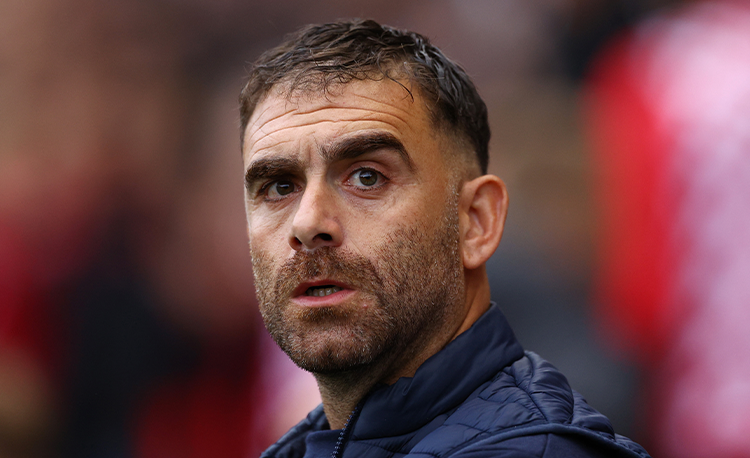
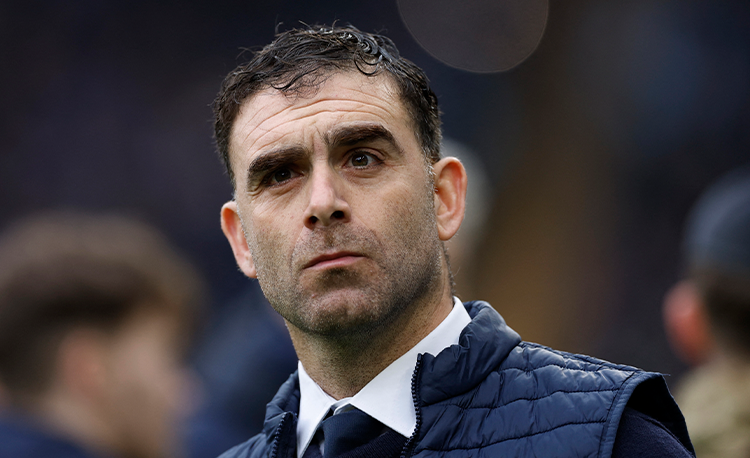
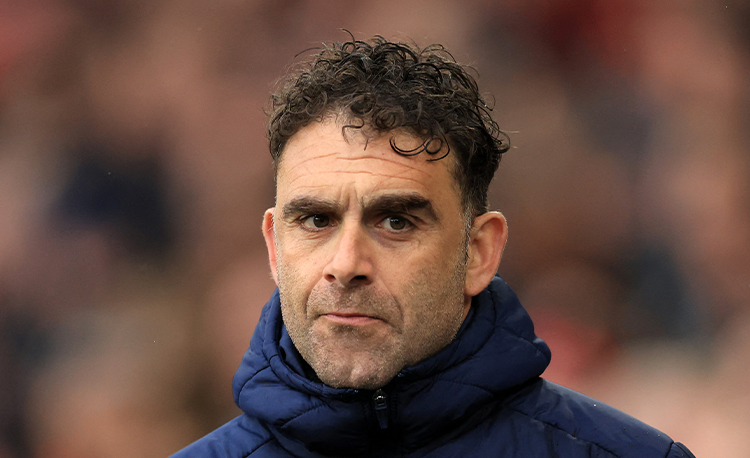
In a recent Elite Soccer webinar, the former Cardiff City head coach Omer Riza spoke to Ben Bartlett about the way he approaches the game, the coaches who have influenced him, and the talent pathway in England.


Words: Carrie Dunn
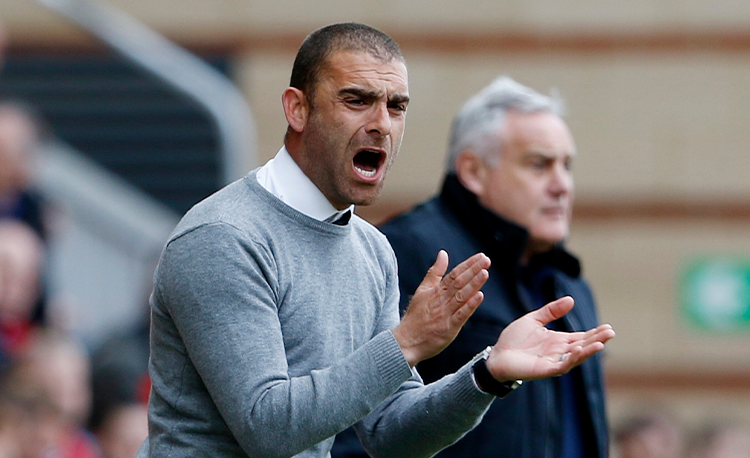
“When I get on the sideline, I’m standing up. I want to see the stuff we worked on come off. I want to enjoy the moments when the crowd are taking a breath and taking a sigh of relief. I want to enjoy all those moments because there’s an element of risk in what we do and how I play anyway, and I need to enjoy it. Otherwise, what’s the point in me doing it?”
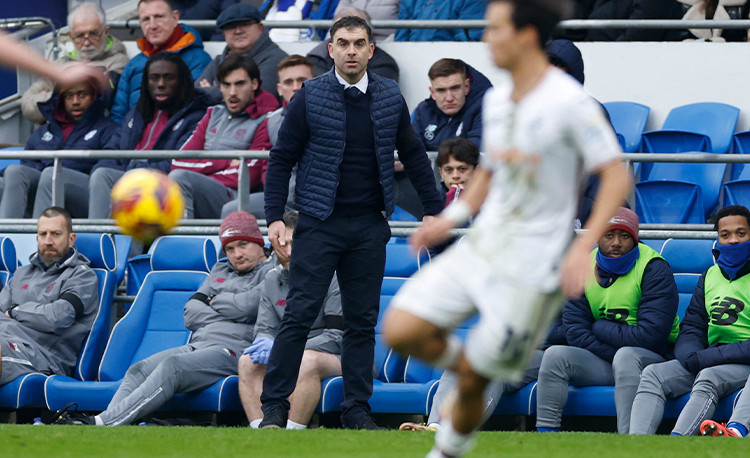
One of Omer Riza’s guiding principles as a coach is to like what he sees in front of him on the pitch. Most recently interim head coach at Cardiff City in the EFL Championship, he has coached in academies, at non-league level, and even in the international set-up with England.
A striker during his playing days, Omer was at Arsenal for a decade from the age of ten before he moved to West Ham United, and describes his own experience as a youth as “tough”.
“It’s a challenge. Every year, you’re trying to stay in the club. It is one of the best academies in England, if not in the world, and it is difficult.
“It definitely makes you stronger and more resilient, and it pushes you to another level.
"It was a thoroughly enjoyable time. I did learn a lot. I learned how to compete because I think Arsenal was primarily about ‘we have to win’, first and foremost. I think that’s changed, but definitely, in my time, it was winning and not losing.”
Changing culture
Omer was coached by some big names, including Don Howe, who he describes as “one of the best coaches to come out of English football” and adds: “I was privileged to be able to be coached by him.”
And Omer was at the club just as Arsene Wenger took over as first-team manager and began to reshape the set-up.
“He came in and changed the whole face of not just Arsenal but the face of football in respect of nutrition, in respect of professionalism, in respect of his coaching style.
“There [are] elements of what I learned and took from him and the club that I’ve taken into my playing and coaching career now.”
Wenger’s recruitment was impressive - including players who played in Omer’s position, like Nicolas Anelka - and brought a huge amount of success to the club.
“It was very good to be around these people, these players, and to learn from them, especially from the foreign players. They were good in a different respect. The culture was different. They changed the culture of the club, with the senior players that were there.
"It was a great environment learning-wise, and it was difficult to break in. I only managed to get my debut against Derby County, I was on the bench a few times in the Champions League and trained for a couple of seasons with the first team, but the experience of just training with those players has helped me along the way.”
Omer left Arsenal in 1999, having spent some time on loan in the Netherlands, and moved on to West Ham and later lower down the leagues at Cambridge United and Barnet, as well as a spell in Turkey for Denizlispor and Trabzonspor. In hindsight, he admits that as a youngster he was too impatient to play – but thinks today’s players in similar situations get more chance to get on the pitch in competitive matches.
His experience has also shaped the way he approaches coaching, saying his objective with young players is “getting players through to the first team and providing a pathway for players who don’t get into the first team, so making sure we look after them, not only for our own club, but for them personally.”
A nudge into coaching
He began coaching at Shrewsbury Town after signing up to take his UEFA B Licence, and joined Histon as David Livermore’s first-team player-coach for the strikers.
"It was a gentle nudge into coaching,” he says. From there he was player-manager at Cheshunt, coach and subsequently caretaker manager at Leyton Orient, academy coach and later assistant at Watford, and a coach for England’s junior teams at under-16 and under-17 level.
"The players that we’ve nurtured and created over the course of the last ten years with England have been phenomenal. During my time, the players that have come through and are still coming through now, they’ve all got special talents. Some might not get there and have longevity in the game as pros, they can fall short for other reasons.
"But working in that environment, working with very good coaches, very good S&Cs, very good physios, everyone is very good at their job, and we all come together well to make sure that that the players get the best education that they can get alongside trying to create a winning mentality environment, alongside trying to pick the crop that will potentially push up to get into the senior squad, which is what it really is all about.”
Omer looks for maturity in young players as a tell-tale sign that they have what it takes to make it as a professional.
"I remember with Kobbie Mainoo, he came in, and he had an element of maturity to him as a person, not just as a player. His game was very mature, but he was actually a really mature boy as well. Jamie Bynoe-Gittens has quite a mature head.
“These players have all got a maturity about them. They’re either physically mature or they are mentally mature in their game, and I think that is key. All the players have got talent. They’ve all got exceptional technical ability, or they’ve got an exceptional talent in respect of physical prowess or technical, tactical, but I think the ones that really do kick on for me is the maturity in their game and the maturity in them as characters.”
Related Files
The importance of non-league
Reflecting on his time coaching at different levels, he says: “It teaches you how to coach differently, how to manage certain situations differently in scenarios. [At non-league level] you’ve got young players that are still trying to become professionals. Playing games is what gives them the experience; you can give them half a chance to maybe step up again.
“Then there are the senior players who have to work [a day job] and are tired and maybe can’t train and you’re managing your groups and you’re managing your numbers.
"Non-league is still a really important place for our football, especially in the UK in respect of youngsters now who can’t find the professional football they’re looking for - the pathway to be able to go and play at 17, 18, 19, rack up the performances, and become more attractive to clubs when you’ve played 150 games at non-league than you have playing under-21s in a Category One Academy.”
“I’ve always worked really hard whatever environment I’m in, giving 100% to the job that’s at task, still thinking about where I want to progress to and where I want to get to”
Continual learning, refinement of abilities, and further development are all very important to him. His target is to be a head coach in the Premier League or an equivalent top-tier competition, and to win trophies. His experience as a player and a coach thus far has prepared him well.
“I’ve always had a resilience about me. It has been built over time, but there is a resilience to say, ‘You know what? No one’s going to tell me that I can’t do something.’
“My character and application has always been good. I’ve always worked really hard whatever environment I’m in, giving 100% to the job that’s at task, still thinking about where I want to progress to and where I want to get to, but by trying to do the best job I can do for the environment that I’m in, for the people that I’m working for.”

Get a free issue
Latest Issue

Subscribe Today
Editor's Picks
Turning defence into a fast attack
Attacking transitions
Deep runs in the final third
Using the goalkeeper in build-up play
Intensive boxes drill with goals
Penetrating the final third
Creating and finishing
My philosophy
Pressing initiation
Coaches' Testimonials
Alan Pardew
Arsène Wenger
Brendan Rodgers
Carlos Carvalhal
José Mourinho
Jürgen Klopp
Pep Guardiola
Roy Hodgson
Sir Alex Ferguson
Steven Gerrard
Get a free eBook
Coaches' Testimonials

Gerald Kearney, Downtown Las Vegas Soccer Club
Paul Butler, Florida, USA

Rick Shields, Springboro, USA

Tony Green, Pierrefonds Titans, Quebec, Canada
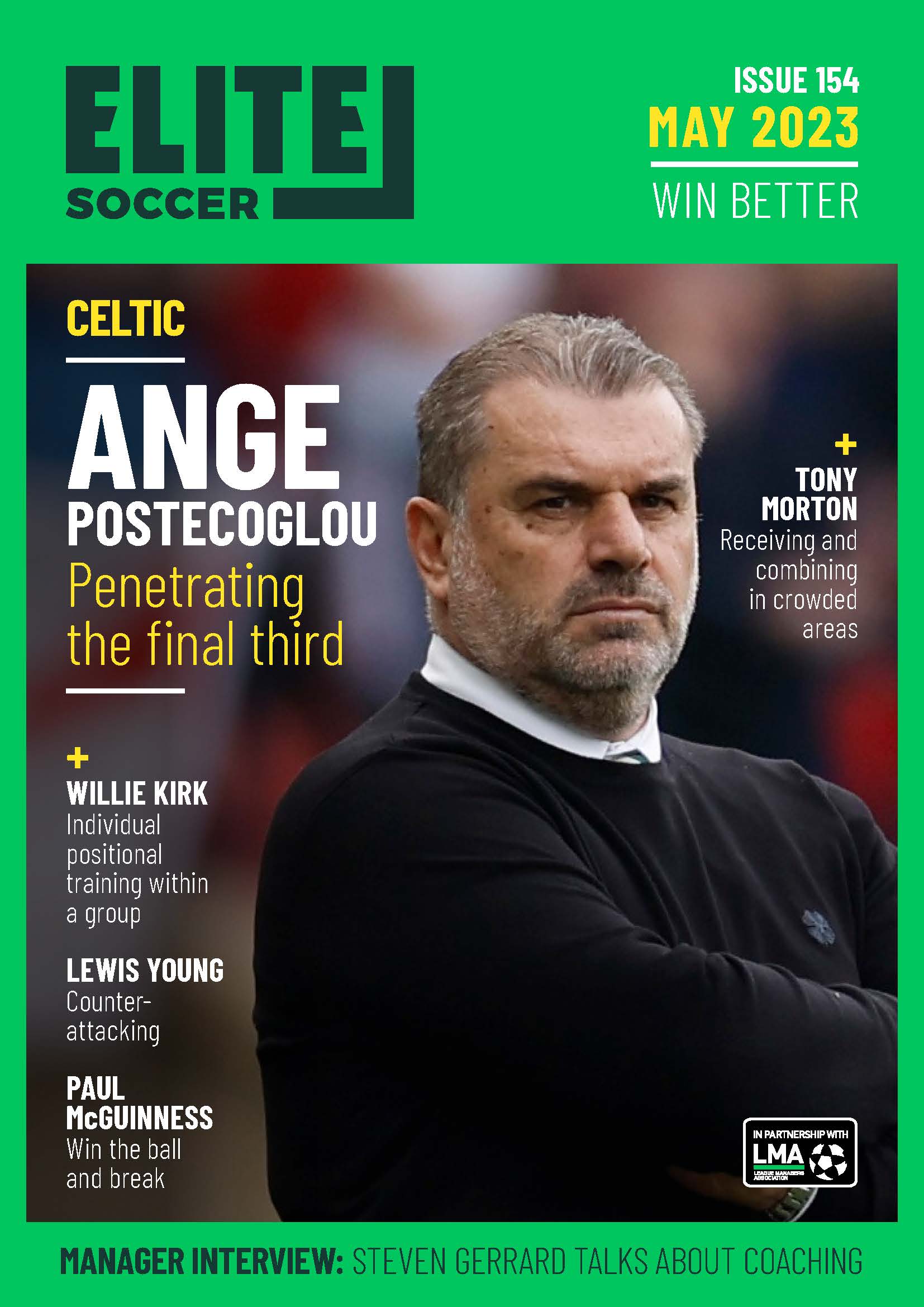
Join the world's leading coaches and managers and discover for yourself one of the best kept secrets in coaching. No other training tool on the planet is written or read by the calibre of names you’ll find in Elite Soccer.
In a recent survey 92% of subscribers said Elite Soccer makes them more confident, 89% said it makes them a more effective coach and 91% said it makes them more inspired.
Get Monthly Inspiration
All the latest techniques and approaches


Since 2010 Elite Soccer has given subscribers exclusive insight into the training ground practices of the world’s best coaches. Published in partnership with the League Managers Association we have unparalleled access to the leading lights in the English leagues, as well as a host of international managers.
Elite Soccer exclusively features sessions written by the coaches themselves. There are no observed sessions and no sessions “in the style of”, just first-hand advice delivered direct to you from the coach.
