You are viewing 1 of your 1 free articles
In a recent Elite Soccer webinar, Ben Bartlett spoke to the Portland Timbers coach about his passion for coaching, the influence of Sir Alex Ferguson, and why it’s important to do the fundamental things well
Words: Carrie Dunn
If you’re going to be a football coach, it’s a good start if you learn from one of the greatest of all time.
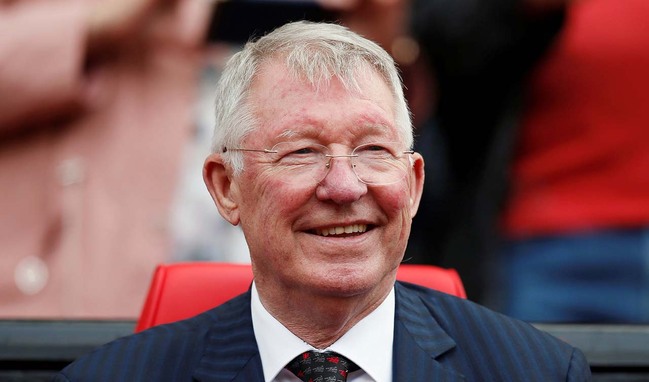
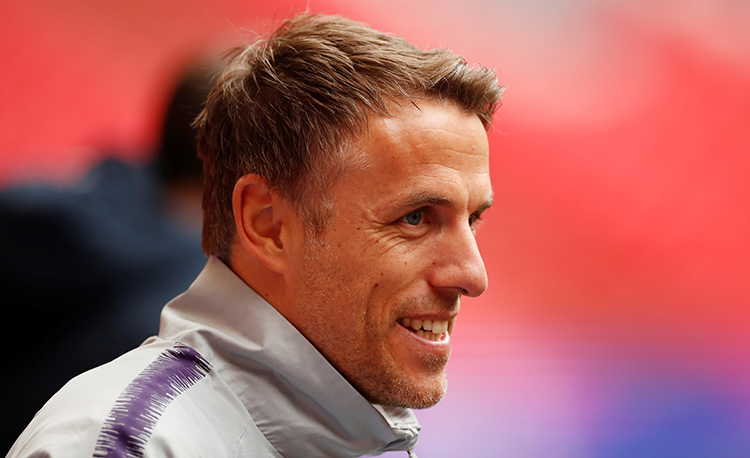
That’s how Phil Neville describes his former Manchester United boss Sir Alex Ferguson, who he says shaped the way he approaches the game.
Neville says he “got the bug for coaching” early in his playing career, and started to progress through his badges at the age of 23.
“The big thing is how obsessed I was about the detail in coaching. When you’re a player, you turn up, you do your rondo, you do your small-sided game or whatever you do, and you go home. You’re just thinking about yourselves. But I used to watch Brian Kidd, the coach at United at the time, go out early, set up his cones, mark it out, look at the distances.
“I was obsessed with manager interviews after the game, how they would carry themselves, what the narrative was before and after games. Every Friday on MUTV I would tape Sir Alex’s interviews. I was working with him and I knew what was going on inside, but I was fascinated by the narrative that he used to tell the outside world: who was injured, the way that he was thinking, the way that the team was going, the psychology with the opposing teams that he used to play against.”
Neville also names Terry Venables, David Moyes, Tony Adams and Roy Keane as influential leaders with whom he worked because of their high standards, which was something about which Sir Alex felt very strongly.
“You showed up every single day to compete. Those are the standards that were passed on to me every single day. When people talk to me about elite environments now as I’m a manager, I just hold people to the same accountability to which Sir Alex held me: you get into work as early as you can, you do your best every single day, every session is a way to improve, and you do the simple, basic things better than everybody else.
“That influence has stood me in really good stead throughout my career, through the good and the bad times.”
Neville also learnt another important thing as a Manchester United player – that even at the very top of the game, everyone is different, and needs different things from their coach.
“A matchday minus one for me as a player was get up, have my breakfast, train, get home as quick as I can, sleep.
“Then you look at somebody like David Beckham. When he finished training, he would go to Selfridges, have a walk around town, look at some clothes, and I was just like, ‘This guy can’t play tomorrow! He’s got to be at home in bed like me!’ You realise very quickly when you see him knocking in goals and free kicks and having the career that he has is that everybody is different. What worked for David Beckham didn’t work for Cristiano Ronaldo. What worked for Ronaldo didn’t work for Wayne Rooney - Wayne Rooney was purely off the cuff. If you said to Wayne Rooney, ‘Study the opposition, look at film,’ he would probably just walk out of football straight away.
“I always think that the biggest thing with management is connecting and understanding the player and the person that you are coaching.”
Neville speaks a lot about what he sees as basic elements of success as a footballer.
“The basics are controlling the ball. Passing the ball up against the wall is one of the basic things that we used to do: passing, technical things, working as hard as you possibly can, being as fit as you possibly can.
“The most important one is your discipline: showing up on time. Wearing the clothes that you’re told to wear. If your coach wants you to wear the club tracksuit, wear the club tracksuit. You’re not allowed to wear a cap? Don’t wear a cap. You’ve got to wear white trainers? Wear white trainers. Say please and thank you. You think about the way that you bring your child up: please and thank you are fundamental. Show respect to people that are doing things for you and then work your absolute hardest every single day.
“We had this little saying at Man United: if the coach asked you to do ten reps, do 12 - always plus two. Two more reps. Two more reps. We finished every session with a run at Man United. The coach would say, ‘Look, we’re going to do six of these.’ We would always end up doing seven or eight because it would mean that you were thinking about working harder than everybody else. It’d mean that you were always pushing yourself beyond your limits.”
The real essential, though, as far as Neville is concerned, is fun.
“You’ve got to have fun. The last thing Sir Alex would say to us before going onto a football pitch was: ‘Go out and enjoy it. Go out and have fun. Pretend that you’re on the playground playing with your best mates and you’re having fun.’ Every single day at Man United, there was an element of fun. As a player, I had fun every single day. As a coach, I try and integrate an element of fun because we’re under pressure, we’ve got expectation, we’re all trying to compete with one another.
“If you get out of bed every single day and you are going into an environment where you are going to have fun, you are going to do those basics even better.”
Neville’s own coaching path has been unusual, to say the least. After gaining his badges early on, towards the end of his playing career he also spent time assisting England men’s youth teams. He spent some time coaching at Manchester United, and co-managed Salford City for a single match with old pal Paul Scholes. He then spent time in Spain with Valencia, first as assistant to Nuno Espirito Santo and then Voro before the brief tenure of brother Gary Neville.
His first role as a head coach came when he took over the England women’s senior national team in 2018. He led the Lionesses for three years, an experience he describes as “the greatest thing I’ve ever done in my life professionally”, taking them to fourth place in the 2019 Women’s World Cup, and praising the players he worked with during that time.
“They taught me more about management than any male footballer: the way you communicate, the way you talk, the way you behave, the key details in coaching, because they wanted to know every single detail, they wanted to know every single scenario, they wanted to know everything, and it stretched my managerial brain to a level than no male footballer has ever stretched it!
“It was the most rewarding three years of my career, and I still think those players are the greatest players that I’ve ever managed.”
Since then, he has been in the US, first with Inter Miami, and now with Portland Timbers, where he was appointed in 2023.
Regardless of the team he is coaching, he says a coach has to lead from the top, but also needs to surround themselves with people who share their values.
“You’re probably looking after 50 to 60 people in a football club as a head coach, and if you are only one of two people that have the same values, then you are really outnumbered.
“The first six months [at Inter Miami] were probably my toughest in football because it was a fight to do the basics every single day. What are the basics? One, turn up on time. My first meeting, two players were late for the meeting. That was a sure sign that we had a major problem: first meeting, new coach, and two players walk in [late].”
In his first six months at the club, Neville worked on instilling discipline with the players and getting into the routine he wanted, but realised it would need new personnel.
“A the end of that season, we got rid of 22 players and we brought in 19, and we didn’t bring in one superstar. We brought in working-class, hungry, young players that we could mould in the environment that we wanted, that was probably one of the best things that I ever did.
“We changed round 12 staff. I wanted staffing that had the same values [as me], not one that would just come to work, pick the pay cheque up and go home.
“All of a sudden we, we ended up finishing in fifth place. It was probably one of my greatest achievements from a managerial point of view because we had to gut the place.”
At Portland Timbers, he “didn’t need to rip up anything – they just needed guidance, they just needed consistency to the way that we work, they needed a structure and an itinerary.”
Neville drew up a detailed timetable setting out every day for the next 12 months.
“Those that had real hunger and desire to get to the very top, they stuck to it and they improved. Those that couldn’t really handle the consistency of what it takes to be an elite athlete, we ended up sitting out those guys.
“You end up leaving people behind on the journey. Consistency in behaviours, consistency in schedule, consistency of everything that you do is the key.”
But going into a new team also requires some level of adaptation from the coach as well. Neville points to his time as an assistant at Valencia, where he needed to learn Spanish, and took lessons every day. He also needed to get used to a more relaxed culture – something he found tricky when he tried to get an electrician to call at his house.
“In Spain, 10 o’clock means 11, maybe 12, maybe when they want to come, and for the first three months I used to be, like, ‘What the hell’s going on here?! People don’t turn up on time!’ They’re so relaxed and they don’t have that English mentality. So you have to adapt, you have to soften, you have to be flexible in everything that you do.
“Then you go onto the training field. Spanish players want to be coached slightly different than English players. They like the softer approach. They don’t like the raised voice. They want to be cajoled and they want to have a two-way conversation.”
He adds: “If you think that you can go into a culture and the culture adapts to you, no, that’s not going to work. You’ve got to adapt to the culture that you are in. Stamp your own authority. Don’t change as a person, don’t change your philosophy - but you have to adapt too.”


In a recent survey 92% of subscribers said Elite Soccer makes them more confident, 89% said it makes them a more effective coach and 91% said it makes them more inspired.
Get Monthly Inspiration
All the latest techniques and approaches
Since 2010 Elite Soccer has given subscribers exclusive insight into the training ground practices of the world’s best coaches. Published in partnership with the League Managers Association we have unparalleled access to the leading lights in the English leagues, as well as a host of international managers.
Elite Soccer exclusively features sessions written by the coaches themselves. There are no observed sessions and no sessions “in the style of”, just first-hand advice delivered direct to you from the coach.