You are viewing 1 of your 1 free articles
In an ESCA webinar, Ben Bartlett found out more about Richard Shuttleworth’s coaching journey across sports, the coaches who influenced him, and what good coaching looks like.
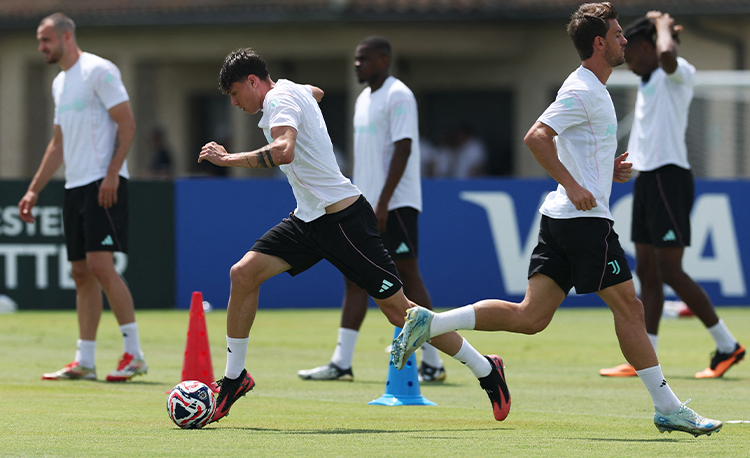
Richard Shuttleworth, a high performance coaching consultant, spent years in the England rugby set-up, helping to transform the national pathway – and names then-head coach Eddie Jones as “one of the smartest, most intelligent coaches I’ve ever met.”
He adds: “He’s very astute. I’d bring coaches into the environment from different clubs. No matter how inexperienced they were, he would go over and shake hands with everybody at the end and he’d go, ‘G’day, mate, have you got any feedback for me?’ He was always open to feedback, always wanted to learn.
“His team talks were fantastic. He would build a story, build a narrative. I used to go down to the dinners every night, and there would be cardboard cutouts of the opposition players as you walked down to the dinner hall. You’d start to see these characters standing proud at the beginning of the hallway; as you get down the end, you’d see a player cutout leaning in over his legs, holding his thighs, panting.”
He also admires the work of field hockey coach Ric Charlesworth, who developed a nine-a-side version of the game, and on reviewing video footage, realised that players were showing different decision-making processes and skills. That led him to create a global nine-a-side tournament that then helped him put together a World Cup-winning squad.
“He knew when to change a substitute. He would always take somebody off every two minutes, and when somebody came on, they would never go back in that same position. They would go in a different line, either defence, midfield or attack, so he pressured people to be multi-skilled or multi-positional, which was still fairly unique back then.”

Richard began his own sporting career as a rugby player in England, continuing when he moved to Australia at the age of 12. Despite age-group international recognition, he switched into coaching early on after repeated knee surgery.
“I had this curious mind about what developed skilful players,” he says.
He admits now that his first-ever session was overdesigned and overthought due to his lack of coaching role models to inspire his content and delivery. It didn’t seem like a stroke of luck at the time, but one of the players he was coaching was a friend, who took him aside at the end of the session.
“He said, ‘That’s probably one of the worst sessions I’ve ever had, mate. I knew what you were trying to do, but what the hell was that related to do with our normal game of rugby?’
“That was a big blow to me, but to be honest, that was the best feedback I’ve ever had, and it was in my very first session. That got me thinking. I really valued feedback from players who were honest, open, and who were quite experienced. That saved me from going down this route of designing endless stuff without the players’ needs in mind.”
Richard’s curiosity about coaching and learning grew, and he headed back into academia to explore different ways of looking at performance and psychology before accepting a PhD scholarship in New Zealand.
He continued to coach rugby alongside his studies, getting the chance to coach his first representative side, which featured two All Blacks.
“I really found myself learning from the players how to coach, because there were some very good players there, so really my own experience developed through having good, experienced players around me.”
In the final year of his PhD, the Otago Rugby Union asked him to coach the Canterbury under-16s representative team, and to apply his theories of coaching to the selection.
“I wasn’t given any information to where these young players had come from, which school they were from. I was just totally blind. So I ran a series of what I call chaos games, related to rugby. They had the same principles, but they were just restricted in different ways, or constrained in different ways, and it brought out certain skill sets: scanning or perceptual skill sets, problem-solving skill sets, and skills skill sets as well - the way that they adapt their techniques and their movements to different problems.
“I think games bring out a lot of different information. The ability to cooperate and compete are necessarily components that are complementary, and competition brings that out. Competition will drive development”
“I had three selection trials, and selected a team. The next day, I turned up and I had all these phone calls and complaints from parents whose kids weren’t selected, who’d always been selected in these teams.
“I came out with these groups of players, which went on to win this [New Zealand] south island tournament, but they were all from different areas of the south island. Most of them were from state schools. There were only a few from the public schools where they [had been historically] getting selected traditionally. I broke this tradition of selecting the players who knew how to play a particular style and were always being selected.
“One of the players [I selected] is now an All Black. I made him captain, but he was expelled from school. He would never been in a representative team, he had a mullet haircut, but he was outstanding, and when you give these guys responsibility, when you support them and inspire them and create a safe environment around them, these tournaments are great experiences for these kids.”
Richard’s coaching design and use of chaos games continues to draw on the same principles he used in that selection process.
“You have to change and go away from a [match scenario] to find out more about the players’ understanding of general movements,” he says. “I use these games to explore and discover new things about the players.
“I think games bring out a lot of different information. The ability to cooperate and compete are necessarily components that are complementary, and competition brings that out. Competition will drive development.
“I definitely think players want to train in that high performance zone, even if it’s a fun game. The best players will beat the game and once they’ve done it, they’ll try and do it in a different way next time. They won’t go the easy way. The not-so-good players will want to look good, so they’ll always try and regenerate the same situation.”
He adds: “[Elite players are] never satisfied with the situation they’re in. They’re always wanting to improve their own situation. It’s the beautiful struggle, it’s the creative tension. It’s that zen. It’s the balance.”
Empowering players to think about what they are doing and prepare them for how to think and respond in a game situation is helpful.
“If you were to give the solution all the time, you end up with drills; they just end up executing the solution and then they lose the context. They don’t quite know the problem that’s coming at them, which is okay at times if you need to work on coordination or execution, or get some sort of psychological confidence benefit from it, they’re coming back from injury and they need to get their coordination patterns back.
“It’s always really good for a few players to be your cultural architects who are out there orchestrating, and when the intensity is low, you can look at one of them and then suddenly things pick up because that player is connected and coordinated.
“I always believe that using a more hands-off approach is a great skill to have as a coach because ultimately that transfers into performance.”
Richard suggests that at the youngest age groups, match officials can also help with players’ understanding.
“Everybody has a part to play in the learning of the development of the child,” he says.
“I always believe that using a more hands-off approach is a great skill to have as a coach because ultimately that transfers into performance.”
“We never tell them, ‘That’s a bad decision.’ We try and understand why they made the decision. ‘What did you see there?’ When players do things right, you do have to celebrate that quite a bit in the moment; if you’ve got a spare moment, you’re running with that player – ‘John, John, well done, mate, awesome! What got you into that position?’ So we can go and we can do that again. I think that’s top coaching. You can guide where they’re looking, but you’re not telling them what to see.”
He suggests coaches owe it to themselves and their players to consider their own personal development and plans to progress their work.
“What am I trying to work on myself, as a coach? It’s not just, ‘I need to get the players to do this.’ There’s continual improvement. Certain coaches will be good at certain things, so just watch how they do that. The best way of learning is through observation.”


In a recent survey 92% of subscribers said Elite Soccer makes them more confident, 89% said it makes them a more effective coach and 91% said it makes them more inspired.
Get Monthly Inspiration
All the latest techniques and approaches
Since 2010 Elite Soccer has given subscribers exclusive insight into the training ground practices of the world’s best coaches. Published in partnership with the League Managers Association we have unparalleled access to the leading lights in the English leagues, as well as a host of international managers.
Elite Soccer exclusively features sessions written by the coaches themselves. There are no observed sessions and no sessions “in the style of”, just first-hand advice delivered direct to you from the coach.
Live calls. Fitness programmes. Session plans. Everything the prepared coach needs.