
 close
close


 LOGIN
LOGIN
You are viewing 1 of your 1 free articles
Rosi Webb: Leaving a legacy
In a recent ESCA webinar, Rosi Webb spoke to Ben Bartlett about her playing career, coach development, and her experiences coaching in the men’s game


Words: Carrie Dunn
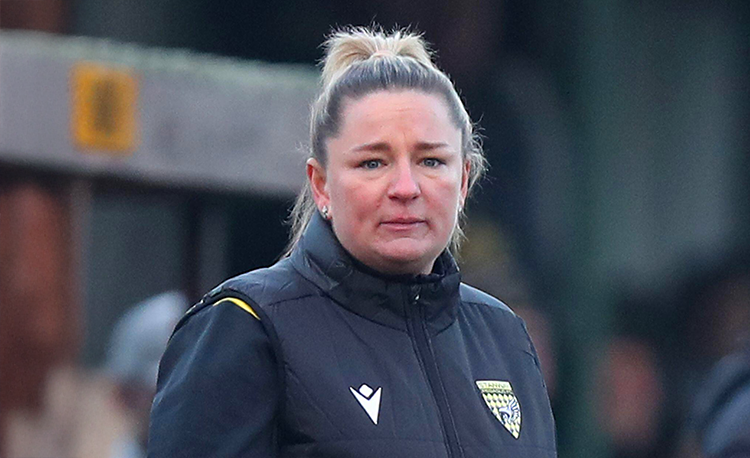
When it comes to coaching, Rosi Webb has one of the broadest perspectives in the game. In her day job, she has most recently been located at the University of Essex, working as a coach developer at The FA women’s high performance centre to support coaches in the girls’ talent pathway and FA Women’s National League.
But she is also manager of Stanway Pegasus in step six of the men’s non-league pyramid – one of the few women to be leading a men’s team and the highest-ranked female head coach in men’s football in England.
“There are still mindsets that exist that we’re trying to break down,” she says. “A lot of the teams that I come across now, they know I exist. They know that I’m here. They know that I do some good stuff, and we have some really good conversations.
“So I like to think that if I was to move on tomorrow, I’ve left a legacy where I’ve changed mindsets in the game.”
Her track record at Stanway is stellar. She led them to promotion in her first season in charge, followed by three campaigns resulting in the play-offs – plus the club’s best-ever performance in the FA Vase, the fourth round in 2023-24.
Rosi began her football career as a player at clubs including Tottenham Hotspur and Charlton Athletic, and after graduating from university with a degree in sports studies, she took a job at Colchester United, later becoming an FA skills coach as well as coaching across age groups.
She puts a great deal of value on credibility and relatability, saying that it’s important to stay in touch with what’s actually happening on training grounds – and as a head coach herself, she is living the same challenges that are being faced by the people she’s working with as a developer.
“The game is forever changing, and I think as coach developers, it’s so important that we’re still working in football, otherwise we get left behind with the trends of the game and how the game’s being played. I enjoy the fact that I can wear different hats, and I can draw on different experiences, whether that be coaching or having played.”
Taking the helm at Pegasus
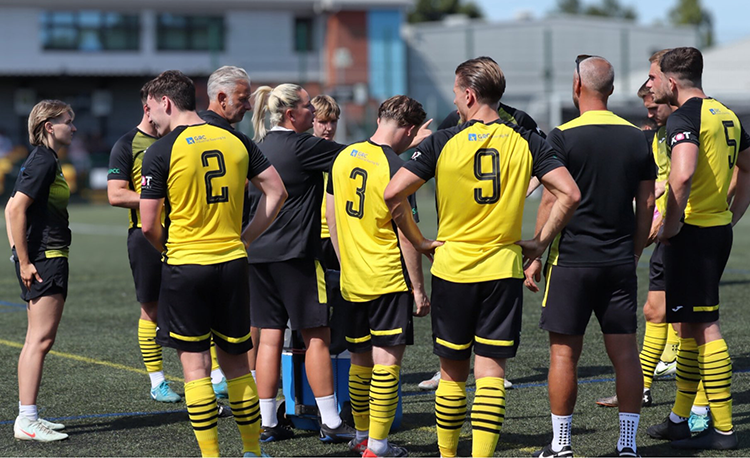
Rosi admits to a degree of naivete when she first took the role at Stanway Pegasus in 2021, beginning with big dreams, before realising that she needed to tailor her vision to her resources.
“You’ve got what you’ve got,” she summarises. She’s quick to thank Stanway’s ownership, who share her passion for driving the club forward. “I wanted to create a culture in the club. I wanted to create a place where players felt heard, players could come along, they could develop, they could question.”
That includes questioning her processes.
“I’m really self aware. I only know what I know, and I’m open to feedback. I always say to the guys, ‘You’re the experts, and if something doesn’t sit right, tell me, and we’ll change it.’
“Over the last few years, we’ve built this environment where I now say that we only ever lose a player if they get offered more money or they go to a step higher, and that for me means that I’ve done my job as a coach.”
She describes the club as one that’s “as professional as we can be with the means that we’ve got”, but knowing that budget is limited has also helped her expand her knowledge.
“We have things like the VEO camera, the stats vest, and I’d love to have somebody come in and do all that for me. Unfortunately, it’s just me, but I wouldn’t change that because I understand a little bit more around the data of the game based on the stats vest, I understand analysing from the VEO footage, and had I not had that and had somebody else [do the work], I wouldn’t have got those experiences.”
Rosi, like any club manager, has a broad range of responsibilities.
Related Files
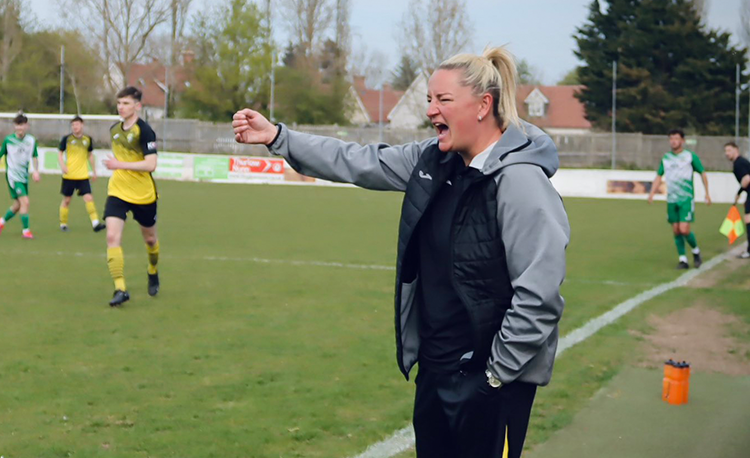
“When you’re involved in a club, you’re not just the manager,” she says. “You get pulled left, right, and centre. I was there Saturday before our [first-team] game, and I turned up to watch the reserves play, and I [had to run] the line because they didn’t have a lino!”
Of course, coaching and picking the team is her primary job, and she views team selection as a jigsaw puzzle.
“Every piece is different,” she says. “It might be a little bit bigger, it might be a little bit smaller, it might be different in colour, but ultimately every piece is important because without one, that picture is not complete.”
Her plans for the team have developed as her understanding of each player’s strengths has grown.
“Rather than working on some of the things that the players need to get better at, I try and try and turn their strengths into super strengths,” she says. “For an example, we might have two holding midfielders. I might have one that’s technically really good, can ping the ball, so as soon as he gets on the ball, he might hit spaces in behind. The player next to him might not have the ability to do that, but actually what he’s really good at is he connects the passes and allows us to overload on one side.
“I can then work back from that and create triggers. If Player A gets on the ball, let’s exploit the space in behind – we’re going to get the ball, and then we’re going to play in the final third. If Player B gets on the ball, we know [someone else] might have to go over and might have to occupy one side of the pitch.
“Every player is important, but they need to be aware of what they’re good at, and they need to just be okay with that.”
Holistic player development
From grassroots upwards, and in all age groups, Rosi is focused on developing players holistically: “getting to know players, how they learn, how they receive feedback, how we can make players more emotionally intelligent and more resilient.”
She’s also keen to find out how players learn, which she thinks can be neglected, adding that from there you can go into tactics and technique because you understand the individual’s perception of football and the world as a whole.
“Oftentimes when I go to sessions, especially when we’re working with younger kids, I see a coach stand up there and they talk through their session, and then they get the players to go out and do it, and then a kid messes around in it. We automatically think the kid hasn’t listened, when actually the kid just doesn’t learn by hearing what you’re saying. They need to see it on a whiteboard; they might have to stand back and watch the practice for a bit; or they might have to be part of the demo.”
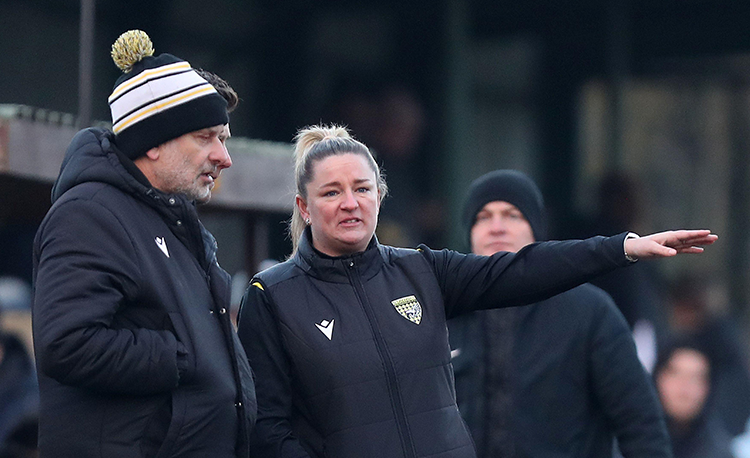
Rosi continues to be curious about different ideas and approaches, and likes to learn from others – not just within football, suggesting that school teachers are the experts in understanding learning styles and could have great insight into session design. When she puts her own sessions together, she likes to use plenty of visual aids, and to stay as clear and concise as possible when she’s speaking to the group.
“If you can keep it under a minute, great. After a minute, you’ve probably lost them,” she says.
“Dripfeed those targets throughout the session rather than sitting there at the beginning going, ‘Right, I want you to do this, this, this, and this.’ Probably they don’t remember the last one you said, or they even switched off after the first one.
“We need to be really open to players being able to experience as much as they can, and create environments where they can learn, they can practise, they can make mistakes, they can review, and they can do it again, and they’re not going to get absolutely shouted at for making a mistake. It’s an environment where mistakes are okay, and we learn from it, and that’s part of the learning process.
“The biggest thing that I find when I’m in the senior game now is that these players are technically really, really good. Some of them lack decision-making, and that’s because as they’ve grown up and they’ve been part of youth teams, they haven’t been exposed to that kind of practice where there’s lots of opportunities to make decisions, opportunities to get it wrong, and opportunities to problem-solve. I think we have to be creating players for the future.”
She does much of her work with Stanway Pegasus in timed blocks, to reflect a game situation as much as possible, and delivering the coaching in the rest periods. The players themselves drive the speed, and the whole session is conducted with a ball at their feet.
“We’re trying to replicate the game. We’re working on our game plan. The ball’s moving. I’m trying to get players making decisions, and I’m trying to get them as close to tempo as possible.
“Ultimately, we’re trying to make the session fun. [Even though] they’re adults, they’ve given up their time, they want to come, they want to enjoy it, and they want to have fun.
“The biggest thing I’ve learned in non-league football is just because you shout louder on the sideline doesn’t mean it strengthens your argument. Having those one-to-one conversations is so important. Don’t just use training for an opportunity to coach, you can coach in match - and I’m not just talking about before the game, and I’m not just talking about half-time. You can coach during the game: the ball might be out of play, there might be a drinks break if it’s a really hot day.
“Really use those moments to coach, because the game is just an extension of the practice on a Tuesday night.”

Get a free issue
Latest Issue

Subscribe Today
Editor's Picks
Turning defence into a fast attack
Attacking transitions
Deep runs in the final third
Using the goalkeeper in build-up play
Intensive boxes drill with goals
Penetrating the final third
Creating and finishing
My philosophy
Pressing initiation
Coaches' Testimonials

Alan Pardew

Arsène Wenger

Brendan Rodgers
Carlos Carvalhal
José Mourinho

Jürgen Klopp
Pep Guardiola

Roy Hodgson

Sir Alex Ferguson

Steven Gerrard
Get a free eBook
Coaches' Testimonials
Gerald Kearney, Downtown Las Vegas Soccer Club

Paul Butler, Florida, USA

Rick Shields, Springboro, USA

Tony Green, Pierrefonds Titans, Quebec, Canada
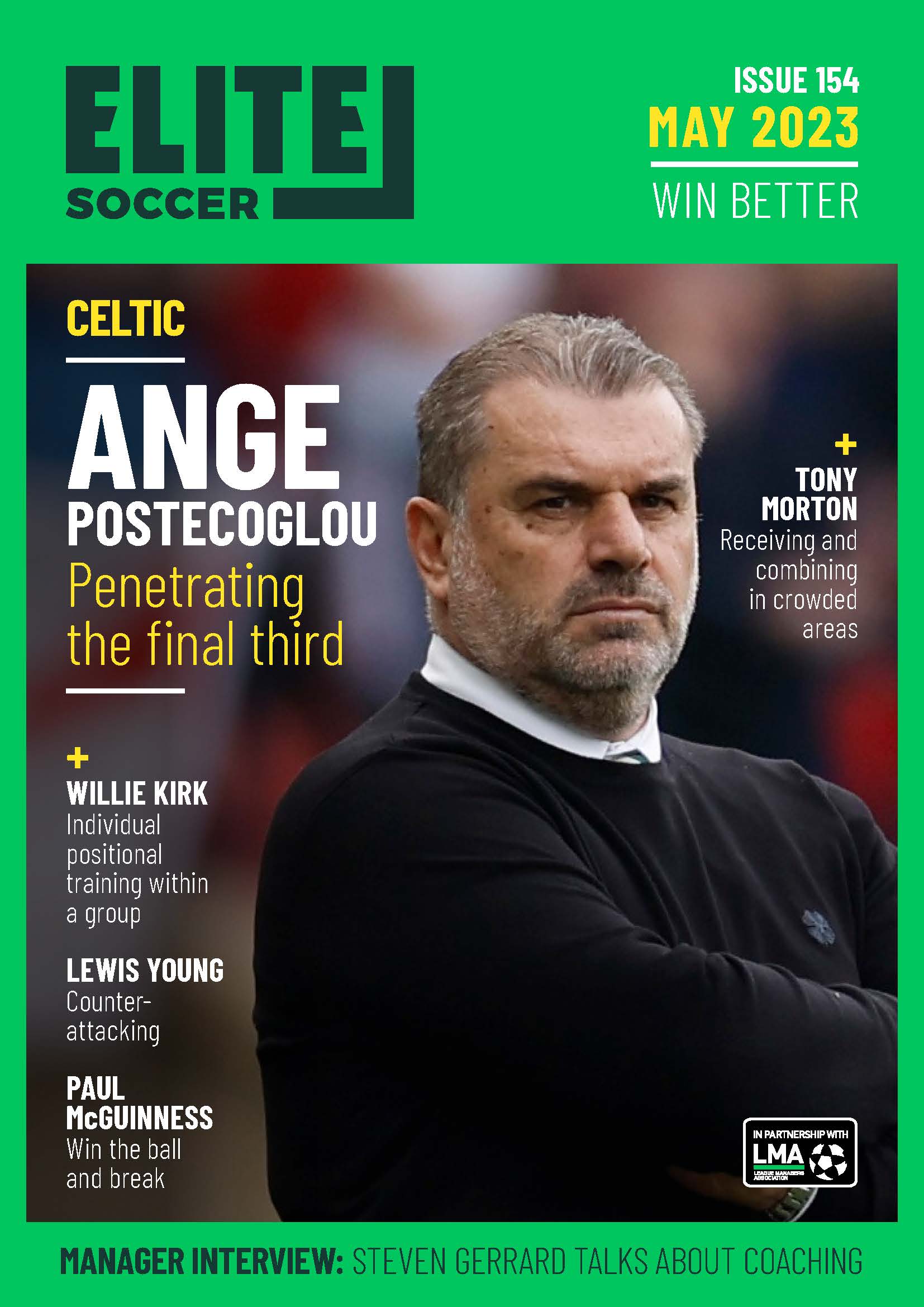
Join the world's leading coaches and managers and discover for yourself one of the best kept secrets in coaching. No other training tool on the planet is written or read by the calibre of names you’ll find in Elite Soccer.
In a recent survey 92% of subscribers said Elite Soccer makes them more confident, 89% said it makes them a more effective coach and 91% said it makes them more inspired.
Get Monthly Inspiration
All the latest techniques and approaches


Since 2010 Elite Soccer has given subscribers exclusive insight into the training ground practices of the world’s best coaches. Published in partnership with the League Managers Association we have unparalleled access to the leading lights in the English leagues, as well as a host of international managers.
Elite Soccer exclusively features sessions written by the coaches themselves. There are no observed sessions and no sessions “in the style of”, just first-hand advice delivered direct to you from the coach.
