ZOOM Q&A WITH KEITH ANDREWS - FEB 25 - DETAILS HERE

 close
close


 LOGIN
LOGIN
You are viewing 1 of your 1 free articles
Slaven Bilic: The Turning Points
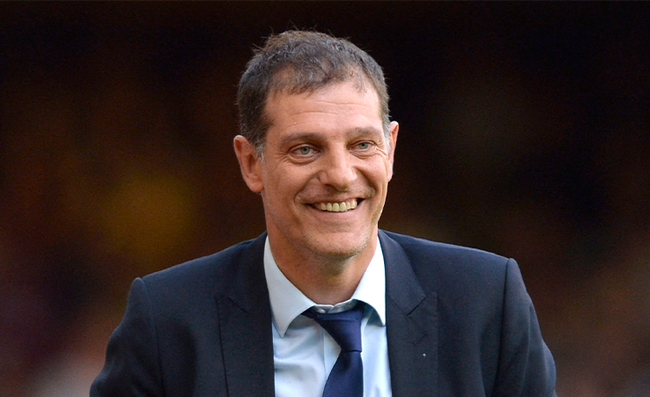
In a recent Elite Soccer webinar, former Croatia manager Slaven Bilic spoke to Ben Bartlett about his life in football and his philosophy of the game


Words: Carrie Dunn
Slaven Bilic’s passion for football is plain to see. After a hugely decorated playing career in England, Germany and his native Croatia, as well as international recognition for his country, his impact as a coach since then has been immense.
He has coached in Croatia, Russia, Turkey, Saudi Arabia and China in addition to his well-known spells in England, which include a record-breaking tenure at West Ham United and a promotion-winning stint at West Bromwich Albion. He has also managed Croatia’s national team at age-group and senior level.
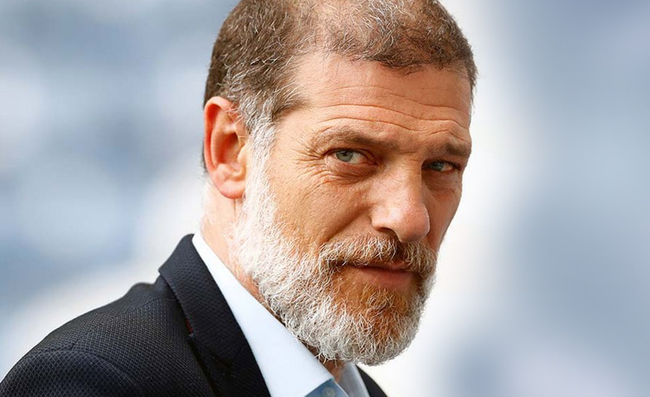
As a player, he worked under coaches including Joe Royle at Everton and Harry Redknapp at West Ham – and he thinks his career on the pitch has helped develop him as a coach.
“I remember every coach since I started to play football in Hadjuk Split back when I was 10 years old. When I took over as a coach, I always thought about every one of them, and I always thought about what I liked in that time and what I disliked.
“I try to shape and to create my, not unique, style, but my way of doing it. Without them, it would be much more difficult for me. I’m not one of them who is saying that the coaching role and the manager’s role should be reserved for ex-players. Many, many managers, new coaches, they are proving that you didn’t have to play great football. But it’s not a flaw. It’s not a minus. It helps you, because you were in those situations. I’m not saying that you had to win Ballon d’Or or that you had to win the Premier League or had to win Champions League.
“What I found really helpful and essential, especially also tactically, but especially to understand the group of people that are together with the same cause, with the same goal, is if you spend at least a year in the dressing room being a part of that group, that’s experience that is difficult to learn in school or from the books. That helps you a lot in understanding the dynamics of a team and how it works.”
Having the quality
He says he may not have been the best player in a team, but he was a player that teams and coaches wanted. He contributed to teams who may not have been the best, player for player, but they succeeded because of the strength of the collective.
"You have to have a quality. If you don’t have a quality, then sometimes it happens that you win this and that. When Leicester won the Premier League, that was a miracle. That was one-off, but they had a quality, especially the spine. They have maybe that year the best goalkeeper in the league, Schmeichel. Then they have Kante, the best midfielder in the league, best winger with Mahrez, and best goalscorer with Vardy.”
Coming from Croatia has gone some way to instilling that quality in Bilic himself, he thinks.
“No matter who is the manager, they always have that spirit. And that is what makes the difference.”
“I try to shape and to create my, not unique, style, but my way of doing it”
He points to his experience as Croatia’s national team coach, when after a tournament and six weeks in camp, he saw a group of his players leaving the airport together.
"I asked, ‘Where are you going, guys?’ They told me, ‘We’re going for lunch together.’
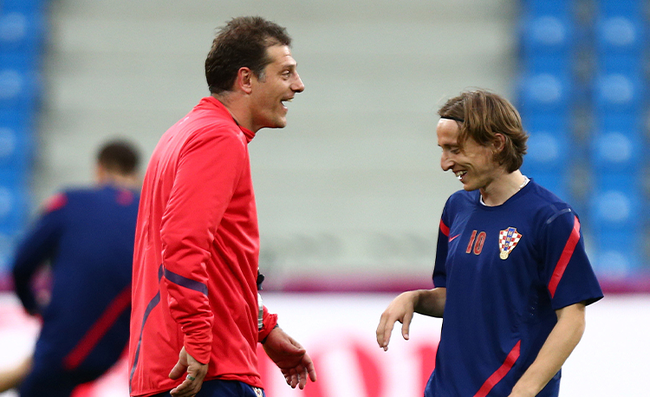
“I said, ‘You had lunch for 60 days!’ Now they go again together for lunch! That’s what makes Croatia different than others. They are mates. They are not in contact only when there’s an international break. They are best mates even when one of them is playing for Man City and the other one is playing for Real Madrid. I bet you that Kovacic and Modric are texting or whatever each other on a daily basis.
“That’s not enough - but [it is] if you add that to talent and if you add that to some kind of a responsibility.”
Related Files
Croatia’s high expectations
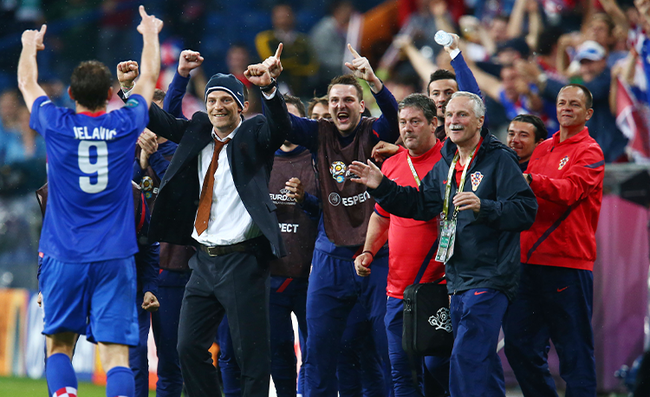
Bilic took over as the senior team’s manager in 2006, having been appointed as under-21 coach two years previously.
“The expectations are high everywhere, and in Croatia, they’re sky high,” he said, admitting that the senior team had been in a decline since the retirement of striker Davor Suker.
"I took over [as manager], and I was very young. I was 37. After prime minister, it’s the number two position in the country. Football is very important. The [domestic] league is not the greatest; the national team is the beacon of the football.”
Bilic led his team to a famous 3-2 win over England at Wembley in European Championship qualification in 2007, with the result and the roles with which he trusted his players creating plenty of comment around his courage.
“On the one hand, yes,” he said, “but what I wanted to say [to the media] is that I knew [the players] because I managed them in the under-21s. It was much easier for me because I knew what they could do. I even spoke to them, in the under-21s: ‘Maybe you can play there?’
That meant he was fully aware of the abilities of players at his disposal such as Niko Kranjčar, Luca Modric and Eduardo.
"I knew they were going to do well. They were special characters. They’re very strong, and they had a quality. Throughout my career, I love young players, and I think all the coaches in the world will tell you that they love young players because young players, they bring you something. They’re not afraid. They are positive. They take on the players. They think the glass is half full. They never think the glass is half empty. They are very brave. You know? They are not afraid. They are not afraid. They don’t want to stay in a comfort zone.
"That’s great when the game is going good. But the game is like life. It has some turning points; there is turbulence in every game. Then the key is to have experience and a safe zone.”
He gives another example from his time at West Ham, pairing the 16-year-old Reece Oxford alongside the veteran Mark Noble.
"Young players, they have their ups and downs, and they need help, and they need to be nurtured. You have to look after them. You have to spend time talking to them.”
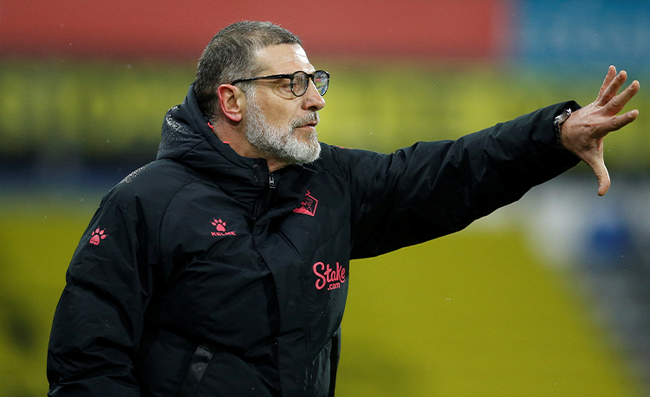
Playing good football
Although Bilic has a preferred system of play – or as he puts it “the way I love the most” - he is always willing to adjust.
“Your tactics, the way of play, your philosophy, it depends on the players you have,” he says.
“My philosophy throughout the years, how I like football, my teams to play: I want to put as many players as possible on a pitch that are good on a ball, that are good players.
“Harry Redknapp was like that. Even when he was managing West Ham and we were not the greatest team, he always put as many good players on a pitch as possible. That’s because if you don’t have that, then you don’t have a chance, and you can’t play good football. If you have that, you have a chance.”
Of course, when winning is the priority, something has to give.
“I always want to play attractive football, but it’s my job to organise them, to make them responsible, to make them die for each other, to do the dirty work and everything. That’s my job.”
And that job is the same no matter what country he is coaching in.
“I love football. You have to respect the habits and the culture. You don’t copy paste the way you train in UK when you go to Saudi Arabia.
“I always want to play attractive football, but it’s my job to organise them, to make them responsible, to make them die for each other. That’s my job”
“Let’s say [you compare] Everton and Sevilla: same value, same players, same everything. In Liverpool it’s 15 degrees to 20 degrees when you’re playing, ideal conditions to play football, raining every day a little bit. In Sevilla, it’s 40 [degrees]. You have to know when you train, how you train - it’s different.
“But football is football. It’s still the same. Your principles: you want to train good, you have to have your team energy, there has to be intensity and energy in the sessions.
“The key is to be consistent and to be fair to everyone. If you are fair, still no matter how the world changes and what the players say, they will respect you.”

Get a free issue
Latest Issue
Subscribe Today
Editor's Picks
Turning defence into a fast attack
Attacking transitions
Deep runs in the final third
Using the goalkeeper in build-up play
Intensive boxes drill with goals
Penetrating the final third
Creating and finishing
My philosophy
Pressing initiation
Coaches' Testimonials
Alan Pardew
Arsène Wenger
Brendan Rodgers
Carlos Carvalhal
José Mourinho
Jürgen Klopp
Pep Guardiola
Roy Hodgson
Sir Alex Ferguson
Steven Gerrard
Get a free eBook
Coaches' Testimonials

Gerald Kearney, Downtown Las Vegas Soccer Club

Paul Butler, Florida, USA

Rick Shields, Springboro, USA

Tony Green, Pierrefonds Titans, Quebec, Canada
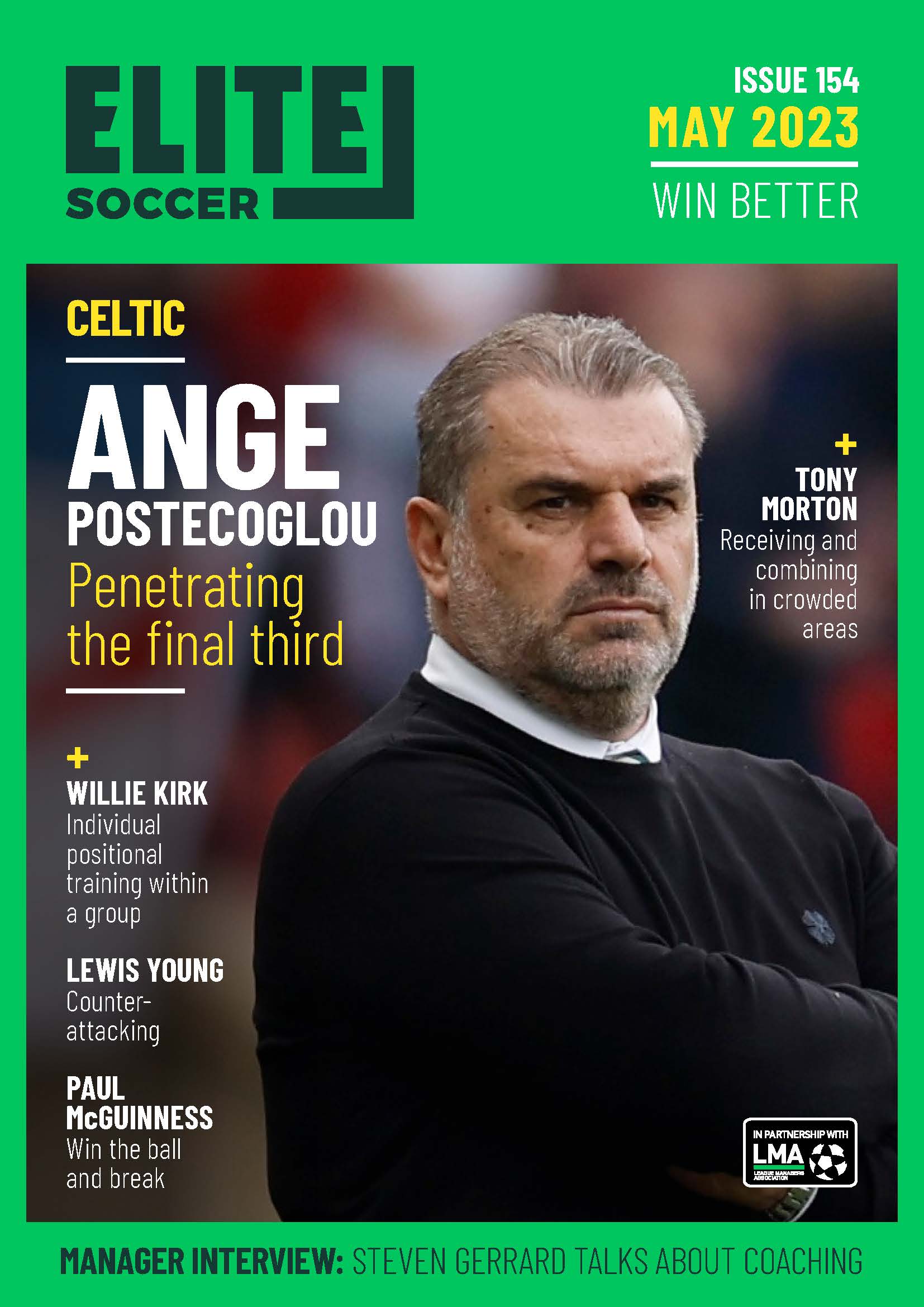
Join the world's leading coaches and managers and discover for yourself one of the best kept secrets in coaching. No other training tool on the planet is written or read by the calibre of names you’ll find in Elite Soccer.
In a recent survey 92% of subscribers said Elite Soccer makes them more confident, 89% said it makes them a more effective coach and 91% said it makes them more inspired.
Get Monthly Inspiration
All the latest techniques and approaches


Since 2010 Elite Soccer has given subscribers exclusive insight into the training ground practices of the world’s best coaches. Published in partnership with the League Managers Association we have unparalleled access to the leading lights in the English leagues, as well as a host of international managers.
Elite Soccer exclusively features sessions written by the coaches themselves. There are no observed sessions and no sessions “in the style of”, just first-hand advice delivered direct to you from the coach.
