ZOOM Q&A WITH KEITH ANDREWS - FEB 25 - DETAILS HERE

 close
close


 LOGIN
LOGIN
You are viewing 1 of your 1 free articles
Steve Holland: Shaping a nation
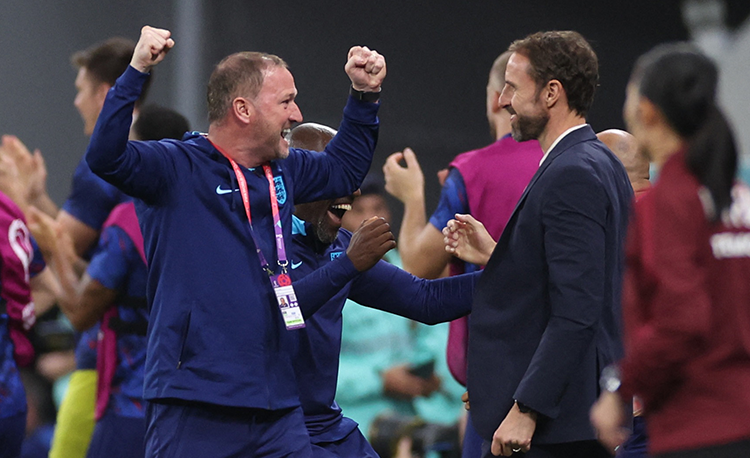
In a recent ESCA webinar, former England assistant coach Steve Holland spoke to Ben Bartlett about his time working alongside Gareth Southgate and how they created a new set of expectations for the national team


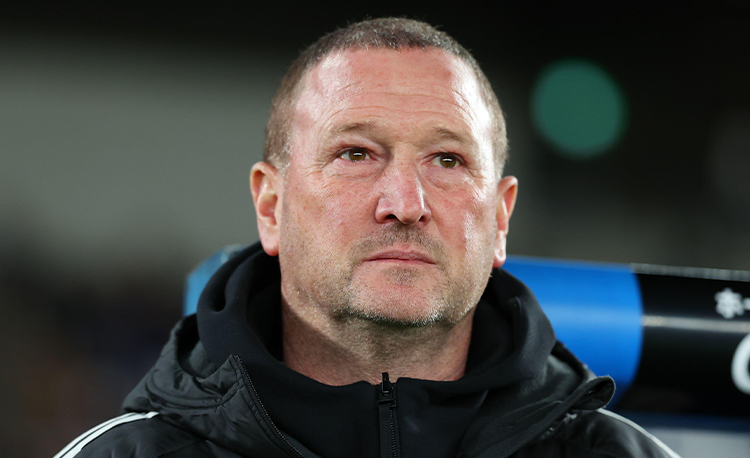
Steve Holland was like any other young hopeful – he loved football, so he wanted to become a professional footballer.
However, at a very young age, he decided to direct his love of the game into coaching.
“I was a professional, but I didn’t have a good career as a professional footballer, so I made a decision very young that I knew I couldn’t play at the highest level, so I wanted to try and operate at the highest level as a coach. I knew I could never catch up the experiences that they would have had as players. But I wanted to know everything that I could learn to try and make that that gap up.”
Since then, Steve has spent 17 years at Crewe Alexandra, eight years at Chelsea, first as reserve team coach and then as assistant, and over a decade in the England national team set-up.
He worked with seven different head coaches while at Stamford Bridge in a time of huge success for the club, where they won the Champions League as well as multiple domestic trophies.
“What I decided that I was going to do early was that I wanted to try and be the best assistant manager that I could possibly be, not necessarily be an assistant manager to quickly try and become a manager.
So whenever there was a change, it was easy for me because of my mindset to adapt because I actually did want to genuinely help the people that I was working with, to try to give them whatever it was that they wanted from me.
“Of course, with every change, that was different, and different staff coming in and having to adapt to the staff as well as the head coaches, and the dynamic of that, but fundamentally if you’re prepared to work hard and you’re honest and you have something to contribute, you have some knowledge and some experience, then people are always open to giving coaches a chance at clubs.
“I was really lucky in that I was always given a fair opportunity by all of the guys that that I worked for, from Antonio Conte, [Jose] Mourinho, right back through to [Carlo] Ancelotti. I was always given a fair chance, and given that chance, I was always determined to make sure that I had provided some worth and contributed, whilst always trying to respect my position in the dynamics of the group.”
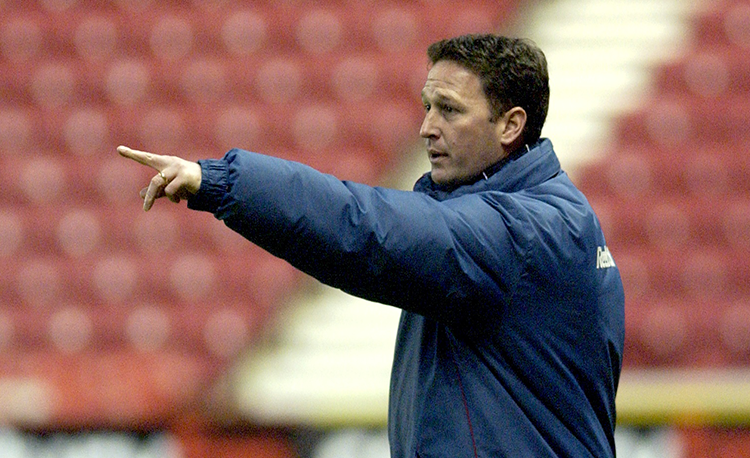
Shaping the nation
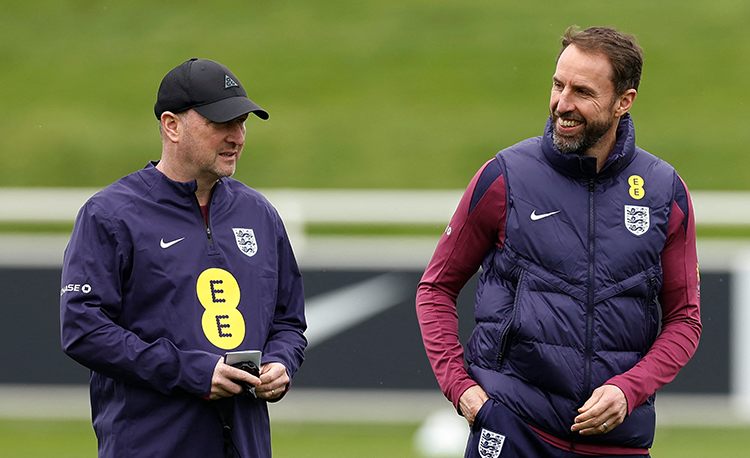
Steve was named assistant manager to newly-appointed England under-21s Gareth Southgate in 2013, and the pair moved up to the senior team in 2016. England subsequently reached the final of the European Championships in 2021 and 2024, and the semi-final of the 2018 World Cup – the most successful England senior men’s side in decades.
Steve puts it down to having a strong staff group who were committed to changing the expectation that England would fall before the final hurdle at a major tournament.
“The World Cup in USA ‘94, England didn’t qualify. In [France] ‘98, England exited round of 16 in Saint Etienne. ‘88 in Germany, we lost all three group games, Bobby Robson’s team. In ‘92, we didn’t win a game and we again exited at the group stage. So two outstanding tournaments [the 1990 World Cup and the 1996 European Championships] with super players who did a great job, but they were one-off moments. There was never a sustained period of getting close, which would then give you real belief that you could get over the line. So that was the biggest challenge really: to try to create that.”
Coaches in an international set-up are constrained by the players at their disposal; they can’t simply go out and buy new personnel, so they need to consider how to play based on their assets. It means a lot of work watching matches in order to get the best possible understanding of each potential player and how they reacted to particular situations – against smaller teams, in away games, in high-profile, high-pressure matches.
“You’re trying to build a profile, not just a technical, tactical, but a psychological profile, a personality profile, because to play for England, the responsibility is big and to wear that shirt, you need to be strong.”
Related Files
Of course, it is also about identifying the best players. Sometimes that is obvious, but sometimes it is about who will slot in best to the system. Steve points to discussions ahead of the Russia World Cup in 2018, when the coaching staff wanted the team to control games more, and thought they should switch from a back four to a back three, and create a midfield that would be making and scoring more goals.
“You’re trying to identify the players that are doing well at the time, trying to get round pegs into round holes, trying to give the team the best possible chance of success,” he says.
After that tournament, England lost 2-1 to Spain in a Nations League qualifier, and the three at the back were struggling.
“We knew we needed to make the next step, we needed really to get to a 4-3-3, 4-2-3-1, and 2019 was the time that we started to introduce that.
“Also, we had a different pool then. [Mason] Mount was emerging at Chelsea, [Bukayo] Saka was emerging, Phil Foden was, these guys coming through the junior teams, Jack Grealish, so we were starting to have a different pool of players that that would allow us to play a different way. That’s the key.
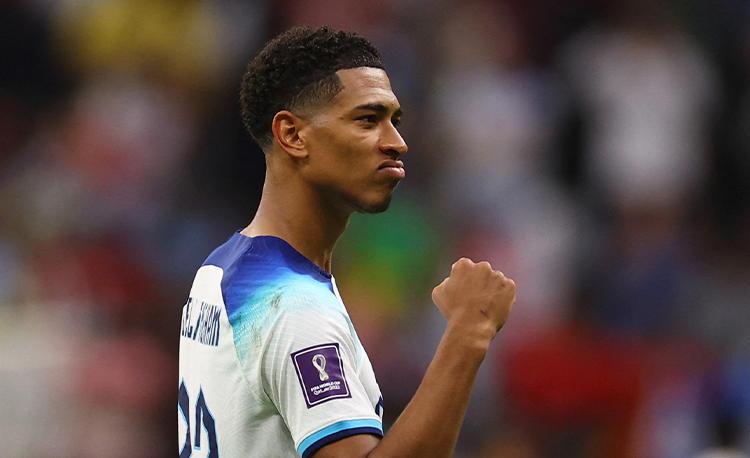
“In Qatar, Jude [Bellingham]’s emerging now. So where’s Jude playing for his club? How can we best transfer what he’s doing really well for his club into England, but still fit in what what makes Phil work? Because Phil is not really one for the touch line. He’s one who needs freedom to move inside and find spaces. That’s okay if [Luke] Shaw’s going outside. That would work. On the right, Saka wide with [Kyle] Walker in. Yes. That’s got a chance.
“So you’re consistently always adapting the jigsaw to the conditions of who’s doing well and who isn’t.”
Ultimately, he says, the role of international coaches is to get the best players available playing in their best positions as regularly as possible so that they are comfortable and able to thrive under pressure when it comes: “They’re used to it, they’ve been there, rather than suddenly picking somebody because he’s perhaps the player for the media, but, actually, you’re playing him in a position where he hasn’t been playing all season long for his club, because when the pressure comes, you’ll get a crash for sure.”
On being an assistant
Although the role of assistant coach might look slightly different depending on the head coach, Steve’s outlook remains the same – he is there to add a broader and more rounded set of skills and perspectives to the set-up.
“With each of the different managers, they all had their own different personality traits,” he says, pointing to the drive and passion of Antonio Conte and Jose Mourinho, and suggesting that sometimes players simply wanted to talk to someone different. “What they wanted at times was somebody to go to, to speak and to get some clarity on this or that, and they perhaps wouldn’t feel comfortable doing that with the head coach.
“You’re like a step between the manager and the players where you’re trying to provide clarity, and sometimes you’re trying to be really supportive.
“If I compare that to working with Gareth, who is a completely different personality and character to Jose and Antonio - I’m not saying better or worse, I’m just saying completely different - I had to behave in a different way to make that relationship work, because Gareth had always that empathy and always time for everybody, and what was required at times was the driving and the pushing on the training ground.
“The best managers in the world, they have super strengths and they have great strengths and they have lots of them. But they all also would have some areas of weakness, even the top ones that win everything.
He adds that the best coaches are always seeking out honest opinions.
“They don’t just want people around them that say, ‘Yes, boss. That’s a good idea.’”
He gives an example of the famous Chelsea v Liverpool match where Demba Ba capitalised on Steven Gerrard’s unfortunate slip to crush the Reds’ chances of winning the Premier League.
“We’d had a lot of talk in the week about what to do, and there was a feeling within the coaching group that matching up Liverpool’s diamond with a diamond was the best way. I felt that a different way with a double pivot was perhaps a better way, having studied all the clips, and all the players came off the front, [Daniel] Sturridge, [Luis] Suarez, [Raheem] Sterling, all coming low to connect. Although my opinion was different to the rest of the group, it was an opinion I held and when I was asked it, I gave my opinion.
“The other side of that is of course that the manager has the decision, always, on everything . He has to deal with all the fallout, so if what you want or what you think isn’t what in the end the manager decides, then immediately you back it and give it 100% and try and make it work. That’s your job.”

Get a free issue
Latest Issue
Subscribe Today
Editor's Picks
Turning defence into a fast attack
Attacking transitions
Deep runs in the final third
Using the goalkeeper in build-up play
Intensive boxes drill with goals
Penetrating the final third
Creating and finishing
My philosophy
Pressing initiation
Coaches' Testimonials
Alan Pardew
Arsène Wenger
Brendan Rodgers
Carlos Carvalhal
José Mourinho
Jürgen Klopp
Pep Guardiola
Roy Hodgson
Sir Alex Ferguson
Steven Gerrard
Get a free eBook
Coaches' Testimonials

Gerald Kearney, Downtown Las Vegas Soccer Club

Paul Butler, Florida, USA

Rick Shields, Springboro, USA

Tony Green, Pierrefonds Titans, Quebec, Canada
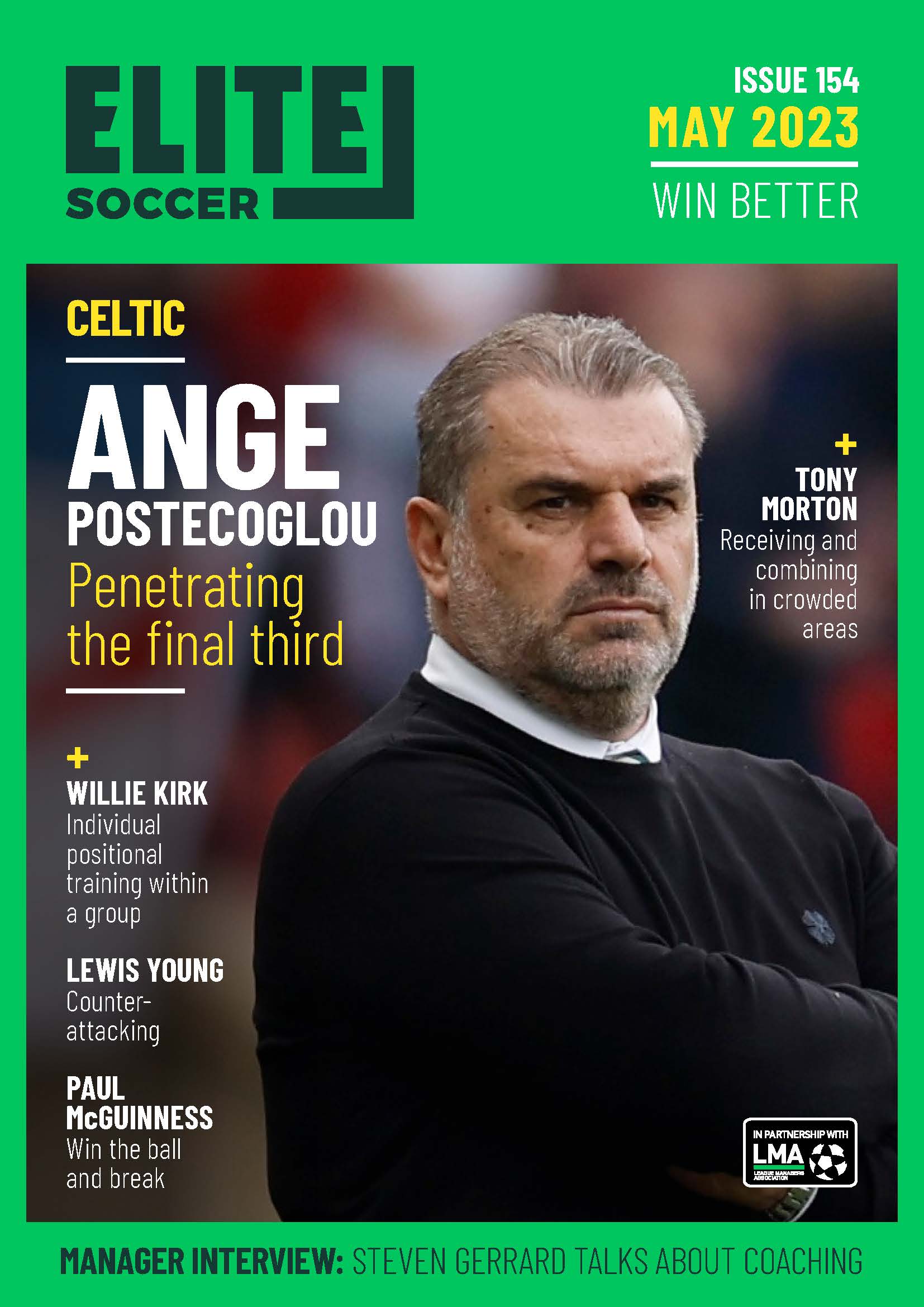
Join the world's leading coaches and managers and discover for yourself one of the best kept secrets in coaching. No other training tool on the planet is written or read by the calibre of names you’ll find in Elite Soccer.
In a recent survey 92% of subscribers said Elite Soccer makes them more confident, 89% said it makes them a more effective coach and 91% said it makes them more inspired.
Get Monthly Inspiration
All the latest techniques and approaches


Since 2010 Elite Soccer has given subscribers exclusive insight into the training ground practices of the world’s best coaches. Published in partnership with the League Managers Association we have unparalleled access to the leading lights in the English leagues, as well as a host of international managers.
Elite Soccer exclusively features sessions written by the coaches themselves. There are no observed sessions and no sessions “in the style of”, just first-hand advice delivered direct to you from the coach.
