ZOOM Q&A WITH KEITH ANDREWS - FEB 25 - DETAILS HERE

 close
close


 LOGIN
LOGIN
You are viewing 1 of your 1 free articles
The greater gains
Sports psychologist Lucy Burdin tells Elite Soccer about her role within football, and the impact it can have at the highest level


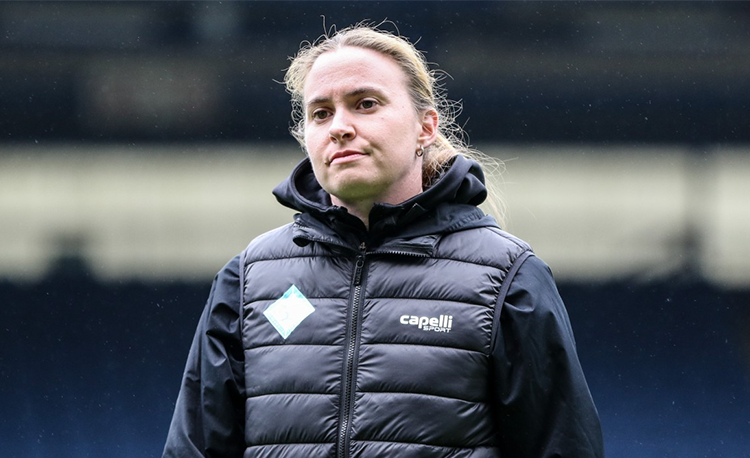
Words: Carrie Dunn
Football – like society more broadly – has got much better at talking about mental health. Sports psychologists are becoming more and more common – and Lucy Burdin hopes more coaches and clubs will start to recognise the positive effect they can have.
In fact, she calls it “the best form of support you’ll ever get”.
She explains: “We can talk about mental health, for example, or performance, but it takes courage to do that. When you have someone with you all the time and actually truly knows you, that’s such a blessing.”
She would like to see sports psychologists being treated just like seeing a physician or physiotherapist, or spending time with the data analyst: “that barrier needs to be removed a little bit.”
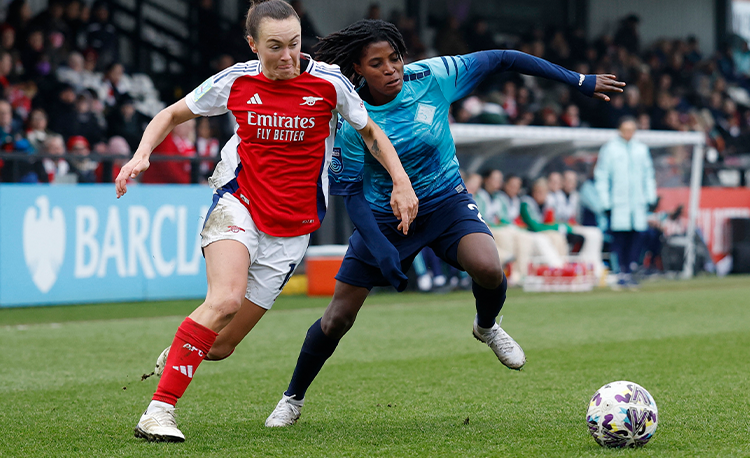
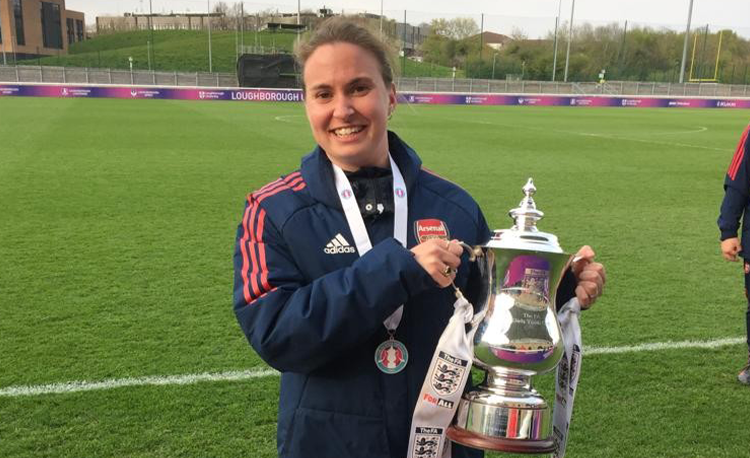
Burdin has always loved football, playing as a teenager, and moved towards psychology while at school; in fact, she was coaching while studying for her Masters degree.
It can sometimes be challenging for people to take on new ideas, and football is no different. Burdin thinks that embracing sports psychology can be difficult for some because it requires a degree of vulnerability.
“It’s not as scary as people think, and hopefully that slowly washes away,” she says.
However, she adds that the idea of being vulnerable in professional sports can be perceived as completely opposite to the usual requirements for success.
“It’s strange in the sporting world, like you have to be this superhero, but in reality, you’re constantly judged as well.
“I’m trying to change that stigma. Actually, it’s a massive positive.”
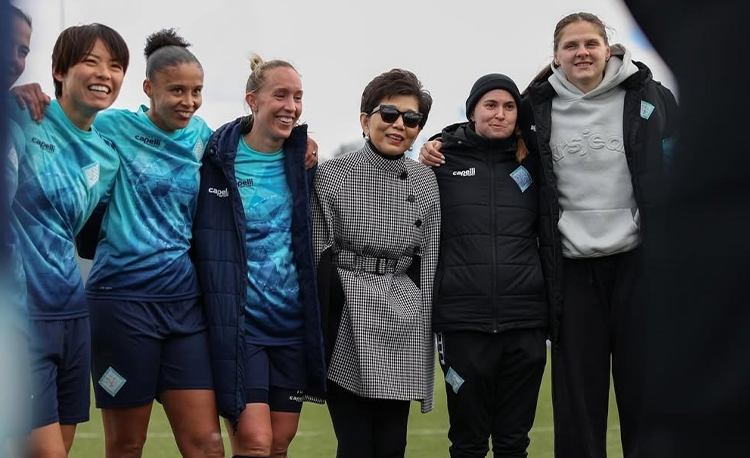
London City Lionesses can attest to that. Burdin worked with them throughout the 2024-25 season as they achieved promotion to the Women’s Super League, becoming the only independent club currently in the top flight. She supported players, coaches and the wider multi-disciplinary team, seeking to help performance on the pitch but also to promote individuals’ wellbeing.
“How I practise, it’s about the person before the athlete: so supporting them first and foremost, and then from that performances get better. As a whole, it’s ensuring people feel seen and heard and they have that safe space, but also coaches and staff recognise how they can best support [players].”
Day to day, Burdin was at the training ground with everyone else, taking part in the morning meeting, eating with the group, observing the dynamics, and then leading group sessions or one-to-ones in the afternoon.
“A one-to-one for me is not always in a room, it’s going for a walk or having a coffee, so it’s a bit more of a comfortable environment for them,” she says. “It was just down to me, what I thought the team could need and what was coming up, because you’re constantly observing as a psychologist. You’re hearing things. You’re seeing things. You’re always on.”
There was a balance between Burdin approaching people proactively if she saw that they might benefit from additional support, and those people coming to her directly.
“You’ve got these fancy devices that track sleep, etcetera, and for me, that’s where you can get the most information: sleep and mood and the general scientific stuff. If that [data] was low for me and consistent, that’s when I would come in. But, otherwise, they’ll come to me. Performance-wise, if they miss a penalty, then it’s more of an informal chat than a ‘Let’s panic and get you in this room’.”
Related Files
Although Burdin’s most recent role was with a women’s team, she sees no difference between working with female footballers or male.
“I like to keep things fairly level. Some individuals could be open to psychology, others aren’t so receptive to it, so I think that’s the same dance you have in in male sport as well. It’s just about being consistent in what you’re doing and trying to understand the individual and not change things drastically.”
Having a sports psychologist on hand can be helpful for dealing with potential problems before they get to a critical point.
“We don’t always have to wait for the crisis point to go, ‘Oh, let’s give you this.’ People want to be heard. That’s the main thing about psychology, and it’s a space for them to be heard and to be listened to. In sport, you’re being pushed to get certain weights or to get the fastest time or to score a goal or to save a penalty.
Whatever it might be, there’s always that high pressure performance, but in reality, whatever happens on the pitch is going to impact them mentally.”
“It’s about being consistent in what you’re doing and trying to understand the individual and not change things drastically”
Of course, some crises can’t be predicted, such a serious injury, and sports psychologists can help there too. Burdin gives the example of an anterior cruciate ligament injury.
“It’s a hard one because their identity completely goes. They know it’s long term.
“It’s a very unpredictable injury. So when you return from an ACL injury, you don’t know if it’s going to go again when you’re just standing still. There’s that fear element. So for me, it’s just to have regular touch points and just be as present as possible, do some techniques that help that individual: if it’s visualization of how they can build strength in the gym or how they can see life outside of football as well or the sport that they’re doing, I think that’s the most important thing.
“For me, an ACL, because [recovery is] so long, it’s a great opportunity to see you as a person rather than just the performer because that identity is completely wiped out for a bit. It’s a great opportunity to get education in or start a course or go and see loved ones: actually learn more about yourself than just being a footballer.”
It isn’t just about a crisis point. A sports psychologist can also help players and teams improve by the fine margins required at elite level.
“It’s the minor details. So it’s always about looking at the body language, or the technical aspect of how they pass the ball, for example, or how the team collaborate together in certain moments of the game. It’s working with the analysts to say, ‘Look, can you focus more on this bit?’
“It’s drawing their attention to certain aspects and utilising other experts in the room to demonstrate those psychological aspects and those fine margins effectively.”
Success for Burdin is not always about the big wins, but the smaller ones as well, which may be easy to forget about sometimes.
“It’s those little moments where I was part of that person’s journey or part of this team’s journey. Even with coaches or staff members as well, you’re all just having that little bit of impact. Even if it’s small, as psychologists, we see wins a lot differently. For me, it’s not about scoring three goals. It’s actually about how they overcame when they were challenged; they didn’t hesitate in that little small moment.”
A sports psychologist embedded within a football club can have a real long-term impact.
“Psychology is everywhere. It’s the physio room. It’s the coaching staff. It’s all the staff. Absolutely every interaction involves psychology. So it’s quite a widespread role to have, but if you manage it effectively, it has greater gains.”

Get a free issue
Latest Issue
Subscribe Today
Editor's Picks
Turning defence into a fast attack
Attacking transitions
Deep runs in the final third
Using the goalkeeper in build-up play
Intensive boxes drill with goals
Penetrating the final third
Creating and finishing
My philosophy
Pressing initiation
Coaches' Testimonials
Alan Pardew
Arsène Wenger

Brendan Rodgers
Carlos Carvalhal
José Mourinho
Jürgen Klopp

Pep Guardiola
Roy Hodgson
Sir Alex Ferguson
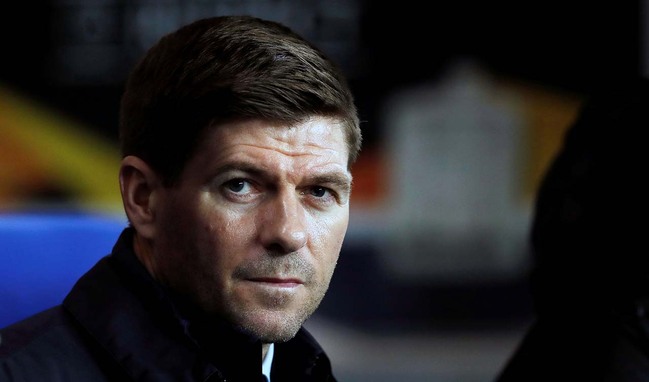
Steven Gerrard
Get a free eBook
Coaches' Testimonials
Gerald Kearney, Downtown Las Vegas Soccer Club

Paul Butler, Florida, USA

Rick Shields, Springboro, USA
Tony Green, Pierrefonds Titans, Quebec, Canada
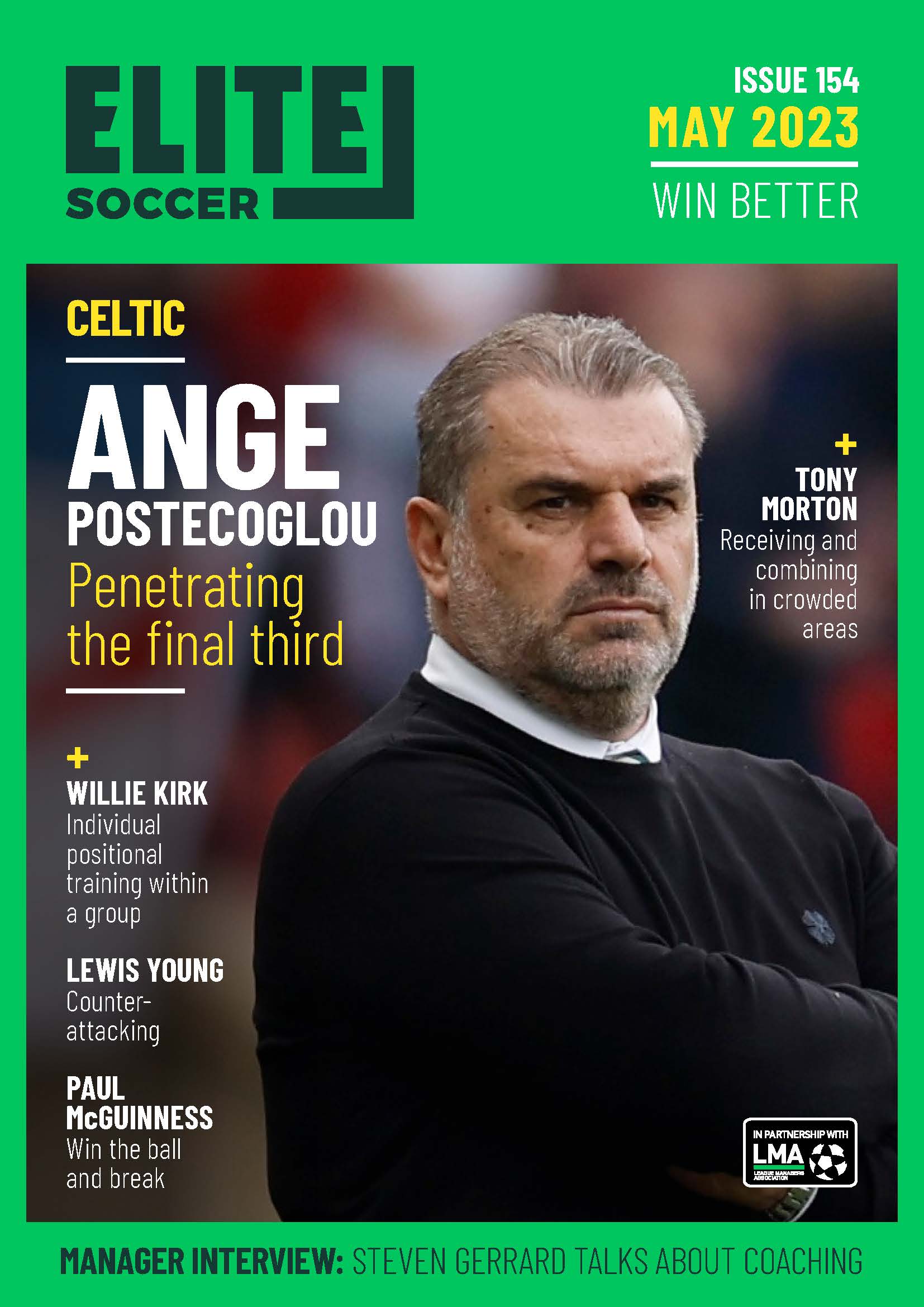
Join the world's leading coaches and managers and discover for yourself one of the best kept secrets in coaching. No other training tool on the planet is written or read by the calibre of names you’ll find in Elite Soccer.
In a recent survey 92% of subscribers said Elite Soccer makes them more confident, 89% said it makes them a more effective coach and 91% said it makes them more inspired.
Get Monthly Inspiration
All the latest techniques and approaches


Since 2010 Elite Soccer has given subscribers exclusive insight into the training ground practices of the world’s best coaches. Published in partnership with the League Managers Association we have unparalleled access to the leading lights in the English leagues, as well as a host of international managers.
Elite Soccer exclusively features sessions written by the coaches themselves. There are no observed sessions and no sessions “in the style of”, just first-hand advice delivered direct to you from the coach.
