
 close
close


 LOGIN
LOGIN
You are viewing 1 of your 1 free articles
The indispensable skill
John Allpress, former assistant head of academy player and coach development at Tottenham Hotspur, looks at the importance of receiving and controlling the ball


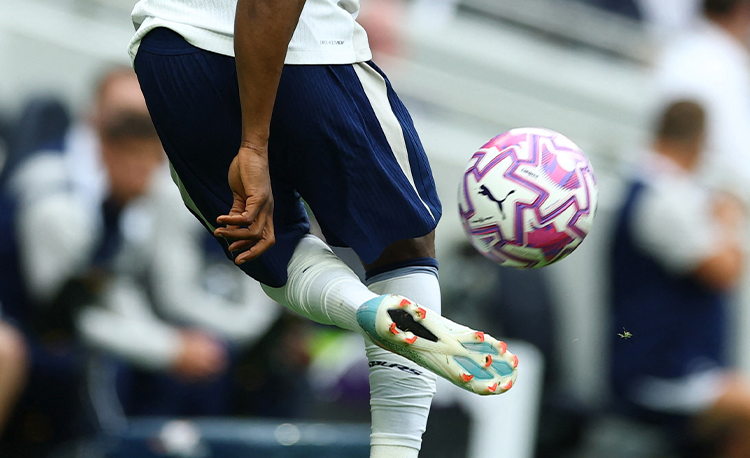
Receiving and controlling the ball during a football match or training session should be seen as a means to an end - not an end in itself. Poor receiving and controlling skills often result in rushed techniques and poor decision-making.
Receiving and controlling skills matter because they buy you time, give you space to work, and put you in charge of potentially tricky situations and the effective execution of your decision-making. Because of this, receiving and controlling the ball efficiently is one of the most important tools in the game and an indispensable part of a player’s armoury.
An essential element
The degree of competence a player has when receiving and controlling the ball will usually go a long way to determining at what level they play out their football career.
Most technical faults when receiving and controlling the ball are associated with players not preparing to receive the ball early enough, selecting the wrong surface for their first touch, or not being relaxed and too tense on contact with the ball, which allows it to bounce off the selected surface and move away out of reach.
Better receiving and controlling skills often result in better player performance during the hurly-burly of match play and are essential elements for linking the game together and promoting connectivity; for example, receiving and controlling the ball in order to:
- pass
- turn
- dribble
- shoot
- run with the ball.
Players also need to be proficient when receiving the ball with their back to goal, facing up an opponent, in tight situations, or in acres of space - and know how to be effective when these situations present themselves.
They must be skilled when dealing with the ball if it comes towards them at varying heights and speeds, quickly selecting the right part of their body to use, eg foot (inside, outside or instep), thigh, chest or head.
The basic mechanics of learning how to receive and control the ball and get it to do what you want it to do can be learned via quality-focused repetitive practice, either unopposed or semi-opposed. Players with the right mindset can put in the extra hours required to hone their techniques by doing ‘ball and a wall’ practices, either solo or with a partner.
Important components and considerations here include:
- how to adjust the body to the flight of the ball as it travels
- how to open your body up to make the pitch bigger for yourself to receive and control the ball as it travels
- how to address the ball as it arrives by offering and withdrawing the foot or thigh at precisely the right moment to kill the pace of the ball
- having the softest of touches to guide the ball with the foot, thigh, chest or head towards an advantageous space
- the flexibility of the whole body and the strength of the non-receiving leg that are vital to balance the player as the skill is undertaken
- ample core strength to be able to hold opponents at bay while receiving and controlling the ball.
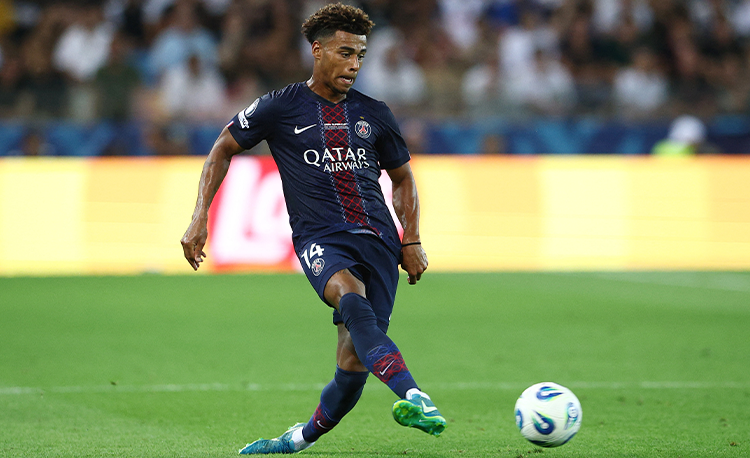
Take the risk
It is crucial that young players experience the dynamic nature of football and the context in which decisions have to be made, as well as being exposed to opportunities to explore and experiment with jeopardy as a backdrop. In these environments the coach should always encourage the players to try things and be prepared to push the boundaries of what they know and can do. It’s always better to make a mistake than not try anything.
Because of this, opposition is vital to learning and practice. Knowing how to exploit receiving and controlling the ball to one’s advantage is best learned and practised in game play, even when these skills are not completely secure. That is the trade-off, and the coach has to make that call.
“It’s always better to make a mistake than not try anything”
Experimenting and risk-taking are of critical importance; for example, on receiving the ball, when to guide it beyond the defender using a big touch, or using a smaller, tighter touch when receiving the ball in front of the defender; how to receive and control the ball with your back to the defender, or how to receive and control the ball to turn using multiple touches or no touches to do so; learning and practising how to see the spaces you need to exploit and guide the ball into them while making the defender believe you want to go somewhere else.
Game-like activities based on challenges are useful for players working on their decision-making processes as well as their technical competences.
So in a small-sided game a coach can test the players in some of the following ways:
- space – look for a space you may use before you get the ball
- control – try to select your controlling surface as the ball travels to you
- touch – how many touches do you need to turn and play forward?
- guiding – look for opportunities to guide the ball into a space before executing your next action
- receiving and sending – look for opportunities to pass off one or two touches.
Related Files
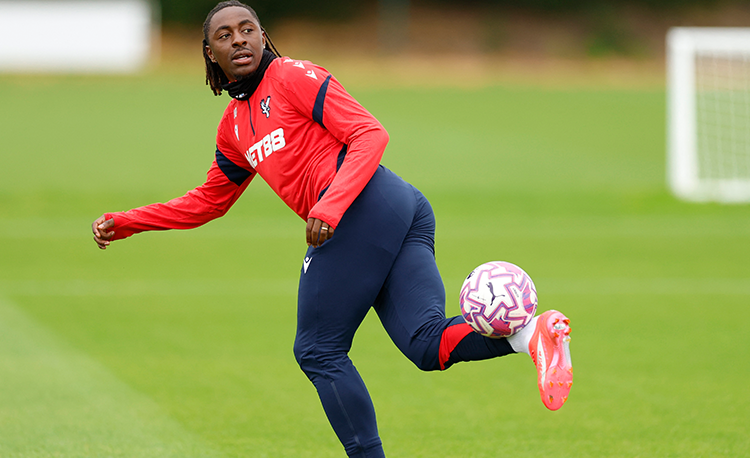
Knowing where the ball is, knowing where your opponent is, knowing where you want to go with the ball and what you want to do with it next - all before you get it - will help greatly if you are to be successful more often than not.
To get a career as a professional footballer you don’t have to be able to score goals, head the ball, tackle, dribble or run with the ball. You do have to be prepared to run around, pass the ball well, turn with the ball effectively and have an excellent first touch and be able to control the ball to your advantage.
As well as the obvious marker of the scoreline, football matches are won by exploiting space. Before a team or individual can exploit space, they must create and maintain it. Space is created through coordinated team play, individual players’ high skill levels or opponents giving the ball away. The player whose receiving and controlling skills are poor needs more time and space to execute what is required than the player whose receiving and controlling skills are good. To achieve good ball control, a player must understand what is involved, how they can improve and then be willing to put in the hours of practice required to make those adjustments.
Match play and game-based practice will ultimately produce the biggest dividend as players practice their performance in realistic situations cooperating with and competing against other players.
This promotes understanding of when to do what (decision-making) and when and when not to take unnecessary risks. Different types of receiving and controlling skills are required for different areas of the pitch; for example:
- a full-back receiving the ball from the goalkeeper out wide higher up the pitch than their deepest midfield player is a far different proposition from an inverted full-back receiving the ball from their goalkeeper five or six yards outside their own penalty area
- a winger aiming to exploit the space behind defenders and receiving ground or aerial passes at speed as opposed to coming short towards the passer with the defender positioned behind them
- first-touch skills in midfield areas of the pitch to retain possession, rather than touching the ball into a space to create the angle for a defence-splitting pass.
Speed, agility, acceleration
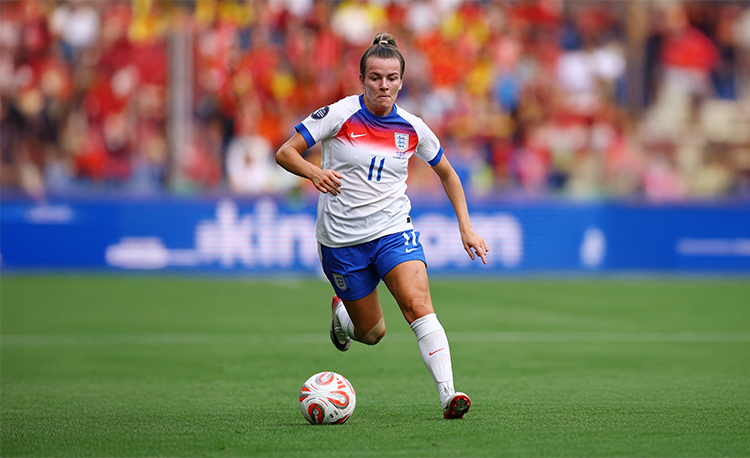
In the modern game at the highest levels, the ball is in play for longer than ever before. Speed, agility and acceleration are now central to the athletic prowess of the best players. Because of this, the game is getting quicker. The speed the ball travels between players in passing sequences and combinations is faster. Consequently, there are more opportunities to receive and control the ball in a top-level match than ever before, so understanding how to be effective in this environment is a wise move, and constant and regular practice is advisable. As we all know, practice makes receiving and controlling ball skills permanent, secure and unbreakable, even under intense matchday pressures.
“Match play and game-based practice will ultimately produce the biggest dividend as players practice their performance in realistic situations cooperating with and competing against other players”


Get a free eBook
Coaches' Testimonials

Gerald Kearney, Downtown Las Vegas Soccer Club

Paul Butler, Florida, USA

Rick Shields, Springboro, USA

Tony Green, Pierrefonds Titans, Quebec, Canada

Join the world's leading coaches and managers and discover for yourself one of the best kept secrets in coaching. No other training tool on the planet is written or read by the calibre of names you’ll find in Elite Soccer.
In a recent survey 92% of subscribers said Elite Soccer makes them more confident, 89% said it makes them a more effective coach and 91% said it makes them more inspired.
Get Monthly Inspiration
All the latest techniques and approaches

Since 2010 Elite Soccer has given subscribers exclusive insight into the training ground practices of the world’s best coaches. Published in partnership with the League Managers Association we have unparalleled access to the leading lights in the English leagues, as well as a host of international managers.
Elite Soccer exclusively features sessions written by the coaches themselves. There are no observed sessions and no sessions “in the style of”, just first-hand advice delivered direct to you from the coach.
