ZOOM Q&A WITH KEITH ANDREWS - FEB 25 - DETAILS HERE

 close
close


 LOGIN
LOGIN
You are viewing 1 of your 1 free articles
Transferring learning from training to matchday
John Allpress, former assistant head of academy player and coach development at Tottenham Hotspur, looks at how the coach can help their players transfer what they are learning and practising on the training field to the matchday experience


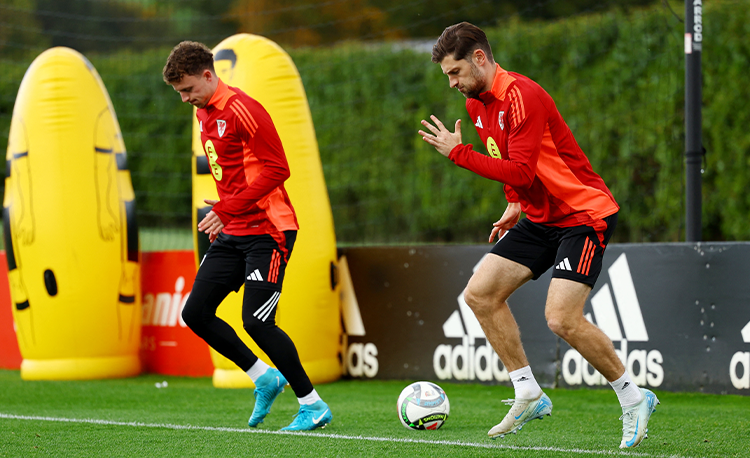
For development players of any age to progress, it’s important for them to be able to notice and absorb the golden threads and the focus of their work when making the links between what they already know and can do, and any new information which could be better and more effective in the future.
Transferring assignments from training to matchday takes planning and understanding on behalf of the coach, as new and unusual instructions could bring about confusion and mistakes as the players adapt and sort things out.
Accommodating these rocky moments is well worth it because while match play and game-based training activities are not the teacher, they do provide a prodigious number of learning opportunities for young players to immerse themselves in real time.
Both environments offer the chance for individuals to experiment and explore authentic circumstances and situations, and while the tariff for an error may be considered higher in matchplay, development players should still be encouraged to push their boundaries and be brave in both settings.
Encourage players to be brave
Coaches set the mood music for any learning and practice environment by the messages they give off in how they behave. For significant benefits to accrue, the players need to have confidence the coaches have their backs, especially when they have been challenged to get out of their comfort zone.
Moving into unknown territory can be tricky at the best of times and sometimes things don’t turn out the way either coach or players want them to, and from time to time players don’t get the rewards their performance deserves. However, regardless of a mistake or a negative result, learning and practice still take place.
Youngsters should always be encouraged to be brave and play with courage rather than play safe and within themselves. It’s always better to make a mistake than not try anything: better to fail aiming high than to succeed aiming low.
To get better, young players must become more skilful. This means combining their technical abilities with their decision-making capabilities. To do this they must practise a lot in matches and in training activities that replicate matchday actions. In this precarious space full of jeopardy, they must be expected to regularly apply their skills on demand and under pressure. If the coach does not supply this backdrop to players’ learning and practice, they are setting them up to fail in the long run.
The language used by the coach when first planning and then explaining what they want the players to concentrate on improving is vital for clarity.
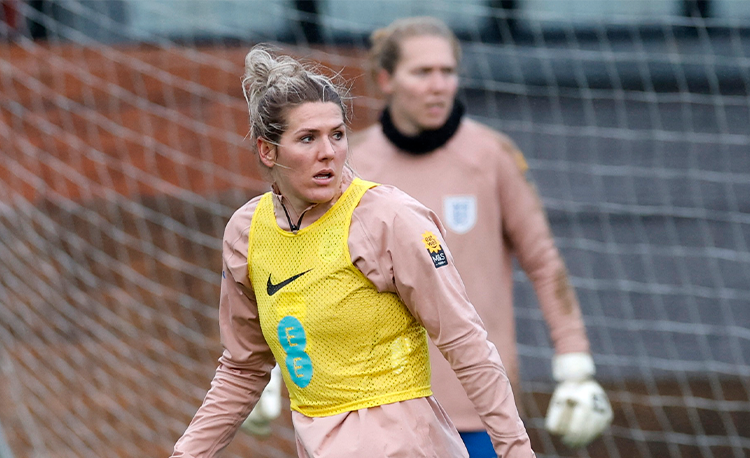
Examples of language in training and matchplay
Outlined below are some examples which can easily be transferred from training into matchplay. These begin with examples of group objectives which set practice up and focus the players on what they should be trying to achieve.
Group objectives
- Aim to get composed possession in midfield in order to play forward.
- Be ready to play forward as a first action.
- Look for opportunities to get the ball back without tackling.
- Try to outwit your opponent with or without the ball.
The coach should also plan practice objectives for the units or individuals within the group so that the work can be personalised. Some examples of unit challenges could be:
- Centre backs: look for opportunities to pass forward off one or two touches.
- Full backs: aim to receive the ball higher up the pitch than your deepest midfield player.
- Goalkeeper: look for opportunities to pass the ball into your midfield players as often as possible.
- Midfield players: try to play forward as a first action as often as you can.
- Wingers: look for dribbling opportunities from a pass laid into your path.
- Central strikers: look for opportunities to shoot or set up a teammate.
Individual challenges
- Goalkeeper in possession: be ready to set up attacks quickly after fielding the ball.
- Goalkeeper out of possession: decide when it’s best to catch, punch or deflect shots at your goal.
- Centre backs in possession: be ready to give supporting depth to a teammate who cannot play forward. Look for opportunities to pass or run with the ball. Decide how best to deal with the ball travelling towards you at varying heights and speeds.
- Centre backs out of possession: decide when it’s best to mark on the inside or outside shoulder. Look for opportunities to intercept and set up counter-attacks. Be ready to tackle or block if your opponent tries to turn with the ball.
- Full backs in possession: look for opportunities to overload wide areas via overlapping runs. Try to pass the ball forward as a first action as often as you can. Decide when it’s best to turn out and change the direction of the attack.
- Full backs out of possession: look for opportunities to win the ball back without tackling. Be ready to change from marking your opponent to covering a teammate. Decide, while the ball is travelling, how best to put an opponent at a disadvantage.
- Midfield player in possession: try to see as much of the pitch as you can before you get the ball. Look for opportunities to turn and break a line as a first action. Be ready to combine with teammates to create chances to shoot.
- Midfield player out of possession: be ready to track your opponent if they try to run in behind you. Look for opportunities to get touch tight with opponents to prevent them turning with the ball. Try to keep your body open to see the ball and your opponent.
- Forward in possession: look for opportunities to use accuracy over power when shooting. Be ready to use a side foot technique when shooting at the far post. Aim to arrive as late as possible when attempting to score from a cross into the penalty area.
- Forward out of possession: be ready to travel quickly as the ball travels to force opponents into predictable play. Decide how best to stop opponents playing forward. Look for opportunities to intercept and counter-attack.
Language is important here. Players are not told what to do, but rather what to focus on while aiming to make an effective decision in the circumstances they face. The language sets this notion up. For example, you must play one touch for the next ten minutes is a very different practice event from “look for opportunities to pass one touch”. In the first, there is very little decision-making for the players; in the second, there are infinite opportunities to execute skilful play regularly, at the right time, under pressure in a real situation, whether they play one touch or not.
This makes it easy for the coach to transfer the players’ practice from the training field to the matchday. Practice makes permanent with players becoming more skilful during matches.
Related Files
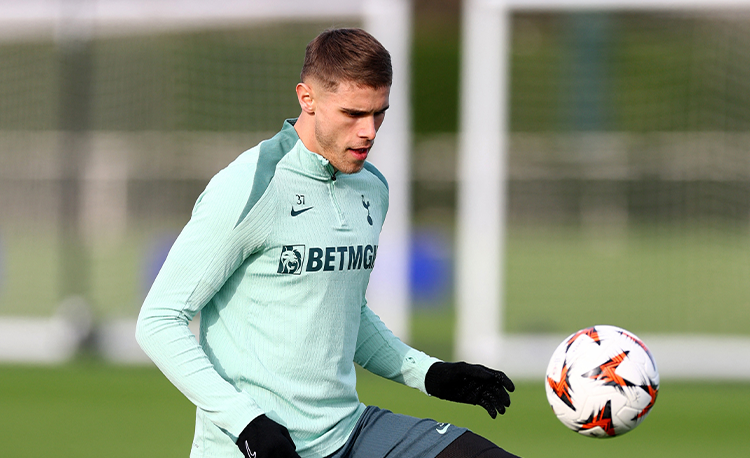
“Make a mistake and learn from it”
Coaching is not straightforward. It depends very much on who you are coaching and what you are coaching them for. Football depends on being able to operate in circumstances that are fluid, where nothing ever happens in exactly the same way more than once, but many very similar things happen a lot.
It is in these circumstances that players need to practise. The more they practise, the better they get, and the more skilful they become. Mistakes will be made but it’s better to make a mistake and learn from it than play safe and stay where you are.

Get a free issue
Latest Issue
Subscribe Today

Editor's Picks
Turning defence into a fast attack
Attacking transitions
Deep runs in the final third
Using the goalkeeper in build-up play
Intensive boxes drill with goals
Penetrating the final third
Creating and finishing
My philosophy
Pressing initiation
Coaches' Testimonials

Alan Pardew
Arsène Wenger

Brendan Rodgers
Carlos Carvalhal
José Mourinho
Jürgen Klopp
Pep Guardiola
Roy Hodgson
Sir Alex Ferguson
Steven Gerrard
Get a free eBook
Coaches' Testimonials

Gerald Kearney, Downtown Las Vegas Soccer Club

Paul Butler, Florida, USA

Rick Shields, Springboro, USA

Tony Green, Pierrefonds Titans, Quebec, Canada
Join the world's leading coaches and managers and discover for yourself one of the best kept secrets in coaching. No other training tool on the planet is written or read by the calibre of names you’ll find in Elite Soccer.
In a recent survey 92% of subscribers said Elite Soccer makes them more confident, 89% said it makes them a more effective coach and 91% said it makes them more inspired.
Get Monthly Inspiration
All the latest techniques and approaches


Since 2010 Elite Soccer has given subscribers exclusive insight into the training ground practices of the world’s best coaches. Published in partnership with the League Managers Association we have unparalleled access to the leading lights in the English leagues, as well as a host of international managers.
Elite Soccer exclusively features sessions written by the coaches themselves. There are no observed sessions and no sessions “in the style of”, just first-hand advice delivered direct to you from the coach.
