You are viewing 1 of your 1 free articles
Scout Nuno Barroca looks at the talent pipeline between Africa and Europe – and explores the challenges and pitfalls as well as suggesting some ways ahead
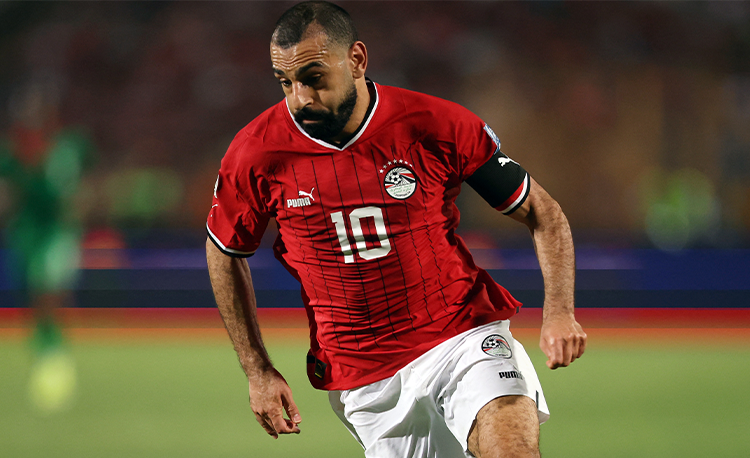
When considering scouting African players, start by the simple exercise of thinking about players who have left their mark on world football. Who doesn’t remember the flair of Jay Jay Okocha, El Hadji Diouf at the 2002 World Cup, or the Champions League triumphs of Samuel Eto’o and Didier Drogba? And what about the current impact of Achraf Hakimi, Sadio Mané, or Mohamed Salah?
When we talk about African players, often we are not only talking about overcoming challenges on the pitch. Sometimes we’re talking about winning at life, escaping widespread poverty on the continent, taking risks, and travelling thousands of kilometres from home: all for a dream, one that isn’t just theirs but belongs to their family, their childhood friends, former teammates, an entire community, and sometimes even an entire city or country. Being able to represent a nation with little visibility at the highest level of football transforms a player into a godlike figure to their compatriots.
In such a vast continent where football is the number one sport almost everywhere, why aren’t there more African athletes in European football or at the world’s top clubs? Why have only three African national teams reached the quarter-finals, and just one the semi-finals, of a men’s World Cup in the last 20 years?
Gradually, I’ve come to understand the challenges involved in scouting male players across Africa. I’ve been fortunate to visit various African countries - Morocco, Egypt, Angola, and South Africa - and observe how football operates there, from youth levels to the professional game. The insights I gathered were consistent across all these countries, and I’ll now explore what I believe are the biggest challenges in the recruitment process for European clubs in Africa.
In a continent as vast as Africa, it’s essential to consider the geographical context. The distance between Europe and Africa can be quite short – take Spain and Morocco, for example - but in general, these are long and complex journeys. To address this, European clubs have developed strategies to overcome the logistical difficulties of scouting in Africa. But in such a huge continent, which countries should we focus on to achieve the best recruitment outcomes for our clubs?
Market selection often depends on the geopolitical background of the target country, especially its historical and linguistic ties to the club’s country. It’s no coincidence that French clubs have many players from Senegal, Algeria, and Mali; that Portuguese clubs feature players from Angola, Guinea-Bissau, Cape Verde, and Mozambique; or that Spanish clubs include players from Morocco and Equatorial Guinea. These connections make adaptation easier and simplify negotiations between clubs.
Another major challenge is the lack of accessible information. A scout planning a two-week trip to watch under-19 matches cannot prepare their itinerary in advance due to the absence of public information on teams and competitions. One must rely on local contacts and networks that follow these leagues regularly.
The core issue is the federations’ lack of structured planning, especially when it comes to youth competitions. It’s common to see under-17 or under-18 teams playing in the third or fourth division of senior leagues because no appropriate youth championships exist, or the ones that do are of very low quality.
Some private academies avoid formal competitions altogether, opting instead to play friendlies throughout the season against opponents they consider of similar quality, ensuring players remain challenged. The younger the age group, the more underdeveloped the competitive structure tends to be, creating a huge structural imbalance between the sports systems in Africa and Europe.
This results in a slower, less grounded developmental path for African players than those raised in European systems.
After scouting and selecting a player, clubs face what I consider one of the greatest challenges: negotiation and signing. Generally, when a European club, whether elite or lower tier, is seen watching a game or approaching a club, the immediate assumption is Europe = money.
Many club officials view this interest as a lifeline: a quick way to make money, rather than a long-term opportunity or a “bigger picture” for the future of the player, the club, and even the negotiator involved in the transfer. Suddenly, a player who wasn’t even considered one of the best on the team is valued at €1–2million simply because a European club showed interest.
These situations often ruin once-in-a-lifetime opportunities for players, undermined by the greed of intermediaries. Without these self-serving interests from clubs and agents, far more African players would make it to Europe. Instead, players who aren’t ready for Europe’s elite academies also miss out on lower-tier opportunities, despite having the potential to succeed, because financial demands block the way.
There is a need for a new approach, one that looks at the long-term relationship between African clubs and European football and opens doors for players to leave for more reasonable fees or even for free. Clubs must understand that within five years, the financial return could be ten times greater.
One of the best solutions European clubs have found is creating partnerships with local clubs. In exchange for financial and organisational support, local clubs develop talent that can eventually move to Europe.
This organisational support, complemented by financial aid, aims to create lasting development conditions. Key initiatives include:
This creates a privileged pathway for top talent to reach Europe with a football education aligned to target clubs.
There’s also a less personalised but effective model: private academies. These are increasingly common across Africa, and their recruitment and development models are often based on European principles. Players with the most potential are integrated into teams with which the academy has partnerships. Many also play important social roles in their communities.
These are the current solutions for recruitment in Africa. However, as mentioned earlier, most of the issues stem from shortcomings at the federation level.
The next step to improving Africa–Europe football relations would be a coordinated restructuring effort among football federations. Football is one of the most profitable sports globally. A structured, sustainable investment plan could generate both sporting and economic wealth: better facilities, more support services, improved infrastructure, and broader community development.
Just as we don’t build a house from the roof down, we can’t develop football without a solid foundation. Federations must invest in:
These efforts can elevate players’ visibility and the value of local football. Some clubs already hire experienced outsiders to kickstart these reforms, which is a good move, but those individuals should work alongside well-trained local staff and partners.
Grassroots development is the key to unlocking Africa’s football potential. I do not doubt that with the implementation of these and other measures, we’ll see positive progress in the medium to long term: more player visibility, more competitive leagues, more talent ready to make the leap, stronger youth national teams, more transfers, and ultimately, more revenue for clubs and federations.
Recruiting African players for European leagues has potential but also pitfalls. The challenge lies in building an ethical, balanced, and sustainable relationship between markets, where African talent is valued as a critical role player and an essential part of football’s global growth.


In a recent survey 92% of subscribers said Elite Soccer makes them more confident, 89% said it makes them a more effective coach and 91% said it makes them more inspired.
Get Monthly Inspiration
All the latest techniques and approaches
Since 2010 Elite Soccer has given subscribers exclusive insight into the training ground practices of the world’s best coaches. Published in partnership with the League Managers Association we have unparalleled access to the leading lights in the English leagues, as well as a host of international managers.
Elite Soccer exclusively features sessions written by the coaches themselves. There are no observed sessions and no sessions “in the style of”, just first-hand advice delivered direct to you from the coach.
Live calls. Fitness programmes. Session plans. Everything the prepared coach needs.