
 close
close


 LOGIN
LOGIN
You are viewing 1 of your 1 free articles
Pressing triggers and compactness in a 3-4-3 shape
This session develops team pressing principles from a 3-4-3 formation, focusing on disrupting opponent build-up and regaining possession high up the pitch


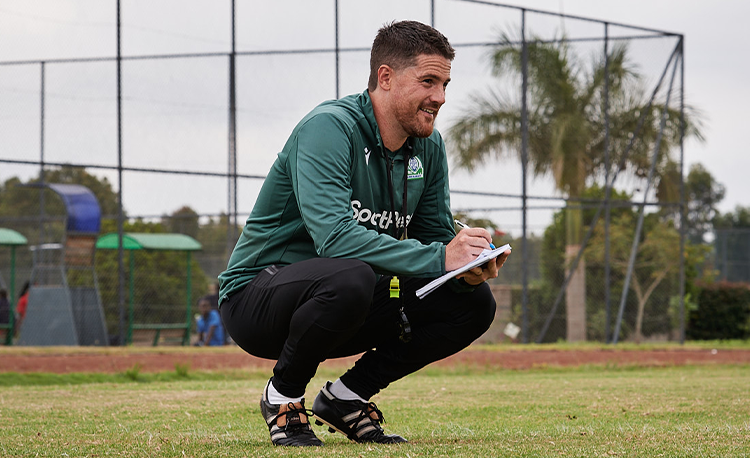
This session develops team pressing principles from a 3-4-3 formation, focusing on disrupting opponent build-up and regaining possession high up the pitch. Across four progressive practices, ranging from possession-based rondos to conditioned games and full 11v11 scenarios, players work on recognising pressing triggers, coordinating pressing movements, and forcing opponents into wide areas or traps.
This session stands out for its tactical realism and positional specificity, allowing players to rehearse pressing behaviours in their exact matchday roles within a 3-4-3 system. Each exercise is carefully layered, from small-sided set-ups to full 11v11, creating natural pressing triggers, decision-making moments, and transitions that mimic real game dynamics.
This session is also highly engaging due to its competitive scoring system, clear role definitions, and fluid role rotations, keeping intensity high and all players mentally switched on. The constraints force players to think critically about space, timing and communication, making the learning active and immersive.
It can be delivered as a single intensive session or split across multiple sessions to allow more time for detailed tactical interventions and deeper learning. It’s especially effective during pre-season, when players are first learning or refining the 3-4-3 formation and pressing system, helping to build shared understanding and clarity in roles.
It can also be used throughout the season as a refresher to reinforce pressing principles or to address specific tactical gaps observed in recent matches. Additionally, it’s ideal to run in the lead-up to games against opponents who favour playing out from the back, where a well-executed high press could be particularly effective.
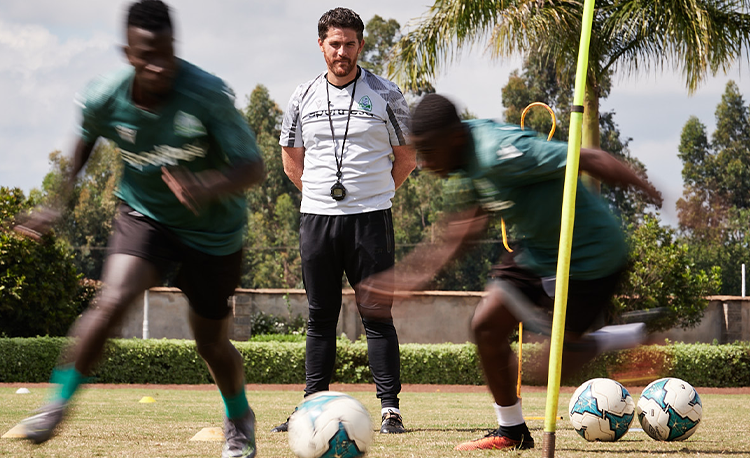
| Area |
Full pitch |
| Equipment |
Full size goals, mini goals |
| No. of Players |
20 + goalkeepers |
| Session Time |
Up to 90mins Possession v pressing: Up to 20mins Conditioned game: Up to 20mins Reduced field 11v11: Up to 20mins Full field tactical 11v11: Up to 20mins |
POSSESSION v PRESSING
We set up on an area of approximately 44yds x 70yds, between the two penalty boxes and narrowed to box width. Teams are set up in 10v10, in 3-4-3 formation. The coach is on the halfway line with a supply of footballs.
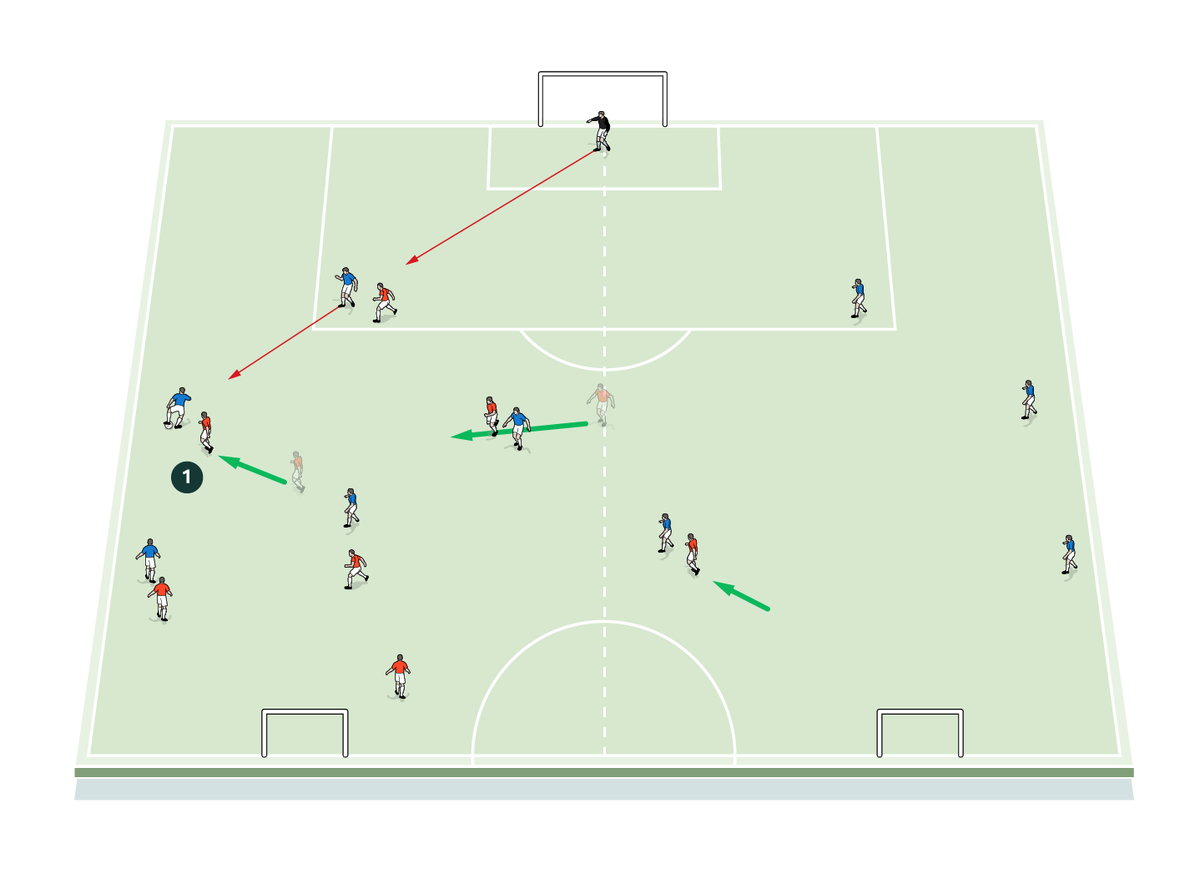
The coach serves a ball into one half, and that team starts in possession. Seven opposition players (three forwards, four midfielders) press across halfway; three defenders stay in their own half [1a]. If the ball goes out, a new ball is served to defending team’s back three, and the teams switch roles, as they do after a turnover as well.
[1a]
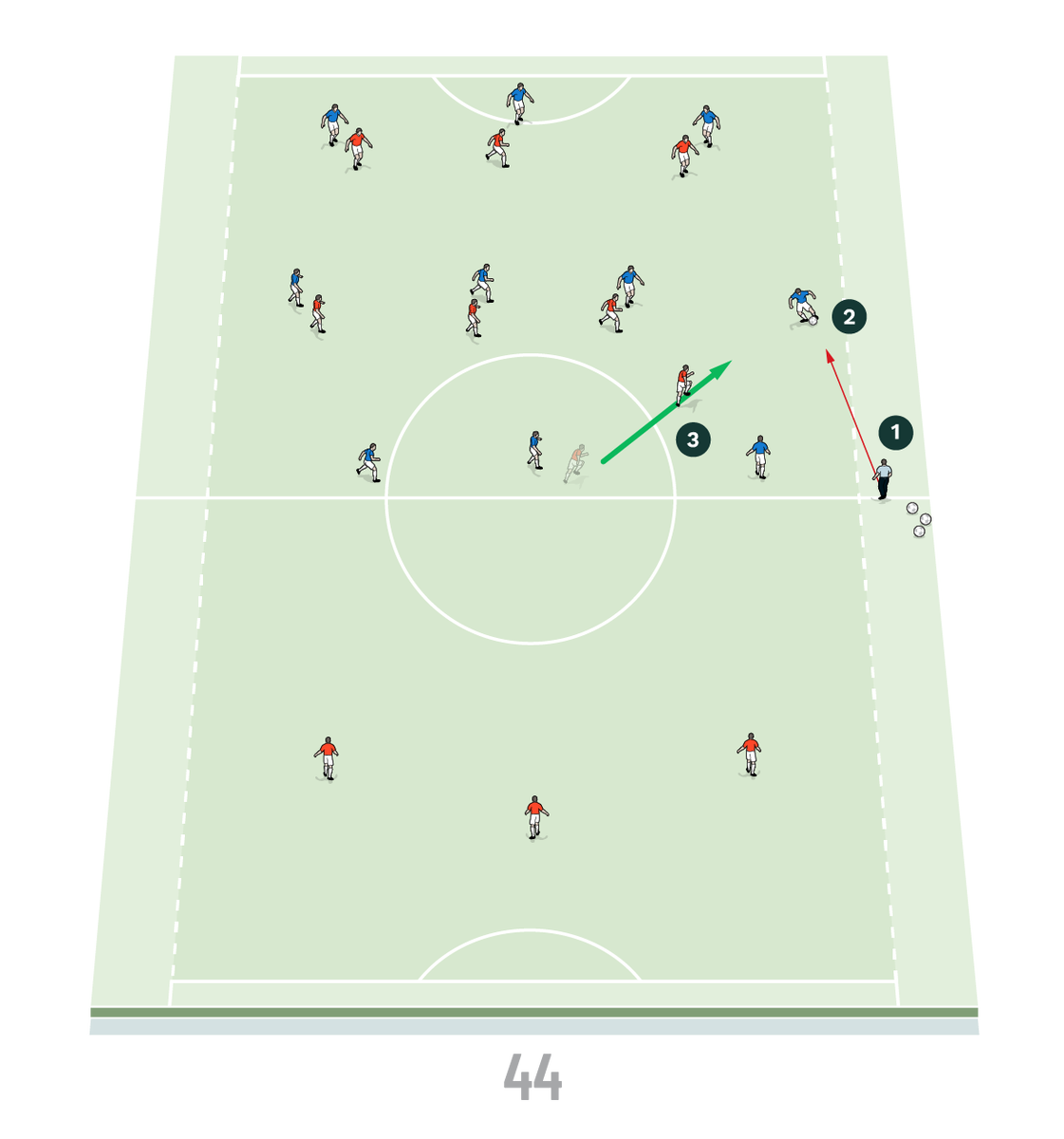
- Coach serves ball in from halfway line
-
Blues start in possession
-
Reds press with three defenders remaining in own half
The team in possession get one point for every eight consecutive passes [1b]; the pressing team get two points if they win the ball and pass it back to their defenders [1c].We are looking for the team in possession to maintain a 3-4-3 shape and proper spacing, to use quick ball circulation and support angles, and to recognise triggers to switch play or break pressing lines.
For the team pressing, we want them to press as a compact unit, forcing play into traps, to angle pressure to isolate and close passing options, and to win the ball with intent to connect quickly to defenders.
We can progress this by limiting players to two or one touches to increase the intensity and technical challenge.
We run this for up to 20 minutes.
[1b]
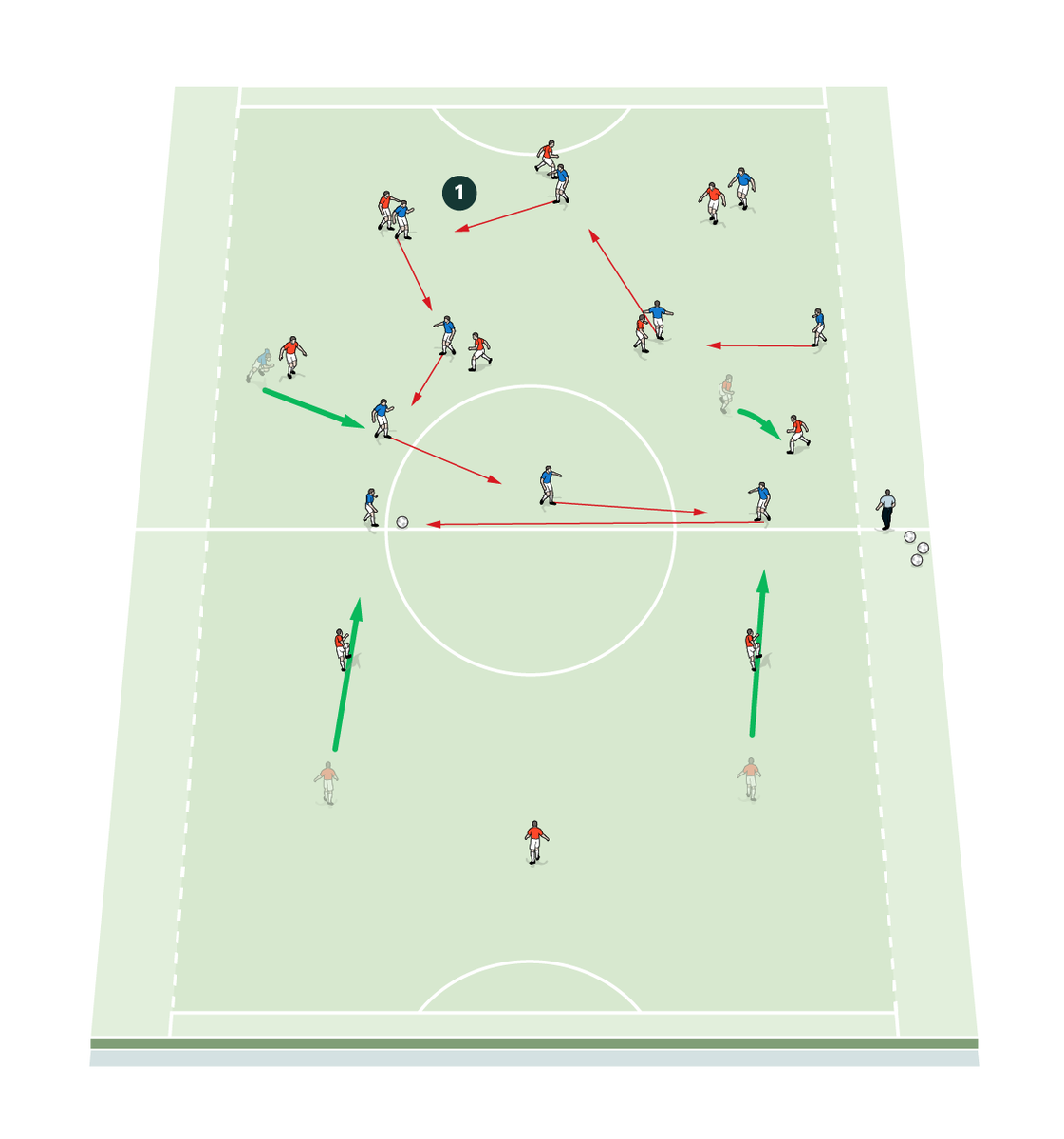
- Blues look to put together eight consecutive passes to win one point
[1c]

- Reds look to intercept
-
Reds win the ball and pass back to defenders and receive two points
CONDITIONED GAME
We set up on a half pitch, split vertically into two equal sides, from the edge of the penalty area to the halfway line. There is one full size goal and two mini goals positioned on the halfway line.
We divide the group into two teams. The build-up team have ten players - one goalkeeper and nine outfield players in a 4-3-3 shape without a centre forward. The pressing team have seven players – three forwards, three midfielders in a 3-4-3 press shape.
Start each rep from a goal kick or a throw-in for the build-up team. We introduce an early constraint: once play is forced to one side (the strong side), the build-up team must remain on that side. This constraint is later removed to allow switches of play.
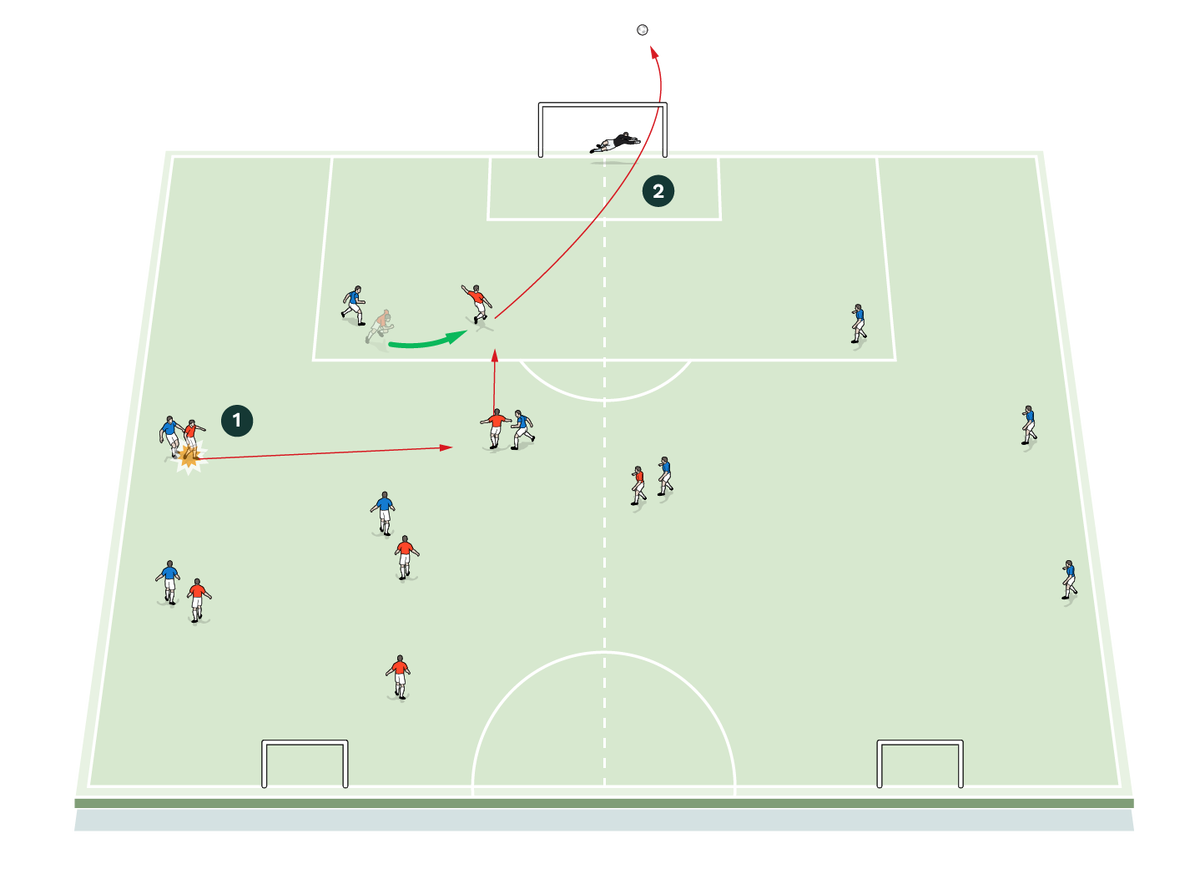
The build-up team score by passing into either mini goal and get one point [2a]. The pressing team get one point if they disrupt build-up and win the ball or force it out of bounds [2b], or two points if they counter-attack after regaining the ball (one point) and go on to score (bonus point) [2c].
[2a]

- Play begins from a goal kick or throw for the build-up team (blue)
-
Blue team look to score by passing into either of the mini goals
We want the pressing team to press in a coordinated 3-4-3 shape, with roles clearly defined on the strong side and passive side. The centre forward presses the centre back while screening the pass to the holding midfielder, and prevents the return pass to the centre back once the ball is played wide. The wide forward on the strong side starts passive, then jumps aggressively to press the full back once the ball is played. The wing back on the strong side is tightly marking the winger. The centre midfielder on the strong side tracks the short passing midfield option. The centre midfielder on the passive side holds the central balance and screens space (with no centre forward to track).
The wide forward on the passive side shifts centrally to pick up the holding midfielder, ready to press the passive centre back. The wing back on the passive side tucks in to support the midfield balance, and is ready to jump to press if the passive side receives the ball.
The collective aim is to funnel the play to the strong side, to press hard once the ball is wide and prevent long, direct passes behind, to player-mark all nearby short options to increase the chances of high regain, and to prioritise compactness and vertical distances between lines during the press.
We run this for up to 20 minutes.
[2b]
- Red team seek to disrupt build-up
[2c]
-
Red team counter-attack in shape
-
Red team look to score
11v11 ON A REDUCED FIELD
We set up on a reduced field, with one full size goal in its normal position, the other 20yds inside the opposite half. Our teams are now in 11v11 for open play, with the build-up team in a 4-3-3 and the pressing team in a 3-4-3. Each rep starts from a goal kick or a throw-in for the build-up team. The pitch dimensions encourage a high defensive line and limit space behind the pressing team.
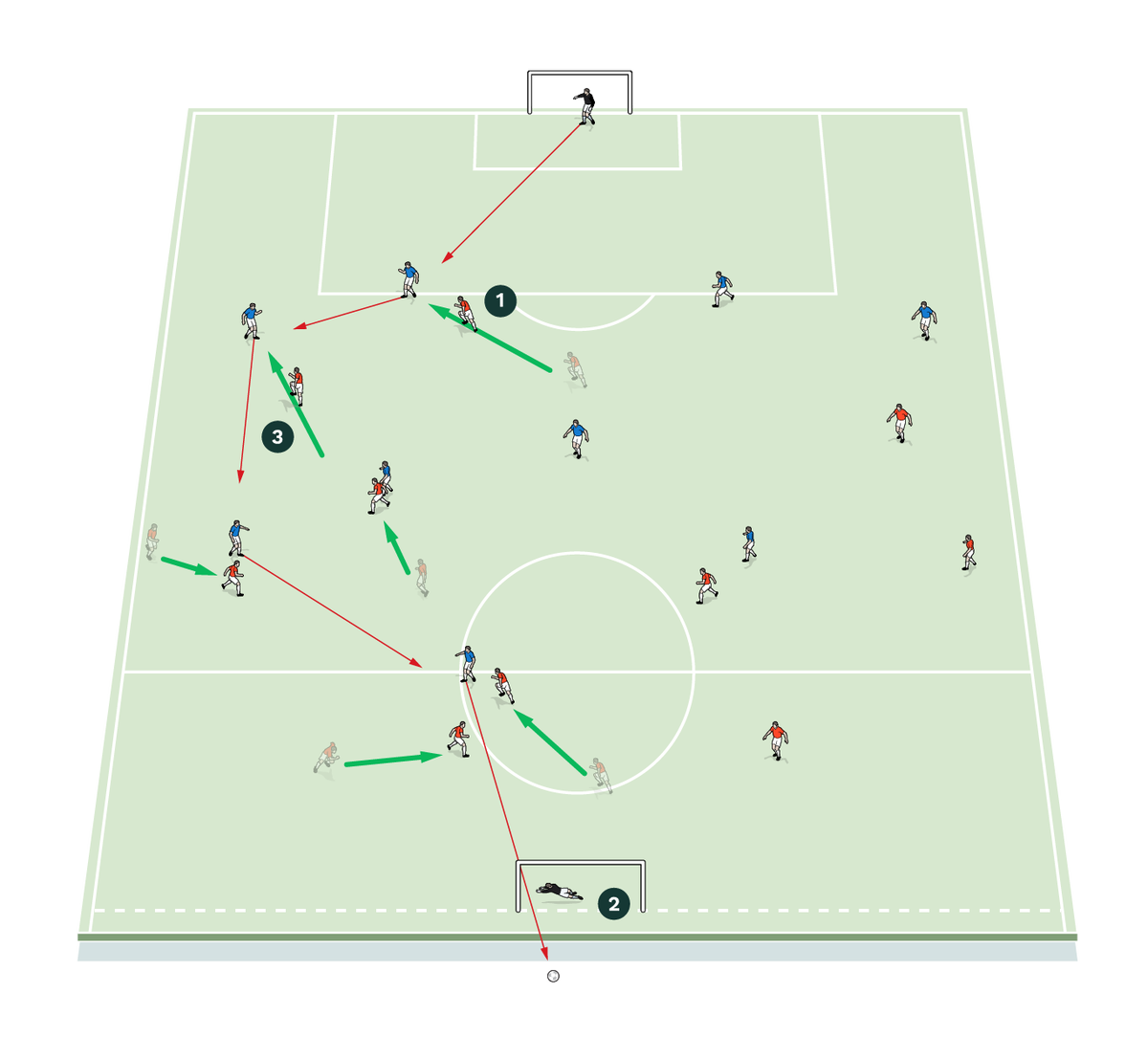
The build-up team are looking to break the press and score in the full size goal, using positional play and ball circulation. The pressing team are looking to stay compact, press as a unit, force play wide [3a], and regain possession to counter [3b]. They should focus on player-to-player duels on the strong side.
[3a]
- Reds look to disrupt
-
Blue team look to score into full size goal
-
Red team press and force play wide
We are looking to maintain vertical and horizontal compactness in the 3-4-3 shape, to force play towards the strong side touchline and player-mark aggressively. The pressing responsibility differs by side: on the strong side, the wide forward presses the opposition full back, on the passive side, the wing back initiates pressure if the ball switches. Ensure immediate pressure on the ball carrier to prevent switches.
After a switch of play, the wide forward who was pressing on the strong side now drops inside to support the two central midfielders and restore balance. The centre forward shifts to cover the opponent’s holding midfielder to block the central progression. We maintain the back four unit (three centre backs and one wing back) while the midfielders screen central spaces.
We run this for up to 20 minutes.
[3b]

- Reds gain possession and counter-attack
FULL FIELD TACTICAL 11v11
We set up on a full-size pitch in an 11v11 match scenario. The build-up team are in a 4-3-3 shape, the pressing team in a 3-4-3. The game starts from the build-up team’s goal kicks or throw-ins in their own half. Normal match rules apply and play flows freely with coaching interventions as needed.
The build-up team look to maintain structure and play through the press using short passes and switches. The pressing team look to apply a high press to force turnovers or long balls, to maintain compact lines, and to control space behind the back three.
We are looking for the first presser to prevent long passes or switches with aggressive pressure; the strong side player-marking to eliminate short passing options; the defensive line to hold shape compactly, only dropping once the long ball is triggered; to maintain line compactness to prevent central gaps when pressing; when the press is broken via central progression, wing backs and defensive line should drop to protect depth; the midfielders to recover goal side, and the forwards dropping into a 5-4-1 block to deny central access and prevent crosses; and emphasising communication, anticipation, and coordinated line movement.
COACHING POINTS
What are the key things to look out for?
To master this session and its pressing principles, players must demonstrate:
Pressing team (defenders):
- Coordinated pressing movements: The front three must press in unison, with clear roles: centre forward screens central options, wide forwards jump aggressively when cues are triggered.
- Compact shape: Maintain tight vertical and horizontal distances between lines to close passing lanes and force play wide.
- Strong-side overloads: Apply aggressive player-marking on the strong side while ensuring cover and balance on the passive side.
- Communication and anticipation: Constant scanning, talking and reading cues (eg poor touch, sideways pass) to trigger the press.
- Regain with purpose: Don’t just win the ball, connect quickly with defenders or exploit space in transition.
Possession team (attackers):
- Maintain structure under pressure: Hold a 4-3-3 shape to provide clear passing options and stretch the press.
- Quick circulation and support angles: Move the ball rapidly, offer diagonal support,
and play away from pressure when possible. - Recognise and punish over-commitment: Use switches, third-player runs, or central overloads if the press is bypassed.
What are the typical mistakes players might make and how do I avoid them?
Common pressing mistakes:
1. Lack of coordination in the front line
- Why it happens: Players press as individuals rather than as a unit.
- How to fix it: Emphasise timing, triggers, and clear pressing roles, especially the centre forward’s screening responsibility and the wide forward’s delayed jump.
2. Poor compactness
- Why it happens: Lines get stretched, midfielders don’t shift across quickly, or defenders drop too early.
- How to fix it: Constantly reinforce team distances, use freeze moments to show gaps, encourage communication from back to front.
3. Over-committing without cover
- Why it happens: Players chase the ball emotionally rather than pressing with purpose.
- How to fix it: Teach players to funnel play into traps, not just chase; stress patience and the importance of team shape behind the press.
4. Failure to recognise switching cues
- Why it happens: Players ball-watch and don’t scan for potential switches or overloads.
- How to fix it: Train players to scan off the ball and adjust body positioning early to anticipate switches.
Big errors to look out for
- Front line pressing without midfield support: Opens easy gaps and gets bypassed so press dies immediately.
- Defenders dropping too early: Breaks compactness, invites pressure relief.
- No scanning or anticipation: Players react too late and lose control of the press.
Related Files

Get a free issue
Latest Issue

Subscribe Today
Editor's Picks
Turning defence into a fast attack
Attacking transitions
Deep runs in the final third
Using the goalkeeper in build-up play
Intensive boxes drill with goals
Penetrating the final third
Creating and finishing
My philosophy
Pressing initiation
Coaches' Testimonials

Alan Pardew
Arsène Wenger

Brendan Rodgers
Carlos Carvalhal
José Mourinho
Jürgen Klopp

Pep Guardiola
Roy Hodgson

Sir Alex Ferguson
Steven Gerrard
Related
Pre-season fitness plan
Play around to play through
Free-kick routines
Get a free eBook
Coaches' Testimonials

Gerald Kearney, Downtown Las Vegas Soccer Club

Paul Butler, Florida, USA

Rick Shields, Springboro, USA

Tony Green, Pierrefonds Titans, Quebec, Canada
Join the world's leading coaches and managers and discover for yourself one of the best kept secrets in coaching. No other training tool on the planet is written or read by the calibre of names you’ll find in Elite Soccer.
In a recent survey 92% of subscribers said Elite Soccer makes them more confident, 89% said it makes them a more effective coach and 91% said it makes them more inspired.
Get Monthly Inspiration
All the latest techniques and approaches


Since 2010 Elite Soccer has given subscribers exclusive insight into the training ground practices of the world’s best coaches. Published in partnership with the League Managers Association we have unparalleled access to the leading lights in the English leagues, as well as a host of international managers.
Elite Soccer exclusively features sessions written by the coaches themselves. There are no observed sessions and no sessions “in the style of”, just first-hand advice delivered direct to you from the coach.
