You are viewing 1 of your 1 free articles
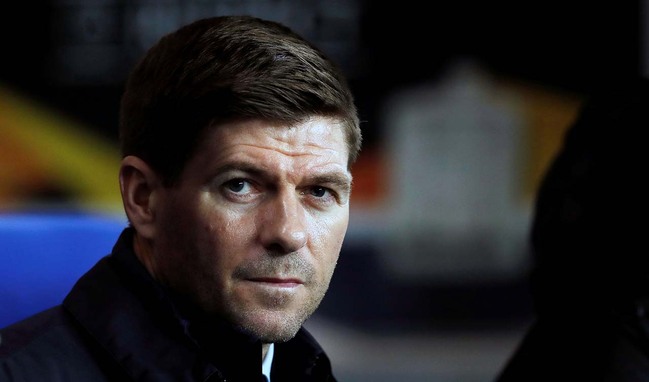
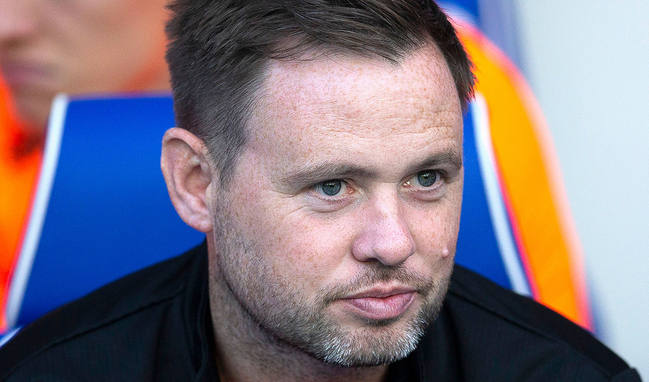
The Rangers manager reflects on how he sees his role.
Words: Steph Fairbairn
I prefer training to be as challenging as possible. I’m not a big believer in tidy, clean training, because I don’t feel it’s realistic. Training is a logical process: if we do ‘this’ and do it well, then we can end up with ‘that’. As head coach it’s my role to monitor and to move the session on when required. Questions constantly arise - what are the challenges now? How can I offer up solutions for the players? What next?
I plan a session, then when running it, my job is to work out what the issues are. My job as coach is to find the best, and most fitting, solution.
As an example, I believe in trying to dominate the ball. So when facing opposition I always ask how that team is going to come and press, but of course it can only ever be an educated guess. I may have watched them play three or four games before, maybe ten times. Maybe we’ve played against them before. Whatever, we will come to a certain understanding. My job is to then translate that to the players: ‘These are going to be your challenges based on what we know’.
Often, of course, the opposition comes with a different approach, and still, as a coach, I have to try and find the answers, yet the concept is the same. It just might look a bit different, in terms of, say, starting positions.
For example, my theory is, even when we play against a team that presses, if individual players do their jobs well and break the lines, resulting in changing the rhythm, the opposition aren’t going to press for too much longer.
Therefore if the team stops pressing intensely because they’re tired, the problem changes. Then you can zigzag your way up the pitch. I say this all the time: every time you play, you’re getting closer to their goal. And by the end, hopefully you’ve got a 1v1 out wide, or you can create an overlap. You’re so close to their goal that breaking lines is not important. It then becomes about the eight running in gaps, about moving the ball quickly, about playing and following.
It’s down to the coach to look at the problem of the play on an individual level. If it’s getting the ball to the six, can they arrive with intensity? Have they got the power to get away from their opponent and arrive and bounce? If they haven’t, then we need to work with them to help them become more powerful. My job, and my team’s job, is to get the player to a point where they can do what they need to solve the problem.
You can see it as a process of questions: what is the problem individually? What’s the problem as a unit? What’s the problem as a team? Work out what the problem is and then find the solution. It’s a logical process that is ultimately related to the concept of the game, or the style.
In terms of my methodology, it all relies on mentality.
“I tell every team I manage it’s about two things: courage and intensity as a team”
My belief is you can coach any team in the Football League to dominate the ball, because they’re all good players. Some of them have a bit more fear than others, so to coax the courage out of them will take a bit more for some than it does for others.
I tell every team I manage it’s ultimately about two things: courage and intensity. Do you have the courage to play? Do you have the intensity to play, to move and to do your job properly, even when out of possession?
You need to be brave to press higher. You need to be brave to win the ball back. You need to possess the courage to run and to recover quickly if we’ve lost the ball and are now not set up properly.
When my team and I analyse performances, the tactical stuff will be both individual and unit-based, but, most of the time, the team stuff will be all about mentality.
And if the team does that, and they play in the style I request, when it goes wrong, it’s on me. If they’ve displayed that courage and intensity and it hasn’t worked out, it’s my job to say: ‘Listen, this is on me. I’ve asked you to play like this. I’ll take full responsibility for it.’
Then I can go deeper: ‘This, in my opinion, is why you made a mistake... because you passed but you didn’t move... you went too early... you were too keen to break a line... you didn’t have your shoulders open’ and so forth.
For me, it’s all about mentality first and tactics second.


In a recent survey 92% of subscribers said Elite Soccer makes them more confident, 89% said it makes them a more effective coach and 91% said it makes them more inspired.
Get Monthly Inspiration
All the latest techniques and approaches
Since 2010 Elite Soccer has given subscribers exclusive insight into the training ground practices of the world’s best coaches. Published in partnership with the League Managers Association we have unparalleled access to the leading lights in the English leagues, as well as a host of international managers.
Elite Soccer exclusively features sessions written by the coaches themselves. There are no observed sessions and no sessions “in the style of”, just first-hand advice delivered direct to you from the coach.
Live calls. Fitness programmes. Session plans. Everything the prepared coach needs.