
 close
close


 LOGIN
LOGIN

OUR BEST EVER OFFER - SAVE £100/$100
JOIN THE WORLD'S LEADING PROFESSIONAL DEVELOPMENT PROGRAMME
- 12 months membership of Elite Soccer
- Print copy of Elite Player & Coach Development
- Print copy of The Training Ground
You are viewing 1 of your 1 free articles
Sean Dyche: Getting the job done
In conversation with Ben Bartlett for the Elite Soccer Coaching Award, Sean Dyche talks about his time at Everton and Burnley, setting goals at a club, and his preferred style of play


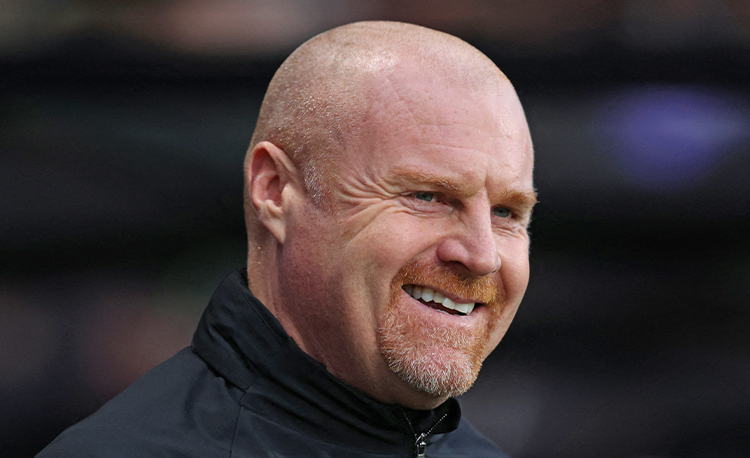
Words: Steph Fairbairn
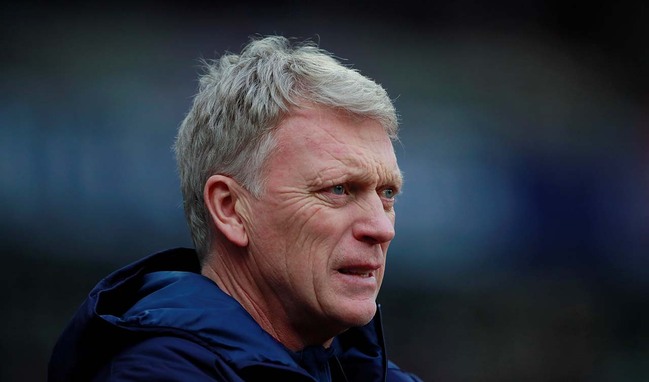
“I’m not football nuts,” says Sean Dyche. “What I’m really mad about is winning and creating a team. I’m not actually obsessed with the game. I’m obsessed with the outcome of the game.”
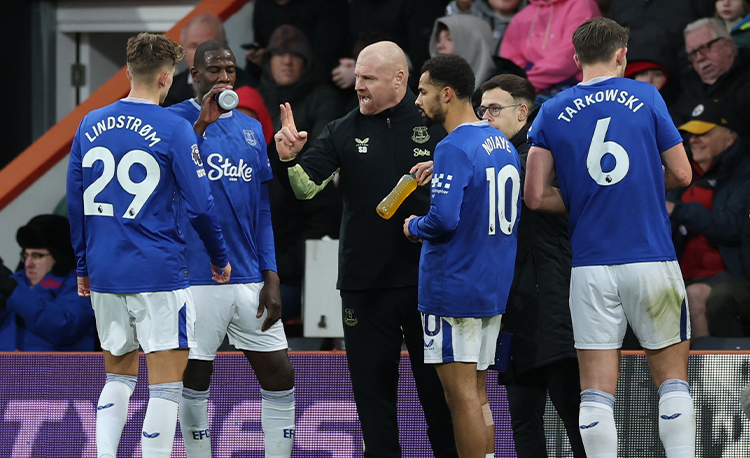
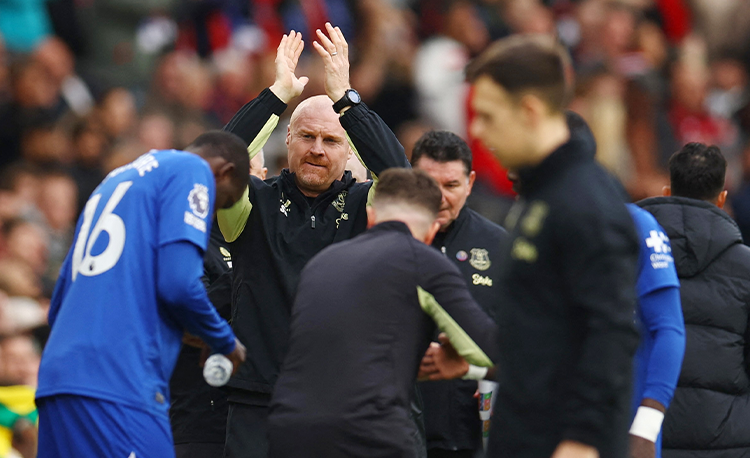
Dyche is speaking three months after his time as manager of Premier League club Everton came to an end. When he initially took over at Everton, in January 2023, Dyche’s task was to stabilise the club and secure their Premier League status. The outcome? A success – avoiding relegation.
The following season, any hopes the club may have had to build from there were thwarted by a points deduction (10 points, later reduced to six) for breaching Financial Fair Play regulations for the three-year period leading up to the 2021-22 season. The task, once again, became Premier League survival. The outcome? A 15th-place finish, two rungs higher than the previous season.
Indeed, Dyche calls himself a manager who can “get the job done”.
“When I went into Everton, I said openly that different managers have different roles,” he explains.
“You look at any company, not just football, but companies around the world, at any given time; they’ll bring in a different leader or manager for different reasons.”
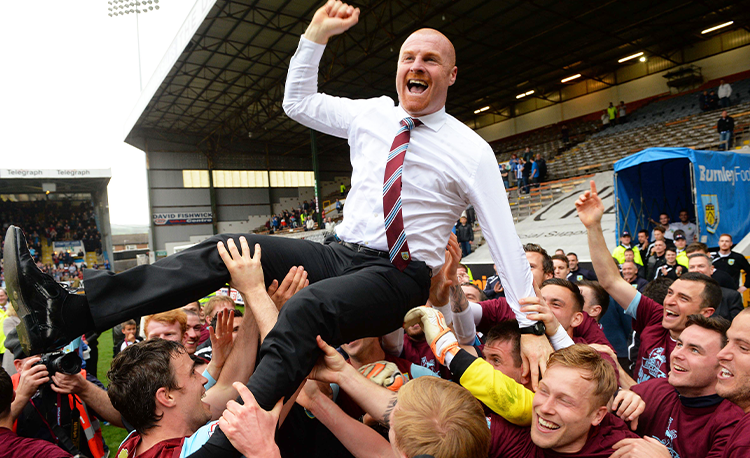
At Burnley, where Dyche spent a decade in charge, his task was to solidify and build. A Championship outfit when he took over in 2012, Dyche led the Clarets back to the Premier League at the end of his second full season in charge.
Immediate relegation followed, but the club bounced back to the top division straight away, where they stayed for four consecutive seasons (they had never before played back-to-back seasons in the division), registering their highest league position since 1973-74 – finishing seventh – and qualifying for European football for the first time in over half a century in the 2018-19 season.
Dyche very much sees himself as a manager of a club, rather than just a team. His on-pitch successes with Burnley were mirrored by his off-field results, helping the club to work towards long-term financial stability setting them up, he says, for “60 to 70 years”.
“Measuring success is now often just looking at if the team are winning. Real measurement, in my opinion, is also about getting the club in good health.”
These are the types of projects he truly buys into.
“I try and be open-minded about what the club need, not just what the team need,” Dyche says.
“Maybe, as the game’s grown, that’s changed, but that’s just my style of managing.”
Aligning goals and expectations
For Dyche, the backing and shared understanding of the board, which, if harnessed correctly, trickles down into the alignment of the rest of the club, is critical, but difficult to achieve.
“Burnley were quite old fashioned in the sense of going: ‘You are the manager, we stand behind you.’
“That was really good to work under. They weren’t always forgiving with money, but the structure and their belief in me as the manager was always there, even through some of the tougher times.
“[My time at Burnley] looks like a glory story, but people forget that for I was booed off for four of my first eight months in charge.
“That alignment across a club is one of the hardest things to achieve.
“Certainly at any Premier League club, and now at a lot of Championship clubs and at some First Division clubs, you might have to answer to, or align with, the owner, the board, the chief executive, the director of football, the head of scouting, the head of analytics.
“There’s this myriad of different people that you have to bring together in some way or another. The thing that often makes that a big challenge, before you even win a game, is trying to align all these people when the owners are asking them for different things.”
“Dyche very much sees himself as a manager of a club, rather than just a team”
What the club needs
The first step to being able to do your job? Understanding what that job actually is.
“One bit of advice for those managing or looking to manage in the professional game: before you tell the world you’re going play the ‘right way’, win. Win first, then tell them.
“I know managers who got a job by telling [the board] they’re going to do this and going to do that, and three months later they’re out. The uptake of a young manager getting another job is about 50%. So be careful with that.
“I know you have to do enough of that to be current and relevant in the modern game. Perception is now more important than fact now, without a shadow of a doubt. Your perceived job and way of working is now more powerful than actually getting the job done, which is bizarre.
“But whatever way you’re going to do it, make sure you are aware of what the job is and that is to win.
You’ve got to win. And when you’re winning, [however you’re doing it] will be deemed the right way.”
For Dyche, the right way is also the way defined by the players you have in front of you, the resources you have available, and the task you’ve been set.
“To dispel a popular misconception, I don’t just want to kick the ball down the pitch,” he says.
“I started my career at Nottingham Forest, under Brian Clough, who played as near to modern football then as any manager was playing.
“But I’m a realist. You’ve got to look at the players. You’ve got to look at what you’ve got. You’ve got to look at the situation. You’ve got to look at what you need to do to change things. That’s what I do.
“I get the staff on board to make them understand, so it goes through us all into the players. We look at the realities of it, asking: what’s our best weapon?”
Related Files
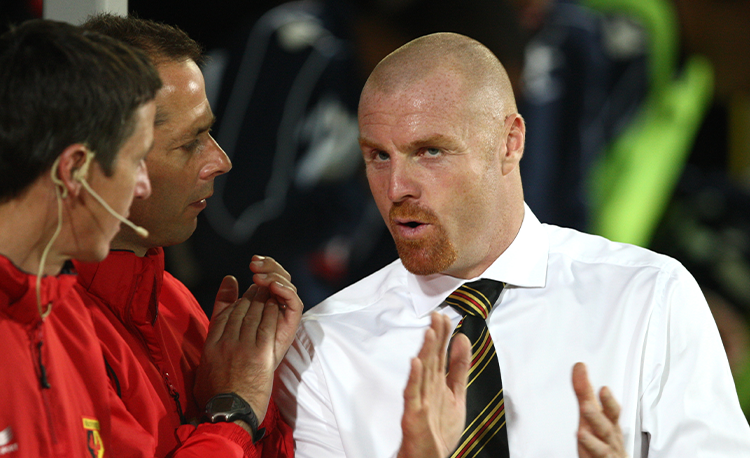
Engage the players
Engaging the players in the process of defining and building a set of core values, identifying what Dyche calls ‘the truth line’, then allows them to buy into using this ‘best weapon’.
“When I went into Burnley and Everton, I gave them a questionnaire,” Dyche explains.
“It was really open, no leading questions. Things like: what do you think people think of you as a team?
What do you want them to think of you as a team? What do you think they think of you as an individual? What do you want them to think of you as an individual?
“I took [the answers] all in, got some feedback on it, and went: ‘This is what you said’.
“So we agreed on this. Is this what we’re agreed on? Is this what everyone’s agreeing on? You’ve said it, so we’re agreeing on it.
“Engage the players in the process of defining and building a set of core values”
“We’d try and find a bit of immediate alignment, and then we’d pick the key things out. Obviously key core values - it’s often simple stuff: hard work, pride in what you do, team ethic, professionalism - key core values of what the underbelly of what we stand for is.
“And then you’ve got to layer up your own tactics, of course you have, but I think there’s a truth line in the team. You’ve got to find the truth line. What’s this group’s ability to find a certain line that runs through that they can all glue to?
“Often, it might be the framework, because that’s often the simplest thing to coach. Get them involved with the framework, knowing their jobs and their responsibilities.
“One of my sayings is framework and freedom. If you do the framework, for the rest of it, you have the freedom to go and play. Be yourselves.”
Know your club
Alongside the players, you also need to align, as much as possible, your staff, the fans, the media, and the board.
“Be careful with your staff. Make sure they know. Sometimes your staff don’t know,” Dyche advises.
“Players are going up to them, asking, ‘Why are we doing this?’ Your staff are going, ‘I don’t really know.’
“Make sure your staff are online as well. Make sure they know.
“Then lay it down as clearly as you can through the media. So the two stories are aligned, inside the camp and outside the camp.
“You obviously have to be a bit more delicate with some of the information so the fans get a feeling of what you’re trying to do. The idea is you’re trying to get all noses pointing in the right direction. It’s very difficult, but that’s what you’re trying to do.”
When it comes to fans, Dyche says it’s about knowing as much as you can about the context of the club. Over the course of his four decades in the game, Dyche has had to learn a lot about a number of clubs.
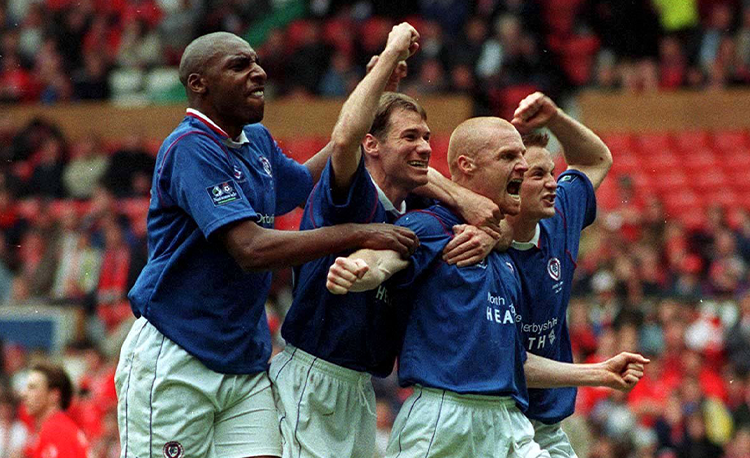
Originally from Kettering, Northamptonshire, in the East Midlands, as a player Dyche had what he calls a ‘journeyman career’. He spent his youth years at Nottingham Forest, before going on to make his professional debut at Chesterfield, where he was captain, and then went on to play for Bristol City, Luton Town, Millwall, Watford and, for his final playing hurrah, return home to Northampton Town.
Dyche was known as a hard-working, no-nonsense centre back, by players and managers alike. It was Aidy Boothroyd who, having let Dyche go at Watford, brought him back as a coach in the youth system just two years later.
His approach to connecting with fans is something he’s learned, and factors into his work in the hotseat.
“It helps if you can understand or get a feel of the sort of the culture of the area, the culture of the fan’s mentality, the fabric of the club, what, historically, has held the club together, the things that make it that club, that really helps with fan engagement,” he shares.
When it comes to the other end of the chain, the top of it, Dyche recognises the need to communicate, negotiate and, above all, be honest, keen to quell rumours that he “knocks doors down, demands, growls and shouts all the time”.
“For me, authenticity is key with the board,” he says.
“That’s being yourself. But whatever yourself is, you have to mould it.
“I call it: high, medium, low. Where are you pitching? What’s the feel of a conversation? Does it need to be high? As in you’re pushing hard with what you’re saying and what you’re driving towards.
“Low might be you’re taking the sting out of the feel of a board or a situation where results might not be going your way and you have to alter the storyline and go: ‘Okay, but behind the results, we’ve got this player injured, we’ve got this player who’s probably worth ten times more than they were a year ago.’ You’ve got to moderate it a little bit.
“But be yourself, whoever yourself is. Stick along the honesty line, bend it and shake it a little bit and twist it, but if you tell the truth, you don’t really have too much to worry about.”
“For Dyche, it’s about the way you work with those around you to lighten the load“
Style of play
Dyche has long been comfortable with who he is in terms of playing style too.
“I’m not a massive fan of: ‘My philosophy is this, my philosophy is that…’ It’s football at the end of the day.
“Style and playing principles, I do. I’ve never changed my style. 4-4-2 is such a flexible formation. It’s one of the most flexible combinations in football. If I have the right players, I will almost definitely play 4-4-2.
“You need two players in midfield who are willing to play against three for starters, because virtually every midfield now is three, whether it’s one and two or two or one; two pivots or one pivot.
“You need two midfielders who can do the work and read the situation. You need a centre-forward who’s clever enough to drop in to be on the back of their deep lying midfielder, or one of the two deep lying midfielders.
“In terms of playing principles, two brilliant managers, Brian Clough and Alex Ferguson, to virtually every player under them, they’d say: ‘Get it into your strikers as quick as you can.’
“I don’t go far from that now. How quickly can we get it forward? Hopefully with a bit more quality and a bit more ability, but get it forward and get it into your striker.
“Play forward. Play forward as many times as you can. And that’s not long ball or short ball, just play forward. If you can play through the thirds, play forwards, brilliant. If you have to be effective by playing a long ball, that’s brilliant as well. There’s no rule to it except play forwards as many times as you can.
“Then we come back to framework and freedom. How quickly can we recover back into our framework as a team? That framework is built on really simple principles.
“If you saw me coach the back four, you wouldn’t believe it. You’d say: are they 10-year-olds? The thing I’ve learned is the higher the players go, they stop doing the basic ugly, hard yards of the job, particularly defenders.
“I always tell them it will serve them well. My defensive record in particular is very good. And it’s built on super simple principles.”
Self-preservation
Dyche also seeks to live his life in a somewhat simple way, making sure he gets space away from the game when he can.
“I go to the gym virtually every day, just to tick over, 20 minutes cross trainer and all that sort of stuff,” he says.
“I do have the ability to switch off. I’m not obsessed by football. I don’t watch every game. I can get away from it. I step away, I go to gigs, I like a curry with my mates. I do a bit of charity stuff. You do need something, because I think it can get to you.
“I remember years ago, the great coaching guru Dick Bate used to have this thing, and we used to debate it all the time. He would say: ‘The best managers are obsessed by football’. I’d say: ‘Absolutely no chance’. I know a few. I’m telling you they’re not. They know what they’re good at.
“You’ve got to find a way of dealing with the pressure, stress and anxiety. That’s from the game and from outside influences, whether that’s family life or other things.
“You need a way of switching off, because it is all encompassing. The Premier League, certainly, is very demanding. The Championship’s demanding more now because of the flow of games. In League One and Two the demand’s getting higher and higher.
For Dyche, it’s also about the way you work with those around you to lighten the load.
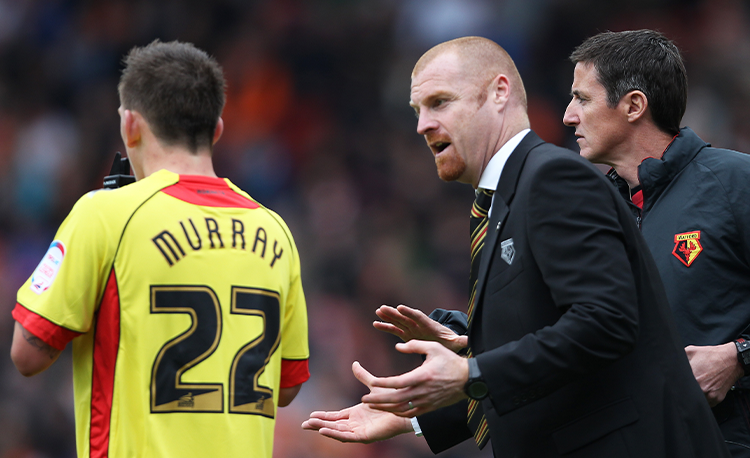
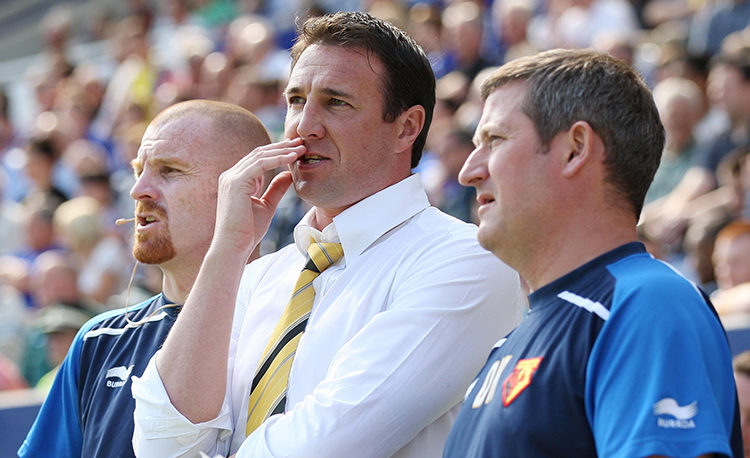
“I was assistant to Malky Mackay [at Watford]. I didn’t think I was a great assistant at times because I pushed him too hard when he needed a breather. He probably needed me to take the heavy weight off him and I was pushing him.
“I was very honest and very loyal to him. But I just was on him constantly when what he probably needed was someone to go: ‘Hey, you have a rest, I’ll go and deal with that’.
“I learned from that. I bought my assistant Ian [Woan] in with me at Watford and he is still with me. He’s a friend that is also a good coach and he’s different to me. That was the key for me. When I first got my job at Watford, I wanted different people to me, not the same as me; different characters.
“You do learn to delegate. When you get your first job, you think you’re going to do a lot yourself, and you do end up doing a lot yourself. It’s almost like you want impress upon the players that you are the leader; this is how we do things.
“As you get a bit deeper in your learning, you delegate better. You use your staff better. Over time you learn to trust people and you learn that you need a break.
“And the players need a break from you too. I didn’t know [former manager] Gérard Houllier that well, but I met him at a dinner and he said an interesting thing to me that stuck with me.
“He asked: ‘Are your players getting a break?’ I said: ‘Yeah, I give them days off’. He said: ‘No, a break from you.’
“When I asked what he meant, he told me that me being there [at the club] all the time meant the players could never get a breather. When the manager’s around, they’re always going to be that bit sharper, that bit more on it.
“But now and again, they need a down moment, a day when they can be a bit softer and a bit looser.”
What comes next
What’s next in the game for Dyche remains an unknown.
He continues to seek to move with the game, taking his daughter’s advice on the growing importance of social media and reflecting on the growing demands on modern managers and the ever-changing definition of success; to remain committed to the off-field and on-field principles and beliefs that he’s held to over the course of his career; and to remain connected to the only industry he’s ever known.
One thing’s for sure, the game will always have a need for a manager who can ‘get the job done’.

Get a free issue
Latest Issue
Subscribe Today
Editor's Picks
Attacking transitions
Deep runs in the final third
Using the goalkeeper in build-up play
Intensive boxes drill with goals
Penetrating the final third
Creating and finishing
My philosophy
Pressing initiation
Compact team movement
Coaches' Testimonials
Alan Pardew
Arsène Wenger
Brendan Rodgers
Carlos Carvalhal
José Mourinho
Jürgen Klopp
Pep Guardiola
Roy Hodgson
Sir Alex Ferguson
Steven Gerrard
Get a free eBook
Coaches' Testimonials
Gerald Kearney, Downtown Las Vegas Soccer Club
Paul Butler, Florida, USA

Rick Shields, Springboro, USA

Tony Green, Pierrefonds Titans, Quebec, Canada
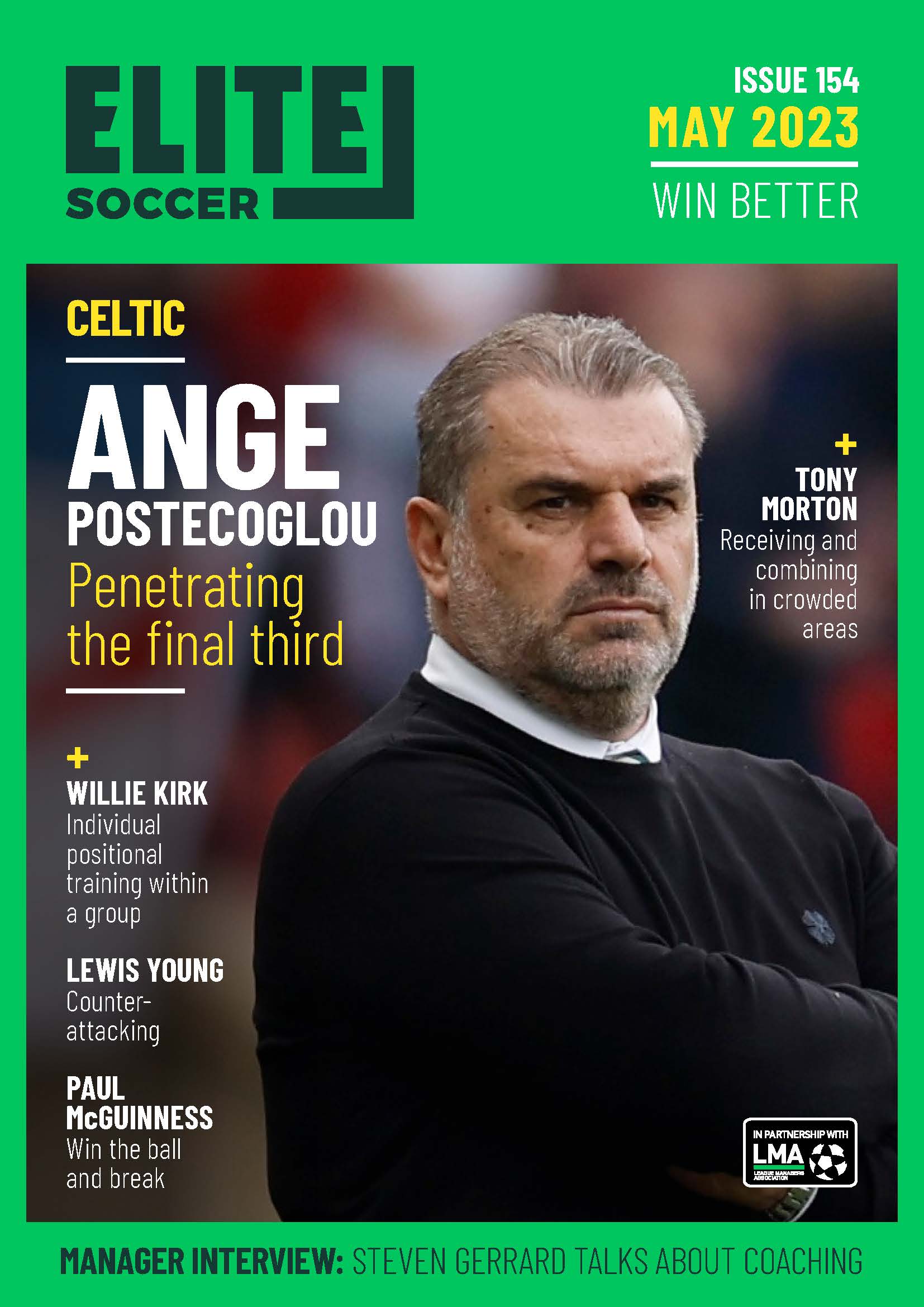
Join the world's leading coaches and managers and discover for yourself one of the best kept secrets in coaching. No other training tool on the planet is written or read by the calibre of names you’ll find in Elite Soccer.
In a recent survey 92% of subscribers said Elite Soccer makes them more confident, 89% said it makes them a more effective coach and 91% said it makes them more inspired.
Get Monthly Inspiration
All the latest techniques and approaches


Since 2010 Elite Soccer has given subscribers exclusive insight into the training ground practices of the world’s best coaches. Published in partnership with the League Managers Association we have unparalleled access to the leading lights in the English leagues, as well as a host of international managers.
Elite Soccer exclusively features sessions written by the coaches themselves. There are no observed sessions and no sessions “in the style of”, just first-hand advice delivered direct to you from the coach.
